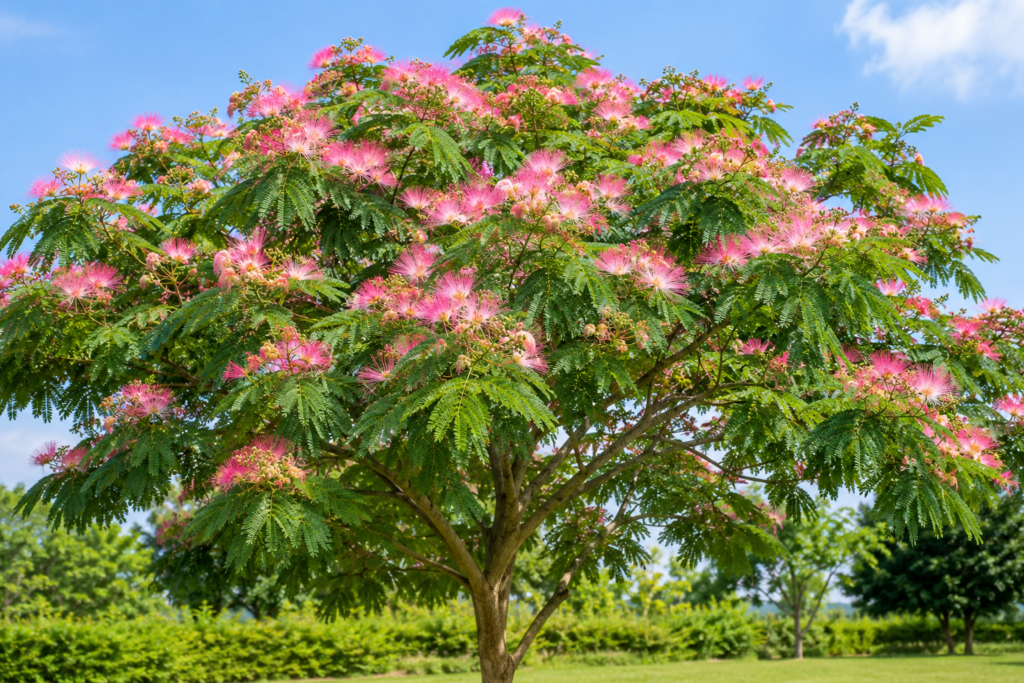
Albizia julibrissin India is an attractive ornamental tree known for its delicate fern-like leaves, spreading canopy, and beautiful silky pink flowers. Commonly called the Persian Silk Tree, Silk Tree, Pink Silk Tree, or Pink Siris, it belongs to the Fabaceae family. India Flora Online records Albizia julibrissin as a tree occurring in several parts of India, including Uttarakhand, Himachal Pradesh, Karnataka, Tamil Nadu, Sikkim, Assam, and other regions.
Its elegant appearance makes it suitable for gardens, parks, farmhouses, landscape projects, and other open outdoor spaces. If you are looking for an ornamental tree that combines attractive foliage with eye-catching flowers, Albizia julibrissin can be an interesting choice.
What Is Albizia Julibrissin?
Albizia julibrissin Durazz. is a deciduous tree belonging to the Fabaceae family. It is recognized by its finely divided, bipinnate leaves and clusters of pink flowers with prominent silky stamens. The flowers give the tree its distinctive powder-puff appearance.
The tree generally develops a broad and spreading crown. Depending on growing conditions, mature trees can reach several metres in height, making them useful as specimen and shade trees in suitable landscapes.
Botanical Information
| Feature | Details |
|---|---|
| Scientific Name | Albizia julibrissin Durazz. |
| Common Name | Persian Silk Tree |
| Other Names | Silk Tree, Pink Silk Tree, Pink Siris |
| Family | Fabaceae |
| Plant Type | Deciduous tree |
| Flower Colour | Pink |
| Foliage | Fine, fern-like, bipinnate leaves |
| Growth Form | Broad and spreading canopy |
| Landscape Use | Ornamental, specimen and shade tree |
Why Is Albizia Julibrissin Popular in India?
The main attraction of Albizia julibrissin is its ornamental appearance. Its delicate foliage creates a light, airy canopy, while the pink flowers provide seasonal colour.
The tree can work particularly well in spacious gardens where there is enough room for the canopy to develop. It can also be considered for parks, institutional landscapes, farmhouses, and selected commercial landscaping projects.
Another interesting characteristic is the movement of its leaflets. The foliage can fold or move in response to light and other environmental stimuli, giving the tree an unusual visual character.
Albizia Julibrissin Growing Requirements
1. Sunlight
Albizia julibrissin generally performs best in a location receiving good sunlight. Full sun can encourage stronger growth and better flowering.
When selecting a plantation site, choose an open area rather than a heavily shaded location.
2. Soil
Good drainage is important. Albizia julibrissin can tolerate a range of soil conditions, but excessively waterlogged soil should be avoided.
A well-drained loamy soil with adequate organic matter can provide a suitable growing environment. Some horticultural references report adaptability across a relatively broad soil pH range.
3. Watering
Newly planted trees need regular watering while their root systems become established. After establishment, watering can generally be adjusted according to rainfall, soil moisture, temperature, and site conditions.
Avoid keeping the soil continuously waterlogged because poor drainage can create root-related problems.
4. Pruning
Light pruning can help maintain the desired structure and remove weak, damaged, or crossing branches. Pruning should be based on the tree’s growth and landscape requirements rather than excessive cutting.
Best Uses of Albizia Julibrissin in Landscaping
Albizia julibrissin can be used in several types of landscape settings.
Garden specimen: Its attractive flowers and foliage can make it a focal tree in a spacious garden.
Farmhouse landscaping: The spreading canopy can add visual interest to large outdoor spaces.
Park landscaping: It can be considered for open public and institutional landscapes where sufficient growing space is available.
Commercial landscaping: The tree may be suitable for selected resorts, campuses, hotels, and other large properties.
Shade and ornamental planting: Its broad crown and attractive appearance make it useful where both visual appeal and shade are desired.
Albizia Julibrissin vs. Other Albizia Species
One important point for plant buyers is that several Albizia species can look similar. Common names such as “Siris,” “Silk Tree,” or “Mimosa” may create confusion.
Albizia julibrissin has distinctive pink, silky flower filaments. India Flora Online also lists related Albizia taxa, so accurate botanical identification is important when purchasing plants for a landscaping project.
For commercial orders, buyers should confirm the scientific name, plant size, root condition, quantity, and nursery specifications before placing a bulk order.
Is Albizia Julibrissin Suitable for Indian Gardens?
Albizia julibrissin is already documented in multiple parts of India, including northern and northeastern regions. However, suitability still depends on the local climate, soil drainage, available space, and intended landscape use.
For areas such as Saharanpur and other parts of North India, site selection and after-planting care are particularly important. A healthy nursery plant, proper planting technique, adequate watering during establishment, and protection from physical damage can improve establishment.
Buy Albizia Julibrissin Plants from Anuj Nursery
If you are searching for Albizia julibrissin India for a garden, farmhouse, landscaping project, or bulk plantation requirement, Anuj Nursery can help you explore suitable nursery plants according to your project requirements.
Anuj Nursery in Nagal, Saharanpur focuses on nursery plants, trees, landscaping plants, and bulk plant requirements. Before purchasing, discuss your required plant quantity, size, transportation requirements, and planting location with the nursery.
For large landscaping projects, choosing the correct species and plant size is just as important as price. Always consider the long-term space requirements of the tree before planting.
Frequently Asked Questions About Albizia Julibrissin
Is Albizia julibrissin available in India?
Yes. Albizia julibrissin is documented in India and is cultivated or found in several Indian regions.
What is Albizia julibrissin commonly called?
It is commonly known as the Persian Silk Tree, Silk Tree, Pink Silk Tree, and Pink Siris.
Does Albizia julibrissin have pink flowers?
Yes. The species is recognized for its prominent pink flowers with long silky stamens.
Does Albizia julibrissin need full sun?
It generally performs well in full sun, particularly when the objective is healthy growth and attractive flowering.
Can Albizia julibrissin be used for landscaping?
Yes. It can be used as an ornamental, specimen, and shade tree in suitable landscape locations.
Conclusion
Albizia julibrissin India is an attractive ornamental tree with fine foliage, a spreading canopy, and distinctive pink silky flowers. It can add seasonal colour and character to gardens, parks, farmhouses, and selected landscaping projects.
For successful planting, focus on good sunlight, well-drained soil, sufficient growing space, proper watering during establishment, and appropriate pruning. If you are planning to purchase Albizia julibrissin plants in bulk, selecting correctly identified and healthy nursery stock is essential.
For Albizia julibrissin and other landscaping plants, Anuj Nursery in Nagal, Saharanpur can be considered for nursery and project plant requirements.