
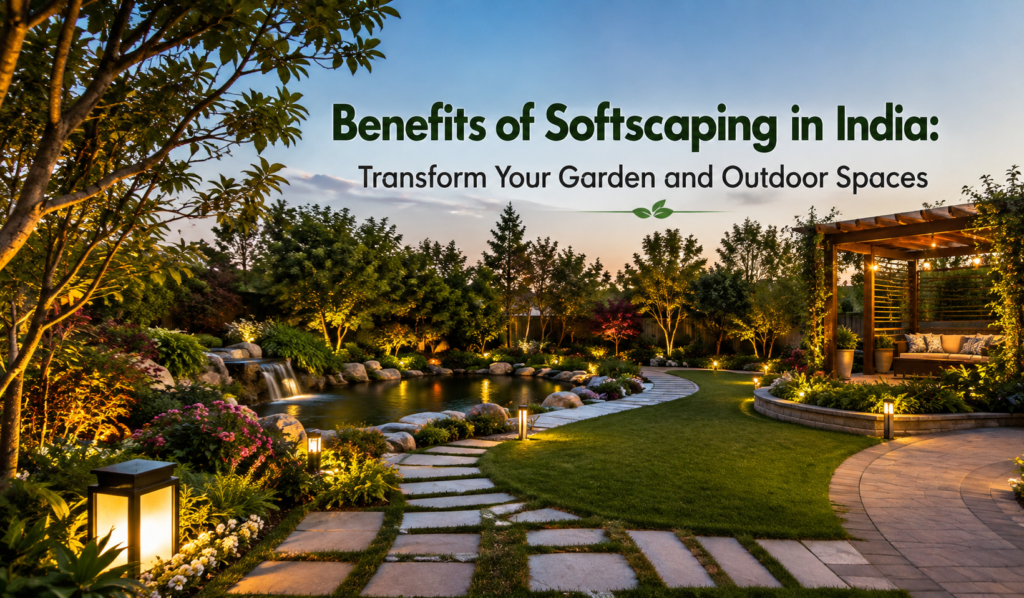
A beautiful outdoor space is more than just a collection of plants. The right combination of greenery, flowers, trees, lawns, and carefully planned planting can completely transform the appearance and atmosphere of a property. This is where softscaping in India plays an important role. From residential gardens and balconies to commercial landscapes and public spaces, softscaping helps create greener, healthier, and more attractive environments.
Unlike hardscaping, which focuses on elements such as pathways, walls, patios, and paving, softscaping focuses primarily on living and natural elements. Let’s explore the major benefits of softscaping and why it is becoming an important part of modern garden design in India.
What Is Softscaping?
Softscaping refers to the use of living and natural elements in landscape design. These can include trees, shrubs, flowering plants, ornamental grasses, ground covers, lawns, climbers, and other types of vegetation.
A well-planned softscape considers factors such as sunlight, soil, climate, water availability, plant growth, and maintenance requirements. This helps create an outdoor space that looks attractive while remaining practical and sustainable.
1. Enhances the Beauty of Your Garden
One of the biggest benefits of softscaping is its ability to improve the visual appeal of outdoor spaces. Different colors, textures, heights, and shapes of plants can be combined to create an interesting and balanced landscape.
Flowering plants can add seasonal color, while trees and shrubs provide structure and greenery. A well-maintained lawn can further enhance the overall appearance of a garden.
2. Helps Create Cooler Outdoor Spaces
India experiences warm temperatures across many regions, making shade and greenery particularly valuable. Trees and dense vegetation can provide natural shade around homes, offices, pathways, and recreational areas.
Strategically planted trees can make outdoor spaces more comfortable while creating a pleasant environment for relaxation and social activities.
3. Supports a Healthier Environment
Plants play an important role in maintaining healthier outdoor environments. Trees and other vegetation contribute to greenery, provide habitats for birds and insects, and can support local biodiversity.
Using a variety of suitable plants in a landscape can create a more natural ecosystem and make gardens more attractive to pollinators and wildlife.
4. Improves Outdoor Living
Modern gardens are increasingly being used as extensions of indoor living spaces. Softscaping can make patios, terraces, lawns, balconies, and outdoor seating areas feel more inviting.
Combining comfortable outdoor areas with flowering plants, trees, shrubs, and greenery can create a peaceful space for family gatherings, relaxation, morning walks, or entertaining guests.
5. Adds Privacy Naturally
Softscaping can also provide natural privacy. Tall trees, dense shrubs, hedges, and screening plants can be strategically placed around boundaries to create a greener alternative to conventional privacy solutions.
This approach can help separate different areas of a property while maintaining a natural and attractive appearance.
6. Supports Sustainable Landscaping
Sustainability is becoming increasingly important in Indian garden design. Selecting plants according to the local climate, soil conditions, and water availability can help reduce maintenance requirements.
Climate-appropriate and low-maintenance plants can be incorporated into landscapes to make better use of available resources. Efficient irrigation combined with thoughtful plant selection can further support sustainable garden management.
7. Increases the Appeal of Residential and Commercial Properties
A well-designed landscape can create a strong first impression. Green entrances, attractive lawns, flowering beds, and carefully selected trees can enhance residential properties, hotels, offices, educational institutions, and commercial spaces.
For businesses, an attractive landscape can also contribute to a welcoming atmosphere for customers, visitors, and employees.
8. Creates Flexible Garden Design Options
One of the advantages of softscaping is its versatility. It can be adapted to gardens of almost any size. Small spaces can use planters, vertical greenery, shrubs, and compact trees, while larger properties can incorporate lawns, tree-lined pathways, flowering borders, and layered planting.
This flexibility makes softscaping in India suitable for everything from urban balconies to large landscape projects.
Choosing the Right Softscape Plants
Choosing the right plants is essential for creating a successful landscape. Consider the local climate, sunlight exposure, soil type, available space, water requirements, and expected maintenance before selecting plants.
A professional nursery such as Anuj Nursery can help homeowners and landscape planners explore suitable trees, plants, shrubs, and other greenery for different outdoor requirements.
Conclusion
The benefits of softscaping in India go far beyond making a garden look beautiful. Softscaping can improve outdoor comfort, support biodiversity, create privacy, enhance property appeal, and contribute to more sustainable landscapes.
Whether you are planning a new garden or upgrading an existing outdoor space, carefully selected plants and thoughtful landscape planning can turn an ordinary area into a vibrant and welcoming environment. With the right combination of trees, shrubs, flowers, lawns, and greenery, your outdoor space can become both beautiful and beneficial for years to come.
AEO FAQs
Q1. What are the main benefits of softscaping?
The main benefits include improved garden aesthetics, natural shade, biodiversity support, privacy, outdoor comfort, sustainability, and enhanced property appeal.
Q2. What is included in softscaping?
Softscaping includes living elements such as trees, shrubs, flowering plants, lawns, grasses, climbers, ground covers, and other vegetation.
Q3. Is softscaping suitable for Indian gardens?
Yes. Softscaping can be adapted to different Indian climates by selecting plants according to local temperature, soil, sunlight, and water conditions.
Q4. How can I make my softscape garden low-maintenance?
Choose climate-suitable plants, use efficient irrigation, plan appropriate plant spacing, and select species that match the available sunlight and soil conditions.