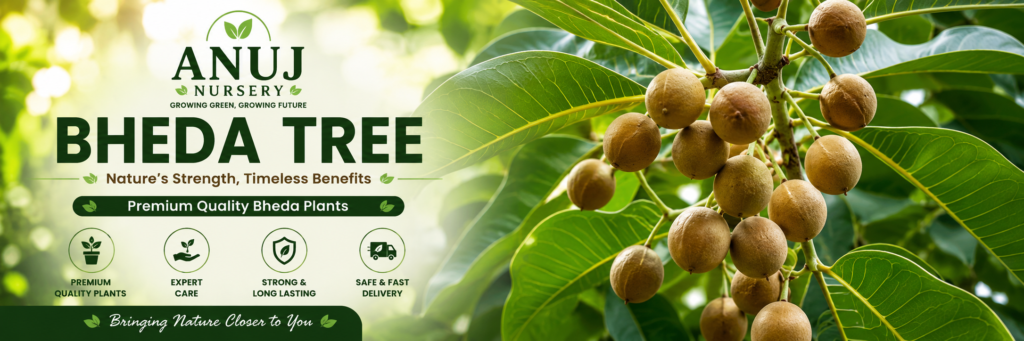
The Bheda Tree (Terminalia bellirica) is a large, valuable tree native to the Indian subcontinent. It is commonly known by names such as Baheda, Bibhitaki, Vibhitaki, and Beleric Myrobalan. The tree is appreciated for its attractive appearance, ecological value, timber, fruits, and long-standing traditional importance in India.
For gardeners, farmers, and plant enthusiasts, growing a Bheda Tree can be a rewarding long-term project. Because it can develop into a large tree, it is best suited to farms, large gardens, plantations, parks, and spacious landscapes.
This complete guide explains Bheda Tree care, benefits, sunlight, watering, soil, fertilizer, pruning, planting, and maintenance tips in a simple and user-friendly way.
What is a Bheda Tree?
The scientific name of Bheda Tree is Terminalia bellirica. It belongs to the Combretaceae family and is widely distributed across parts of South and Southeast Asia.
Bheda is a deciduous tree that can grow to a considerable size under suitable environmental conditions. Its broad canopy makes it useful for providing shade and adding greenery to large outdoor spaces.
The tree produces characteristic fruits that have been traditionally valued in Indian culture and traditional practices. The fruits are also an important food source for some wildlife.
Benefits of Growing Bheda Tree
1. Valuable Native Tree
Bheda is an important tree species of the Indian subcontinent and can contribute to native and naturalized landscapes.
2. Provides Shade
A mature Bheda Tree can develop a broad canopy, making it useful for shade in farms, parks, and large outdoor areas.
3. Traditional Importance
Bheda fruit, also known as Bibhitaki, has a long history of use in traditional Indian systems. Traditional use should not be confused with proven medical treatment, and the fruit should not be used as a substitute for professional medical advice.
4. Supports Biodiversity
The tree provides habitat, shelter, and food resources for various birds, insects, and other organisms.
5. Attractive Landscape Tree
Its large structure, foliage, and natural growth form can add visual appeal to spacious landscapes.
6. Long-Term Environmental Value
Like other large trees, Bheda contributes to greenery and can support soil, habitat, and local ecosystem functions.
Bheda Tree Care Guide
Sunlight Requirements
Bheda generally grows well in full sunlight. Select an open planting location where the tree can receive several hours of direct sunlight every day.
Good sunlight supports healthy foliage and strong overall development.
Young nursery plants may require gradual acclimatization if they have been grown in protected conditions.
Watering Requirements
Young Bheda plants require regular watering during establishment. Water deeply when the upper layer of soil begins to dry.
Once established, the tree can tolerate periods of relatively dry conditions. However, additional irrigation may be helpful during prolonged hot and dry weather.
Avoid overwatering and standing water because poor drainage can cause root problems.
Soil Requirements
Bheda can adapt to different soil types but generally performs well in fertile, well-drained soil.
Before planting, improve poor soil with mature compost or well-decomposed organic manure. Avoid areas where water remains stagnant after rainfall.
Good drainage is particularly important for young trees.
Fertilizer Requirements
Young Bheda plants can benefit from organic compost or well-decomposed manure around the root zone.
If additional fertilizer is needed, use a balanced fertilizer according to soil conditions and the manufacturer’s instructions.
Avoid applying excessive fertilizer close to the trunk.
Pruning Requirements
Bheda generally needs limited pruning once established. Remove dead, damaged, diseased, or crossing branches when necessary.
Young trees can receive light formative pruning to encourage a strong and balanced structure.
Avoid unnecessary heavy pruning.
Best Places to Plant Bheda Tree
Because Bheda can become a large tree, choose a location with sufficient space for its mature canopy and root system.
It can be suitable for:
- Farms
- Farmhouses
- Large gardens
- Parks
- Plantations
- Institutional campuses
- Roadside landscapes
- Ecological planting projects
- Large outdoor spaces
Avoid planting large trees too close to buildings, electrical wires, narrow paths, or underground utilities.
Common Bheda Tree Problems
Yellow Leaves
Yellowing may occur because of overwatering, poor drainage, nutrient deficiencies, transplant stress, or natural seasonal changes.
Check soil moisture and drainage before applying fertilizer.
Slow Growth
Young trees can initially grow slowly while establishing their root systems. Poor sunlight, compacted soil, insufficient water, or transplant shock can also affect growth.
Leaf Damage
Inspect foliage regularly for insects, spots, discoloration, or other signs of stress. Proper spacing, sunlight, and watering can help maintain plant health.
Frequently Asked Questions
What is the botanical name of Bheda Tree?
The botanical name of Bheda Tree is Terminalia bellirica.
What is Bheda also called?
Bheda is commonly known as Baheda, Bibhitaki, Vibhitaki, and Beleric Myrobalan.
How much sunlight does Bheda Tree need?
Bheda generally prefers full sunlight for healthy growth.
How often should I water Bheda Tree?
Young plants require regular watering during establishment. Established trees generally need less irrigation but may benefit from additional water during prolonged dry periods.
Can Bheda Tree grow in India?
Yes. Terminalia bellirica is native to the Indian subcontinent and grows naturally in many suitable regions.
Can Bheda Tree be grown in a home garden?
Yes, provided there is enough space. Because Bheda can become a large tree, it is not ideal for very small gardens.
Conclusion
The Bheda Tree (Terminalia bellirica) is a valuable and attractive tree with ecological, cultural, traditional, and landscape importance. Its broad canopy and ability to grow into a large tree make it especially suitable for farms, plantations, parks, farmhouses, and spacious gardens.
For healthy growth, provide full sunlight, well-drained soil, appropriate watering, organic nutrition, and adequate growing space. Young plants need more attention during establishment, while mature trees can become relatively resilient under suitable conditions.
If you are looking to buy a healthy Bheda Plant online in India, visit AnujNursery.in and explore the available tree and plant collection for your garden, farmhouse, farm, plantation, or landscaping project.
Choose a healthy Terminalia bellirica plant suited to your local conditions and provide proper care from planting onwards.
Order your Bheda Plant from Anuj Nursery today and add a valuable native Indian tree to your green space!