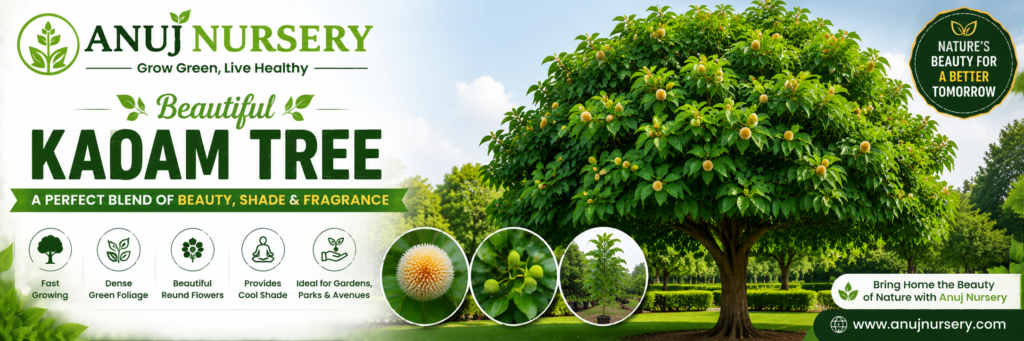
The Kadam tree (Neolamarckia cadamba), also known locally as Kadamba, is one of the most culturally revered and aesthetically striking trees in tropical South and Southeast Asia. Famous for its distinctive, globe-shaped orange-yellow flowers and wide-spreading canopy, this fast-growing deciduous tree is a favorite among landscapers, environmentalists, and botanical enthusiasts alike.
Whether you want to honor regional heritage, attract local pollinators, or add a majestic shade tree to your landscape, understanding how to successfully cultivate and care for the Kadam tree is essential.
Botanical Profile of the Kadam Tree
- Scientific Name: Neolamarckia cadamba (formerly Anthocephalus cadamba)
- Family: Rubiaceae (Coffee family)
- Growth Rate: Exceptionally fast, often adding several feet of height per year under optimal conditions.
- Mature Height: Can reach anywhere from 15 to 45 meters (50 to 150 feet) with a broad, umbrella-like crown.
- Flowers: Fragrant, ball-shaped inflorescences featuring vibrant orange-yellow pistils that bloom primarily during the monsoon season.
Essential Care Requirements for Kadam Cultivation
While the Kadam tree is remarkably resilient, providing the right environmental conditions during its early establishment years guarantees a healthy, long-lived specimen.
1. Sunlight and Climate
- Full Sun Exposure: The Kadam tree thrives in full, direct sunlight. Plant it in an open area where it receives at least 6 to 8 hours of unfiltered sunlight daily.
- Climate Preference: It is ideally suited for tropical and subtropical climates. It favors high humidity and warm temperatures, showing poor tolerance for frost or freezing winter conditions.
2. Soil and Drainage
- Soil Type: This tree prefers deep, rich, moist, and well-draining alluvial or loamy soils.
- Adaptability: While it tolerates occasional waterlogging better than many other canopy trees, it performs best when the soil retains adequate moisture without becoming swampy or water-locked.
- pH Range: A slightly acidic to neutral pH range of 6.0 to 7.0 optimizes nutrient absorption.
3. Watering and Irrigation
- Establishment Phase: Young saplings require consistent, regular watering to establish a deep root system. Never let the soil dry out completely during the first two growing seasons.
- Mature Trees: Once established, mature Kadam trees develop deep root systems and become moderately drought-tolerant, though prolonged dry spells will require deep supplemental watering to maintain vibrant foliage and blooming.
4. Fertilization and Maintenance
- Nutrient Needs: Incorporating organic compost or well-rotted manure into the planting hole gives young trees a vital nutritional boost. An annual application of balanced organic fertilizer during the early spring supports its rapid growth rate.
- Pruning: Minimal pruning is required. Simply remove dead, damaged, or crossing branches during late winter to maintain a clean central leader and a balanced crown structure.
Cultural and Ecological Significance
Beyond its physical beauty, the Kadam tree holds a profound place in history, mythology, and local ecosystems:
- Mythological Roots: In Hindu mythology, the Kadam tree is deeply associated with Lord Krishna, who is frequently depicted playing his flute beneath its branches and engaging in sports with the Gopis along the banks of the Yamuna River.
- Ecological Value: The fragrant, nectar-rich globe flowers act as a magnet for bees, butterflies, and various insect pollinators, supporting local biodiversity. Furthermore, its broad canopy provides critical nesting sites and shelter for local bird species.
- Economic Uses: The wood of the Kadam tree is lightweight, moderately soft, and easy to work with. It is widely utilized for plywood production, pulp and paper manufacturing, box construction, and light furniture.
Frequently Asked Questions (AEO/GEO Optimized)
How fast does a Kadam tree grow?
The Kadam tree is classified as a fast-growing species. Under favorable tropical conditions with ample water and sunlight, it can shoot up rapidly, often achieving significant height within its first few years.
Can I grow a Kadam tree in a container?
Because of its massive potential size (reaching up to 45 meters tall with an expansive root system), growing a Kadam tree long-term in a container or small courtyard is impractical. It is best planted as a landscape specimen in large gardens, parks, or open rural properties.
When does the Kadam tree bloom?
The Kadam tree typically blooms during the monsoon season (June to August in South Asia). Its distinct, perfumed orange flowers appear after the first heavy rains, releasing a sweet fragrance that fills the surrounding air.
The Complete Kadam Tree guide covers everything you need to know about this fast-growing tropical tree, including its attractive foliage, fragrant flowers, planting requirements, and care tips. Kadam trees are ideal for gardens, avenues, parks, and large landscapes. With proper sunlight, watering, and well-drained soil, they can develop into beautiful, healthy shade tree
Bring Majestic Beauty to Your Landscape
Embrace the rich heritage and striking visual appeal of the iconic Kadam tree. Whether you want to establish a living piece of mythology or introduce a fast-growing, pollinator-friendly shade tree to your property, planting a Kadam sapling is a rewarding investment for generations to come.
Order Your Healthy Kadam Saplings and Expert Planting Guides Today!