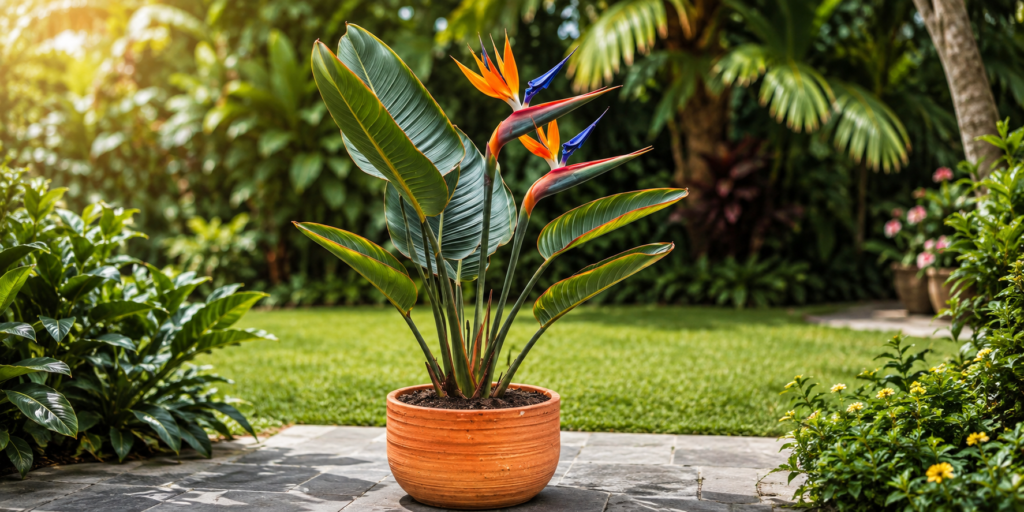
The Bird of Paradise Plant (Strelitzia) is a spectacular tropical ornamental plant known for its large, banana-like leaves and distinctive bird-shaped flowers. It is an excellent choice for adding a lush, tropical appearance to home gardens, patios, balconies, terraces, entrances, and suitable indoor spaces.
With proper sunlight, watering, soil, humidity, fertilizer, and regular maintenance, Bird of Paradise can develop into an impressive statement plant. However, it is important to remember that flowering usually requires a mature plant and suitable growing conditions.
This complete guide covers Bird of Paradise plant care, benefits, sunlight, watering, soil, fertilizer, pruning, repotting, flowering, common problems, and FAQs.
What Is a Bird of Paradise Plant?
Bird of Paradise belongs to the genus Strelitzia. Its large, upright foliage gives it a strong architectural appearance even when it is not flowering.
The plant is particularly popular in tropical and subtropical landscaping. Depending on the species and growing conditions, it can become considerably larger outdoors, while younger plants can be maintained in containers.
Its dramatic foliage makes it valuable as both a landscape plant and decorative container plant.
Benefits of Growing Bird of Paradise
1. Stunning Tropical Appearance
Large green leaves instantly create a lush, tropical look and can become a focal point in a garden or patio.
2. Attractive Ornamental Flowers
Mature plants can produce distinctive flowers that resemble a colorful bird, which gives the plant its popular name.
3. Excellent Landscaping Plant
Bird of Paradise works particularly well around entrances, garden borders, patios, pools, and other suitable outdoor areas.
4. Suitable for Containers
Smaller plants can be grown in large containers, making them useful for terraces, balconies, and bright indoor spaces.
5. Long-Term Garden Appeal
With appropriate care, Bird of Paradise can remain an attractive ornamental plant for many years.
Bird of Paradise Plant Care Guide
Sunlight Requirements
Bright light is essential for healthy Bird of Paradise growth.
Outdoor plants generally perform well in a sunny location, although plants moved from shade should be gradually acclimated to stronger sunlight.
Indoor plants should be placed near a bright window where they receive plenty of natural light.
Insufficient light can result in slow growth, smaller leaves, and reduced flowering potential.
Watering Requirements
Water your Bird of Paradise when the upper portion of the soil has started to dry.
During hot weather and active growth, the plant may require more frequent watering. In cooler or less active periods, watering can be reduced.
Avoid keeping the soil constantly saturated. Good drainage is critical because prolonged waterlogging can cause root problems.
Soil Requirements
Bird of Paradise prefers fertile, well-draining soil.
For container growing, use a quality potting mix that retains some moisture while allowing excess water to drain quickly.
Always choose a container with drainage holes.
Fertilizer Requirements
Feed Bird of Paradise during active growth with a balanced fertilizer according to the manufacturer’s instructions.
Regular but moderate feeding can support healthy foliage development.
Avoid excessive fertilizer, as too much salt accumulation can damage roots and leaf edges.
Pruning and Maintenance
Bird of Paradise generally requires limited pruning.
Remove dead, yellow, badly damaged, or diseased leaves using clean pruning shears.
Brown leaf edges can sometimes result from environmental stress rather than disease, so identify the cause before removing large amounts of healthy foliage.
Wipe indoor leaves occasionally to remove dust and improve their appearance.
Repotting Bird of Paradise
Container-grown plants may eventually become root-bound.
Repot when roots are excessively crowded or growth has slowed because the container has become too small. Move the plant into a slightly larger container with fresh, well-draining growing medium.
Avoid unnecessarily large pots because excess soil can retain moisture for too long.
How to Encourage Bird of Paradise Flowers
Flowering depends on factors including plant maturity, species, sunlight, nutrition, climate, and overall health.
For better flowering potential:
- Provide plenty of bright light.
- Grow the plant in suitable temperatures.
- Avoid excessive watering.
- Provide balanced nutrition.
- Give mature plants adequate root space.
- Avoid excessive pruning.
- Be patient with young plants.
A young Bird of Paradise may produce beautiful foliage for years before it reaches flowering maturity.
Common Bird of Paradise Problems
Brown Leaf Edges
Brown edges can result from inconsistent watering, low humidity, excessive fertilizer salts, strong environmental stress, or damaged roots.
Yellow Leaves
Yellowing may be associated with overwatering, poor drainage, nutrient problems, insufficient light, or natural aging.
Splitting Leaves
Leaf splitting can occur naturally, particularly outdoors where wind and weather affect the large leaves. It does not always indicate a disease.
No Flowers
A young plant may simply not be mature enough. Insufficient light, unsuitable climate, inadequate nutrition, or other environmental stress can also reduce flowering.
Frequently Asked Questions
How much sunlight does Bird of Paradise need?
Bird of Paradise generally prefers bright light and several hours of direct sunlight, when properly acclimated. Indoor plants should be placed near a bright window.
How often should I water Bird of Paradise?
Water when the upper soil layer begins to dry, adjusting frequency according to temperature, pot size, soil, and season.
Can Bird of Paradise grow indoors?
Yes. Younger plants can grow indoors successfully when provided with bright natural light, adequate space, suitable humidity, and good drainage.
Why are my Bird of Paradise leaves turning brown?
Possible causes include inconsistent watering, dry conditions, fertilizer salt buildup, root problems, excessive environmental stress, or natural leaf damage.
Why is my Bird of Paradise not flowering?
The plant may be too young. Lack of sufficient light, unsuitable growing conditions, or inadequate nutrition can also limit flowering.
Conclusion
The Bird of Paradise Plant (Strelitzia) is a stunning ornamental choice for gardeners who want bold tropical foliage and, with maturity and suitable conditions, spectacular flowers.
For healthy growth, focus on the essentials: bright sunlight, well-draining soil, appropriate watering, balanced fertilizer, adequate space, and regular maintenance.
If you’re looking to buy a healthy Bird of Paradise Plant online in India, explore the ornamental plant collection at AnujNursery.in.
Bring a tropical statement to your garden or home—order your Bird of Paradise Plant from Anuj Nursery today!