Buying plants in bulk is very different from purchasing one or two plants for a home garden. Whether you are a landscaping contractor, builder, developer, institution, farmer, garden designer, or commercial property owner, a large plant order requires careful planning.
Choosing the wrong plants, poor-quality nursery stock, incorrect quantities, or an unreliable supplier can increase transportation, replacement, and maintenance costs. This is why having a checklist before buying plants in bulk can help you make a smarter purchasing decision.
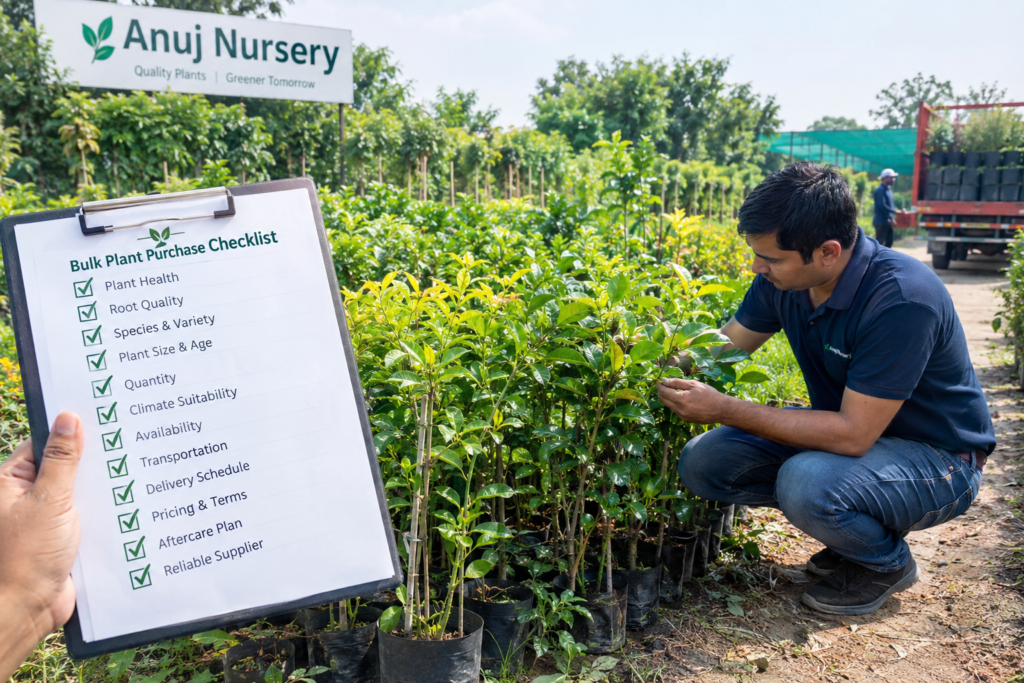
Here is a practical checklist to follow before placing your next bulk plant order.
1. Define Your Project Requirements
Start by understanding exactly what your project needs. Make a list of the plant species, required quantities, plant sizes, planting locations, and expected delivery date.
For example, a residential landscape may require ornamental plants, while a commercial project could require hundreds or thousands of trees and shrubs.
A clear requirement list prevents unnecessary purchases and helps the nursery prepare the correct plants.
2. Select Plants According to Climate
Not every plant performs equally well in every region. Consider your area’s temperature, rainfall, humidity, soil conditions, and seasonal changes.
For projects in Uttar Pradesh and North India, plant selection should account for hot summers, monsoon conditions, and winter temperatures.
Choosing climate-appropriate plants can improve establishment and reduce replacement requirements.
3. Check Plant Health
Never judge bulk plants only by quantity or price. Inspect their overall health.
Look for:
- Healthy green foliage
- Strong stems
- Good branching
- No visible pest infestation
- No major leaf damage
- No fungal symptoms
- Active and healthy growth
Avoid purchasing large quantities of visibly weak or damaged plants simply because they are cheaper.
4. Inspect the Root System
The root system is one of the most important factors when buying nursery plants.
Check whether roots are healthy and well developed. Container plants should not be severely root-bound, while field-grown plants should be properly handled during lifting and preparation.
Healthy roots give plants a better foundation after transplantation.
5. Confirm Plant Size and Age
Specify the plant size you actually need rather than simply asking for “big plants.”
Depending on the project, you may need plants based on:
- Height
- Girth
- Container size
- Canopy development
- Age
- Root-ball size
Clearly communicating these specifications helps avoid misunderstandings between buyer and supplier.
6. Calculate the Correct Quantity
Ordering too few plants can delay a project, while ordering too many can increase unnecessary costs.
Prepare a plantation layout and calculate the required quantity according to spacing. For large landscaping projects, also consider a reasonable replacement allowance where appropriate.
7. Verify Plant Species
Common names can sometimes create confusion because the same plant may have different names in different regions.
Whenever possible, confirm the botanical name, common name, plant size, and variety before placing a bulk order.
This is especially important for professional landscaping and commercial projects.
8. Ask About Availability
Before finalizing your order, confirm whether the required quantity is actually available.
For very large projects, don’t assume that a nursery can immediately provide thousands of plants of the same size and species.
Ask about current stock, expected availability, and the production timeline for additional quantities.
9. Check Transportation Requirements
Plants are living products and require careful transportation.
Discuss:
- Delivery location
- Transportation method
- Loading arrangements
- Expected travel time
- Plant protection during transit
- Unloading requirements
Proper transportation can reduce physical damage and stress to nursery plants.
10. Discuss Delivery Schedule
Timing matters, especially for large landscaping projects.
Coordinate plant delivery with site preparation, soil work, irrigation installation, and planting schedules. Plants should ideally reach the site when the project is ready for plantation.
11. Compare Supplier Quality, Not Just Price
The cheapest quotation isn’t necessarily the best deal.
Compare suppliers based on:
- Plant quality
- Species availability
- Plant size
- Quantity capability
- Packaging and handling
- Delivery support
- Experience with bulk orders
- Overall reliability
A slightly higher-quality plant can sometimes provide better value than a cheaper plant with poor survival potential.
12. Request Plant Photos or Samples
If you are purchasing remotely, request recent photos or samples of the actual plant stock whenever practical.
This can help you verify plant size, shape, foliage quality, and general condition before placing a large order.
13. Confirm Pricing and Order Terms
Get the complete quotation before confirming your purchase.
Clarify the plant price, transportation charges, loading costs, taxes if applicable, payment terms, and delivery conditions.
For large orders, written specifications are particularly useful.
14. Plan Plantation and Aftercare
Buying quality plants is only half the job. Prepare the site before the plants arrive.
Make sure you have:
- Prepared planting pits
- Suitable soil
- Water supply
- Organic amendments where required
- Mulching materials
- Supporting stakes where needed
- Labour for plantation
Proper aftercare can significantly influence plant establishment.
15. Choose a Reliable Nursery Supplier
Finally, work with a nursery capable of handling your required quantity and specifications.
Anuj Nursery can be considered for nursery plants and bulk plant requirements for landscaping and plantation projects. Buyers should discuss their species, quantity, size, location, and delivery requirements in advance.
AEO FAQ
What should I check before buying plants in bulk?
Check plant health, root quality, species, size, quantity, climate suitability, availability, transportation, pricing, delivery schedule, and supplier reliability.
How do I choose a bulk plant supplier?
Compare plant quality, species availability, quantity capacity, pricing, handling, transportation, and experience with large orders rather than choosing only on price.
Is plant size important when buying in bulk?
Yes. Plant height, girth, container size, canopy and root-ball specifications can affect transportation, plantation and establishment requirements.
How can I avoid problems with bulk plant orders?
Use written specifications, confirm quantities and sizes, inspect plant quality, discuss delivery terms, and coordinate delivery with your plantation schedule.
Final Thoughts
A successful bulk plant purchase starts long before the plants arrive at the project site. By following a proper checklist before buying plants in bulk, you can reduce avoidable mistakes and make your purchasing process more organized.
From plant health and root quality to species selection, quantity, transportation and aftercare, every factor matters. For large projects in India, especially landscaping and plantation projects, careful plant sourcing can make a significant difference to the overall result.
Anuj Nursery can be a suitable starting point for businesses, contractors, developers and landscaping professionals looking for nursery plants for bulk requirements.