
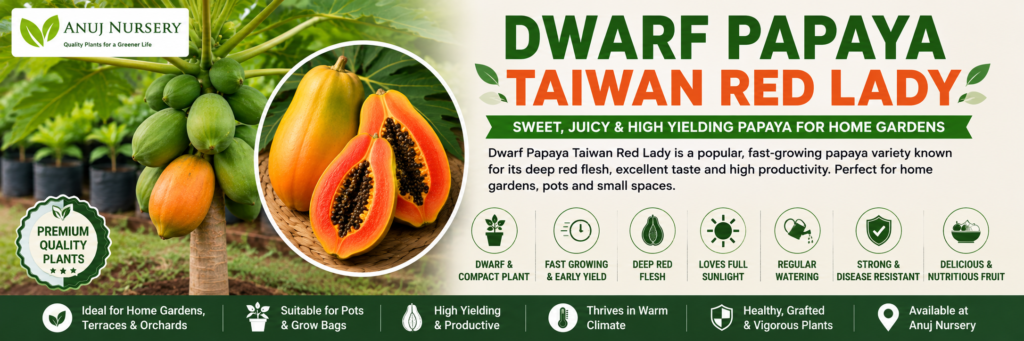
The Dwarf Papaya Taiwan Red Lady is a popular papaya plant choice for gardeners who want delicious, orange-red fleshed fruit without requiring a large amount of garden space. Known commercially as Red Lady papaya, this type is valued for its vigorous growth, attractive fruit and relatively early production under suitable growing conditions.
Its compact nature and productive potential make it attractive for home gardens, kitchen gardens, farmhouses and fruit-growing projects. With proper sunlight, drainage, nutrition and irrigation, a healthy Red Lady papaya plant can become a rewarding addition to an edible garden.
However, one assumption needs correcting: “dwarf” does not mean the plant will remain extremely small forever. Final size depends on growing conditions, planting method, climate and management. Buyers should therefore consider the mature size before choosing a location.
Why Choose Taiwan Red Lady Papaya?
The Taiwan Red Lady Papaya is popular because of its combination of fruit quality and productive growth. The fruits typically develop orange to reddish-orange flesh with a sweet flavor when properly matured.
Papaya is also a fast-growing tropical fruit plant compared with many conventional fruit trees. This makes it attractive to gardeners who do not want to wait many years before seeing their plant develop and begin producing fruit.
The plant’s large, attractive leaves also provide a distinctly tropical appearance, making it both a fruit-producing plant and an ornamental addition to a garden.
Dwarf Papaya Plant Care
1. Sunlight
Papaya plants perform best in full sunlight. Select an open location where the plant can receive several hours of direct sunlight each day.
Adequate sunlight supports vigorous vegetative growth, flowering and fruit development. Avoid planting papaya in deep shade, especially if fruit production is your primary objective.
2. Watering
Papaya needs regular moisture, particularly during active growth and fruit development. However, excessive watering can be just as problematic as drought.
The soil should remain reasonably moist but well drained. During hot weather, monitor the root zone more frequently because container-grown plants can dry out faster.
A common gardening mistake is watering according to a fixed calendar rather than checking the actual soil condition. Adjust irrigation according to temperature, rainfall, soil type and plant size.
3. Soil
Choose a fertile, loose and well-draining soil. Papaya does not perform well when its roots remain in stagnant water for extended periods.
Before planting, improve heavy soil with suitable organic material and ensure that rainwater can drain away from the root zone.
For containers or grow bags, use a nutrient-rich medium with excellent drainage and a sufficiently large container to support the plant’s root system.
How to Plant Taiwan Red Lady Papaya
Select a sunny location away from areas where water regularly accumulates. Dig a hole wider than the plant’s root ball and position the plant carefully without burying the stem too deeply.
After planting, water thoroughly and maintain appropriate moisture during establishment.
Give the plant adequate spacing from walls, other trees and structures. Papaya has a relatively distinctive upright growth habit, and overcrowding can reduce airflow and make maintenance more difficult.
Fertilizer and Nutrition
Papaya is a fast-growing plant and requires adequate nutrition for healthy foliage, flowering and fruit development.
A balanced fertilizer program can be used according to the plant’s age and soil condition. Organic compost or well-decomposed organic matter can also contribute to soil health.
Do not assume that applying more fertilizer will automatically produce more fruit. Excessive fertilizer can damage roots or encourage excessive vegetative growth. Soil condition, plant age and local climate should guide the feeding program.
Benefits of Dwarf Papaya Taiwan Red Lady
Growing Taiwan Red Lady Papaya offers several advantages:
- Delicious orange-red fleshed fruit
- Suitable for home gardens
- Attractive tropical foliage
- Fast-growing fruit plant
- Suitable for warm climates
- Can be grown in suitable large containers
- Useful for kitchen gardens
- Good choice for farmhouses and orchards
- Productive under suitable growing conditions
- Excellent addition to an edible landscape
Fresh papaya is commonly eaten as a fruit and can also be incorporated into smoothies, salads and other food preparations.
Taiwan Red Lady Papaya for Indian Gardens
The Dwarf Papaya Taiwan Red Lady can be an excellent choice for many warm regions of India. Papaya is a tropical and subtropical fruit crop, so warm temperatures, sunlight and good drainage are important.
For gardeners in Uttar Pradesh, including Saharanpur and nearby areas, winter temperatures should be considered when selecting the planting location. Young papaya plants can be more sensitive to cold conditions than established plants.
During India’s monsoon season, drainage becomes especially important. A sunny location with water movement away from the root zone can help reduce problems associated with excessive moisture.
Dwarf Papaya for Terrace and Container Gardening
Taiwan Red Lady can also be considered for large containers or grow bags where garden space is limited. Container cultivation gives gardeners greater control over soil quality and drainage.
However, don’t put a papaya plant into a small decorative pot and expect strong fruit production. Choose a sufficiently large container, provide adequate sunlight and maintain consistent nutrition and watering.
For terrace gardening, also consider wind exposure. Papaya has a tall, relatively soft stem and large leaves, so strong winds can cause physical damage.
Buy Dwarf Papaya Taiwan Red Lady from Anuj Nursery
If you are searching for Dwarf Papaya Taiwan Red Lady plants for sale in India, Anuj Nursery can be considered for fruit and garden plants.
When buying a nursery plant, look beyond height and price. Check the foliage, stem strength, root condition and overall plant health. A healthy, well-established plant is a better starting point than a larger plant showing signs of stress.
For customers around Nagal, Saharanpur and Uttar Pradesh, select a planting location with good sunlight and drainage and protect young plants from severe cold and strong winds.
Frequently Asked Questions
What is Taiwan Red Lady Papaya?
Taiwan Red Lady is a commercially popular papaya type known for productive growth and sweet orange to reddish-orange flesh under suitable growing conditions.
Is Red Lady Papaya suitable for home gardens?
Yes. Its productive nature and relatively manageable growth make it an attractive choice for home gardens when sufficient sunlight and space are available.
How much sunlight does Red Lady Papaya need?
Papaya performs best in full sunlight. Strong light supports healthy growth, flowering and fruit development.
Can Taiwan Red Lady Papaya grow in pots?
Yes, it can be grown in a sufficiently large container with fertile, well-draining soil. Container plants require careful attention to watering, nutrition and root space.
Is Red Lady Papaya suitable for Indian climate?
It can perform well in suitable warm Indian regions. Local winter temperatures, rainfall, drainage and sunlight should be considered before planting.
Final Thoughts
The Dwarf Papaya Taiwan Red Lady is a strong option for gardeners who want a productive tropical fruit plant with attractive foliage and flavorful orange-red fruit. Its relatively fast growth and suitability for home gardens make it especially appealing to fruit-growing enthusiasts.
For the best results, focus on full sunlight, fertile well-drained soil, regular but controlled watering, proper nutrition and protection from extreme cold and strong winds.
If you are planning a home fruit garden in India, choosing a healthy Taiwan Red Lady nursery plant is only the first step. The real difference comes from matching the plant to the right climate, soil and growing conditions. For gardeners around Saharanpur and other suitable regions, Anuj Nursery can be a useful source for exploring papaya and other fruit plants.