
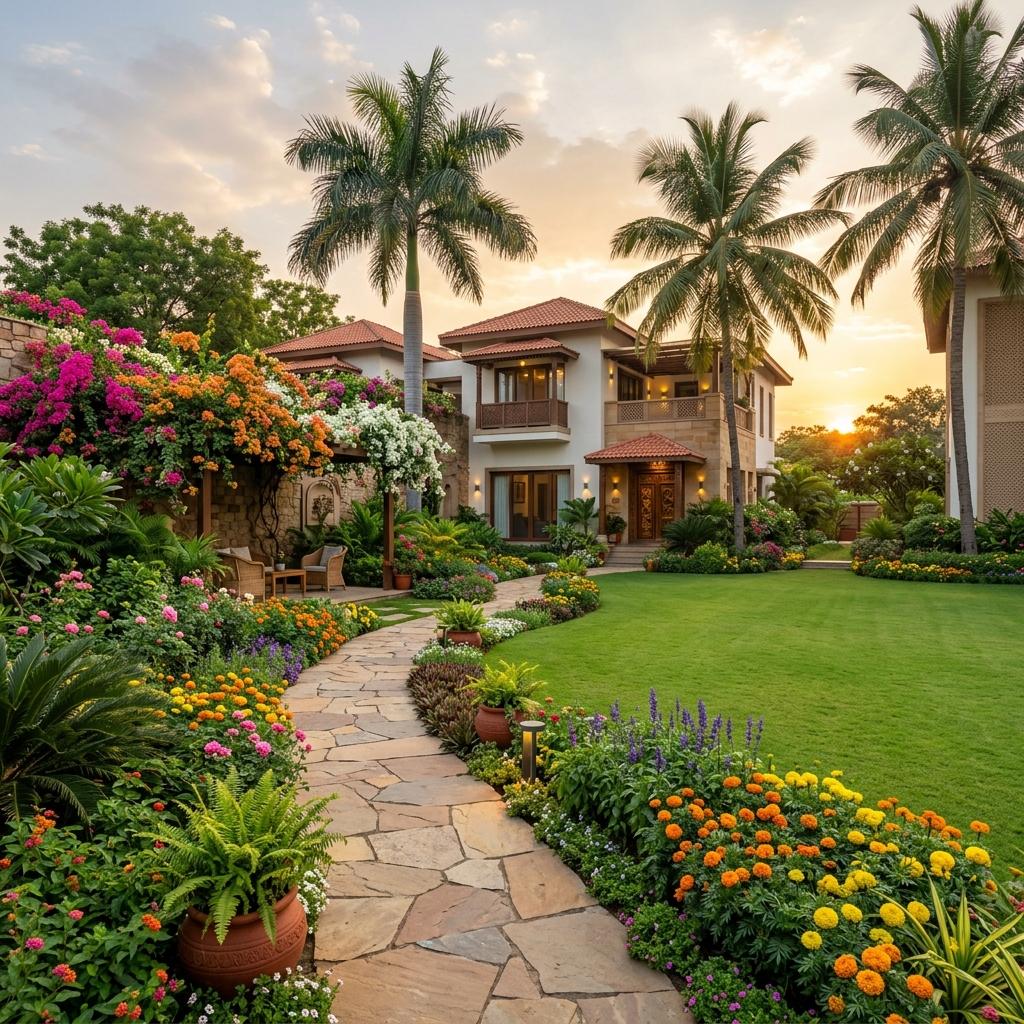
A beautiful garden can transform an ordinary house into a peaceful, attractive, and refreshing living space. Whether you have a large front lawn, a small courtyard, a rooftop, or a narrow space beside your house, the right garden design can help you make the most of your outdoor area.
For homeowners in Saharanpur, Uttar Pradesh, garden planning should consider the local climate, available sunlight, soil conditions, water requirements, and the space available for planting. Summers can be hot, winters can be cool, and monsoon rainfall can affect drainage and plant growth. Choosing suitable plants and designing the garden carefully can help create a green space that remains attractive throughout the year.
In this guide, Anuj Nursery shares practical garden design ideas for homes in Saharanpur, including modern layouts, flowering plants, lawn designs, vertical gardens, and budget-friendly landscaping solutions.
1. Design a Beautiful Front Garden

The front garden is often the first thing visitors notice about your home. A well-planned entrance can improve the overall appearance of your property and create a welcoming atmosphere.
Consider these design ideas:
- Create a small lawn bordered by flowering plants and decorative shrubs.
- Install a stone or concrete pathway leading to the entrance.
- Place attractive planters beside the main gate or entrance.
- Use ornamental trees where sufficient space is available.
- Add low-maintenance ground-cover plants along the borders.
Plants such as hibiscus, ixora, marigold, and suitable varieties of croton can add colour to the garden. For greenery and structure, consider duranta, dwarf shrubs, or other plants selected according to sunlight and available space.
Tip: Keep pathways clear and avoid planting large trees too close to walls, underground pipes, or foundations.
2. Create a Small Garden for Limited Spaces

You do not need a large plot to enjoy a beautiful garden. Even a small outdoor area can become attractive with thoughtful planning.
For compact gardens, use a simple layout with a few plant varieties rather than overcrowding the space.
Practical ideas include:
- Arrange plants in groups of different heights.
- Use pots and planters along walls to save ground space.
- Select compact shrubs and small ornamental plants.
- Add a narrow pathway to make the area easier to access.
- Keep one open section for seating or everyday use.
Plants such as snake plants, areca palms in suitable conditions, peace lilies in shaded areas, and flowering plants appropriate for the available light can work well in container gardens.
Choose containers with drainage holes, and ensure that water does not collect around the house.
3. Choose Plants According to Saharanpur’s Climate
Plant selection is one of the most important parts of successful garden design. A plant that looks beautiful in a photograph may not thrive in your garden if its sunlight, water, or temperature requirements are unsuitable.
Consider the following options for residential landscaping.
| Plant | Main purpose | General growing preference |
|---|---|---|
| Hibiscus | Colourful flowers | Sun to partial sun |
| Bougainvillea | Decorative flowering climber | Full sun, well-drained soil |
| Marigold | Seasonal colour | Sunny locations |
| Duranta | Hedges and borders | Sun to partial sun |
| Neem | Shade and long-term tree planting | Sunny outdoor areas |
| Bottle palm | Ornamental focal point | Warm conditions and suitable drainage |
| Snake plant | Low-maintenance foliage | Bright indirect light to partial shade |
Actual performance depends on the plant variety, planting location, soil, and seasonal conditions. For Saharanpur homes, select plants based on your specific site rather than choosing solely by appearance.
4. Add a Green Lawn with Decorative Pathways

A lawn can make a residential garden feel open, fresh, and organised. It is particularly suitable for homes with enough outdoor space for both greenery and movement.
To design a practical lawn:
- Measure the available area before purchasing grass.
- Check whether the location receives sufficient sunlight.
- Prepare the soil and establish proper drainage.
- Choose a suitable lawn grass variety for the local conditions.
- Add stepping stones or a pathway to reduce unnecessary walking on the grass.
Keep in mind that lawns may require regular mowing, watering, and maintenance. If your goal is to reduce water use and upkeep, consider a smaller lawn combined with mulched plant beds, shrubs, and paved sections.
5. Create a Vertical Garden for Small Homes
Vertical gardening is a useful option when floor space is limited. It allows you to introduce greenery along walls, balconies, courtyards, and selected outdoor structures.
You can create a vertical garden using wall-mounted planters, tiered plant stands, or a professionally installed vertical planting system.
Suitable plants depend on the amount of light available. Pothos, spider plants, and certain ferns may work in shaded or bright-indirect-light locations, while sun-loving species are better for exposed outdoor walls.
Before installation, make sure the wall can support the structure and that excess irrigation water can drain safely. Protect the wall from persistent moisture to prevent dampness and damage.
6. Design a Relaxing Backyard Garden

A backyard garden can provide a comfortable place for relaxing, spending time with family, or enjoying the outdoors.
Start by deciding how you want to use the space. You might want a seating corner, a small lawn, a flowering border, or a kitchen garden.
Useful backyard design ideas include:
- Place a bench beneath a suitable shade tree.
- Create a flower bed along the boundary wall.
- Grow herbs such as mint, coriander, and tulsi in accessible containers.
- Use taller plants for privacy where appropriate.
- Install outdoor lighting along pathways if needed.
Leave enough room to move comfortably between different sections. A well-organised backyard does not need dozens of plant varieties; a balanced combination of trees, shrubs, flowering plants, and open space can be more effective.
7. Use Low-Maintenance Garden Design Ideas
Not every homeowner has time for daily garden maintenance. A low-maintenance design can reduce routine work while keeping the garden attractive.
Here are some practical approaches:
- Choose plants that suit the local climate and soil.
- Group plants with similar watering needs.
- Use mulch around suitable planting beds to help retain soil moisture.
- Install efficient irrigation where appropriate.
- Avoid overly complicated lawn shapes and narrow planting strips.
- Select slow-growing shrubs where frequent pruning would be difficult.
Native and locally adapted plants can be useful choices when they suit the garden’s conditions. However, no plant is completely maintenance-free. Even drought-tolerant plants need appropriate watering during establishment.
8. Plan Your Garden According to Your Budget
A beautiful home garden does not always require a large investment. You can develop it in stages to manage costs and avoid unnecessary purchases.
| Budget-friendly option | How it helps |
|---|---|
| Start with a small planting area | Reduces initial plant and preparation costs |
| Use locally suitable plants | Can improve plant survival |
| Choose simple pathways | Avoids complex construction |
| Combine pots with ground planting | Makes use of existing space |
| Plant trees in suitable locations early | Allows them to establish and grow over time |
| Expand gradually | Spreads spending across different stages |
Before starting, prepare a simple plan showing the garden dimensions, plant locations, pathways, seating areas, and water source.
For larger projects, consider the cost of soil improvement, drainage, irrigation, plant transportation, labour, and ongoing maintenance—not just the purchase price of plants.
9. Common Garden Design Mistakes to Avoid
Even attractive plants can produce disappointing results when the overall design is poorly planned.
Avoid these common mistakes:
- Planting sun-loving species in deep shade.
- Choosing trees without considering their mature size.
- Placing plants too close together.
- Ignoring drainage and waterlogging.
- Using too many different colours and plant varieties in a small area.
- Installing a lawn where sunlight or water availability is inadequate.
- Forgetting to plan access for watering, pruning, and cleaning.
A good garden design balances beauty, practicality, plant health, and long-term maintenance.
How Anuj Nursery Can Help with Home Garden Planning
Anuj Nursery serves customers in the Nagal and Saharanpur area who are looking for plants for home gardens, residential landscaping, and outdoor green spaces.
When planning your garden, first identify your available space, budget, sunlight conditions, and preferred style. These details will help you choose plants and layouts that fit your requirements.
Whether you want flowering plants for your entrance, ornamental trees for your property, shrubs for garden borders, or plants for a small courtyard, select each option according to its growing requirements and the intended purpose.
For larger residential landscaping projects, planning plant quantities, spacing, soil preparation, and irrigation before purchasing materials can help reduce avoidable expenses.
Frequently Asked Questions (FAQs)
1. What are the best garden design ideas for homes in Saharanpur?
Popular options include front lawn gardens, flowering borders, compact container gardens, vertical gardens, backyard seating areas, and low-maintenance landscapes. The best choice depends on your space, budget, sunlight, and maintenance preferences.
2. Which plants are suitable for home gardens in Saharanpur?
Hibiscus, bougainvillea, marigold, duranta, neem, and suitable ornamental palms are possible choices. Always match each plant to the available sunlight, soil drainage, space, and seasonal conditions.
3. How can I design a small garden at home?
Use vertical planters, compact shrubs, containers, and a simple pathway. Keep the number of plant varieties manageable and preserve enough open space for easy access.
4. How can I create a low-maintenance garden?
Choose locally adapted plants, group species according to watering requirements, use mulch where suitable, and limit the amount of lawn that needs regular mowing.
5. How much does home garden landscaping cost in Saharanpur?
The cost varies according to garden size, plant selection, lawn installation, pathways, soil preparation, irrigation, labour, and design complexity. Obtain an itemised estimate based on your site before starting work.
Conclusion
The best garden design ideas for homes in Saharanpur combine attractive planting with practical planning. From colourful front gardens and compact vertical gardens to green lawns and relaxing backyards, there are options for almost every home and budget.
The key is to understand your space, select plants suited to local conditions, provide proper drainage, and plan for long-term maintenance.
With thoughtful planning and suitable plant selection, Anuj Nursery can be a starting point for exploring plants for your home garden and residential landscaping needs in the Saharanpur area. Begin with a simple design, choose plants carefully, and expand your garden as your needs and budget allow.