
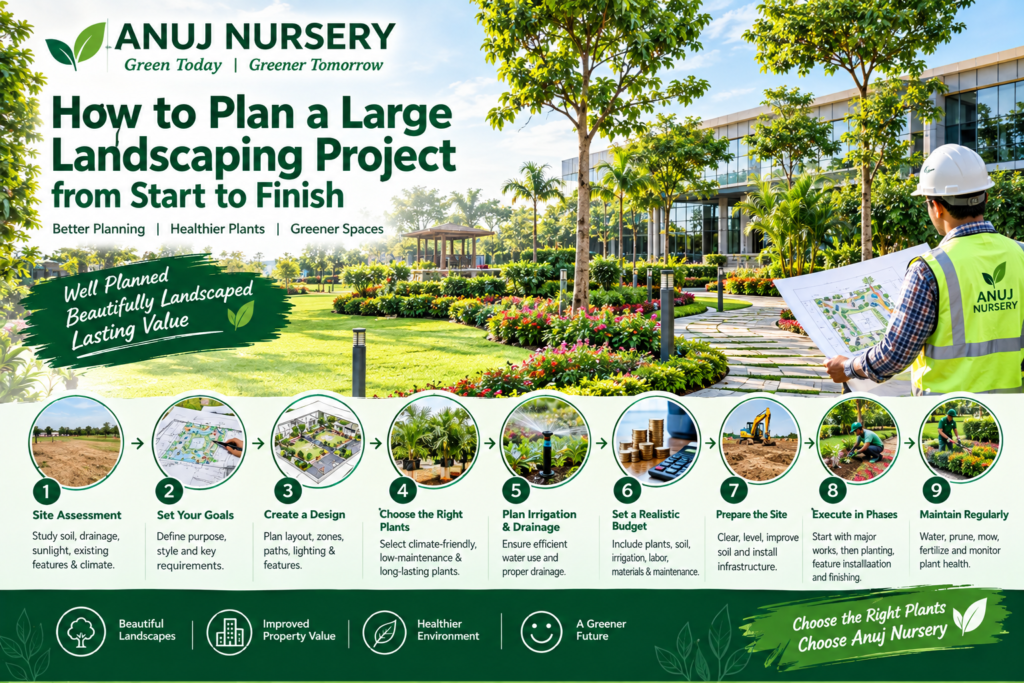
A large landscaping project can transform an empty or poorly designed outdoor area into a beautiful, functional, and sustainable green space. Whether you are developing a corporate campus, hotel, resort, residential property, park, commercial complex, highway landscape, or institutional area, proper planning is the key to achieving long-lasting results.
Unlike small gardens, large landscaping projects require careful consideration of site conditions, plant selection, irrigation, budget, design, installation, and ongoing maintenance. In this guide, we explain how to plan a large landscaping project from start to finish in a practical and organized way.
1. Understand the Site
The first step is to carefully evaluate the site. Study the total area, soil condition, drainage, sunlight, existing vegetation, water availability, access points, buildings, pathways, parking areas, and utility lines.
Understanding the site helps determine which plants will perform well and where different landscape elements should be placed. In India, local climate and seasonal weather should also be considered before finalizing the design.
2. Define Your Landscaping Goals
Before creating a design, decide what you want the landscape to achieve.
For example, a corporate campus may need an attractive entrance, shaded seating areas, lawns, pathways, and privacy planting. A resort may focus more on ornamental plants, lawns, trees, and relaxing outdoor spaces.
Clearly defined goals make it easier to develop a practical landscape plan and avoid unnecessary expenses.
3. Prepare a Detailed Landscape Design
Once the site and objectives are understood, create a detailed landscape layout. The design should show the placement of trees, shrubs, lawns, flower beds, pathways, seating areas, lighting, irrigation systems, and other features.
For large properties, divide the landscape into different zones. This makes installation and maintenance easier while creating a visually balanced overall design.
4. Select the Right Plants
Plant selection is one of the most important parts of a large landscaping project. Choose plants based on the local climate, soil, sunlight, water requirements, growth rate, mature size, and maintenance needs.
A good landscape usually combines different plant categories, including:
- Shade and ornamental trees
- Flowering trees
- Evergreen trees
- Palms
- Flowering shrubs
- Hedges
- Ground covers
- Seasonal plants
- Lawn grasses
Popular landscaping plants can include Areca Palm, Ficus, Polyalthia Longifolia, Plumeria, Ixora, Duranta, and other species suitable for the specific location.
5. Plan Irrigation and Drainage
Large landscapes require an efficient water management system. Before planting begins, plan irrigation zones according to plant requirements and site conditions.
Drip irrigation, sprinklers, and other suitable irrigation methods can help distribute water efficiently. Proper drainage is equally important because standing water can damage plant roots and affect lawn health.
6. Set a Realistic Budget
A detailed budget should include plants, soil preparation, irrigation, lawn installation, landscaping materials, labor, transportation, equipment, lighting, and future maintenance.
It is better to create a realistic budget at the planning stage rather than making major changes during installation. A well-planned budget helps control costs without compromising important landscape elements.
7. Prepare the Site
Before planting, the site needs proper preparation. This may include clearing unwanted vegetation, improving soil, leveling the land, creating drainage, preparing planting beds, and installing irrigation infrastructure.
Good soil preparation gives plants a stronger foundation and can improve their long-term growth.
8. Execute the Landscaping in Phases
Large landscaping projects are often easier to manage in phases. Start with major infrastructure and hardscape elements, followed by soil preparation, irrigation, trees, shrubs, lawns, and decorative plants.
Planting larger trees early can also give them more time to establish while the remaining landscape work is completed.
9. Focus on Regular Maintenance
The project does not end when planting is complete. Regular maintenance is essential for keeping the landscape healthy and attractive.
Maintenance may include watering, pruning, mowing, fertilization, weed control, pest monitoring, replacement of damaged plants, and seasonal care.
A proper maintenance schedule can protect the investment made in the landscaping project and reduce long-term repair costs.
Why Choose Anuj Nursery for Large Landscaping Projects?
Selecting healthy and suitable plants is essential for successful large-scale landscaping. Anuj Nursery offers a variety of trees, palms, shrubs, flowering plants, and ornamental greenery suitable for different landscaping requirements.
For large projects, plant selection should be based on the site’s climate, soil, available space, irrigation facilities, and long-term maintenance requirements. Working with a reliable nursery can make the plant procurement process more organized and efficient.
Frequently Asked Questions (AEO)
How do you plan a large landscaping project?
Start by evaluating the site, defining project goals, preparing a landscape design, selecting suitable plants, planning irrigation and drainage, setting a budget, preparing the site, installing the landscape, and establishing a maintenance schedule.
What plants are best for large landscaping projects?
The best plants depend on the local climate and site conditions. Trees, palms, flowering shrubs, hedges, ground covers, and lawn grasses can all be used to create a balanced landscape.
How long does a large landscaping project take?
The timeline depends on the property size, design complexity, site preparation, availability of plants, infrastructure work, and weather conditions.
Why is maintenance important after landscaping?
Regular maintenance keeps plants healthy, lawns attractive, irrigation systems functional, and the overall landscape clean and visually appealing.
Conclusion
Learning how to plan a large landscaping project from start to finish helps property owners and project managers create greener, more functional, and visually attractive outdoor spaces. From site assessment and landscape design to plant selection, irrigation, installation, and maintenance, every stage plays an important role.
With proper planning and suitable plants from Anuj Nursery, large landscaping projects can become beautiful, sustainable, and easier to maintain for years to come.