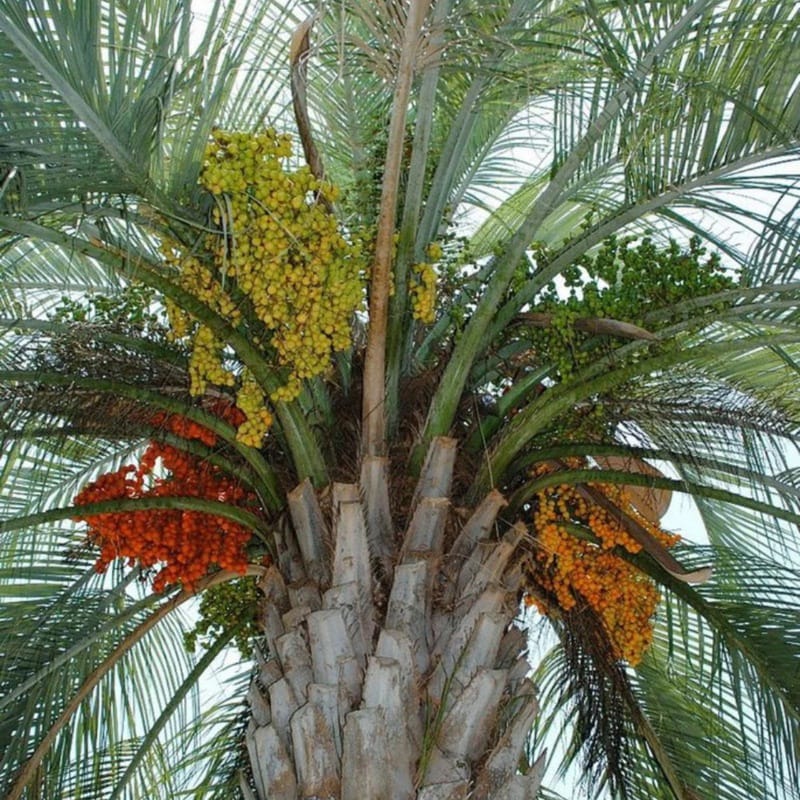
The Jelly Palm (Butia capitata) is an attractive, hardy palm valued for its elegant appearance, compact growth and distinctive blue-green foliage. Also known as the Butia Palm, it is an excellent choice for gardens, landscapes, resorts, parks and large outdoor spaces. Its graceful arching leaves and sturdy trunk give it a tropical yet sophisticated appearance.
Unlike many tropical-looking palms, the Jelly Palm can tolerate cooler conditions and is relatively adaptable when planted in suitable soil with good drainage. This makes it an interesting landscaping option for homeowners, gardeners and landscape designers looking for a distinctive ornamental palm.
What Is a Jelly Palm?
The Jelly Palm is a palm species traditionally known by the botanical name Butia capitata. It belongs to the Arecaceae family and is native to parts of South America. The palm develops a solitary, thick trunk topped with long, arching, feather-like leaves.
One of its most interesting characteristics is its fruit. The small orange-yellow fruits are aromatic and have traditionally been used to make jellies, juices and other food products, which is why the palm became popularly known as the “Jelly Palm.”
Key Features of Butia Palm
The Jelly Palm stands out because of its attractive foliage and strong landscape performance. Its leaves generally have a blue-green to silvery-green appearance, creating a striking contrast against green lawns and other landscape plants.
Key features include:
- Attractive blue-green, feather-like leaves
- Strong and ornamental trunk
- Long-lasting landscape appeal
- Relatively drought-tolerant once established
- Distinctive edible fruit
- Suitable for gardens, parks and commercial landscapes
- Can tolerate cooler conditions better than many tropical palms
Jelly Palm Growing Requirements
For healthy growth, plant your Butia capitata in a location receiving plenty of sunlight. Full sun generally helps the palm develop stronger growth and maintain its characteristic foliage.
The soil should be well-drained because constantly waterlogged conditions can damage the roots. Sandy or loamy soil with good drainage is generally suitable. Regular watering is helpful when the palm is young, but established plants can become considerably more tolerant of dry periods.
Adding organic matter to poor soil can support healthy establishment. However, avoid planting the palm in areas where water remains stagnant after rainfall.
Jelly Palm Care
Jelly Palm care is relatively straightforward once the plant becomes established. Water young palms regularly according to local weather and soil conditions. As the root system develops, gradually reduce excessive irrigation and allow the soil to dry somewhat between watering.
A balanced palm fertilizer can be applied during the active growing season according to the product’s instructions. Remove completely dead or damaged fronds carefully, but avoid excessive pruning of healthy green leaves.
Good sunlight, proper drainage and appropriate watering are the three most important factors for maintaining a healthy Butia Palm.
Landscaping Uses of Jelly Palm
The Jelly Palm can become a strong focal point in landscape designs. Its unusual foliage makes it particularly useful where a landscape needs a distinctive architectural plant.
It can be planted as a specimen palm near entrances, lawns, patios and pathways. It can also be incorporated into tropical, subtropical, Mediterranean-style and contemporary landscapes.
For commercial properties, Jelly Palms can add character to resorts, hotels, farmhouses, institutional gardens and large residential projects.
Why Choose a Jelly Palm?
If you want a palm that combines ornamental beauty with durability, Butia capitata is worth considering. Its blue-green foliage gives it a different appearance from common green-leaved palms, while its relatively strong adaptability makes it useful in a range of landscape applications.
The palm also provides seasonal interest through its attractive fruit, adding another distinctive feature to the landscape.
Buy Jelly Palm Plants from Anuj Nursery
Looking for a quality Jelly Palm (Butia capitata) for your garden or landscaping project? Anuj Nursery offers a range of plants suitable for residential and commercial landscaping.
Before purchasing, consider the available planting space, sunlight, soil drainage and the mature size of the palm. Choosing a healthy plant from a reliable nursery can make establishment easier and improve long-term landscape performance.
Visit anujnursery.in to explore nursery plants and landscaping options.
Frequently Asked Questions
Is Jelly Palm the same as Butia Palm?
Yes. Jelly Palm is a common name associated with Butia capitata, which is also commonly called Butia Palm.
Does Jelly Palm need full sun?
Yes, Jelly Palm generally performs best in a sunny location with good light exposure.
Is Jelly Palm drought tolerant?
Once established, it can tolerate periods of dry conditions, although young palms need more consistent watering.
Can Jelly Palm be grown in India?
Yes, Jelly Palm can be considered for suitable parts of India when provided with adequate sunlight, well-drained soil and appropriate irrigation.
What is Jelly Palm fruit used for?
The aromatic fruit has traditionally been used in products such as jellies, juices and preserves.
Final Thoughts
The Jelly Palm (Butia capitata) is an eye-catching ornamental palm with blue-green foliage, attractive form and interesting fruit. Its combination of beauty, adaptability and relatively simple maintenance makes it a valuable option for landscape projects.
For homeowners, landscapers and garden designers searching for a distinctive palm, Butia Palm can add structure, texture and year-round visual interest to an outdoor space.