
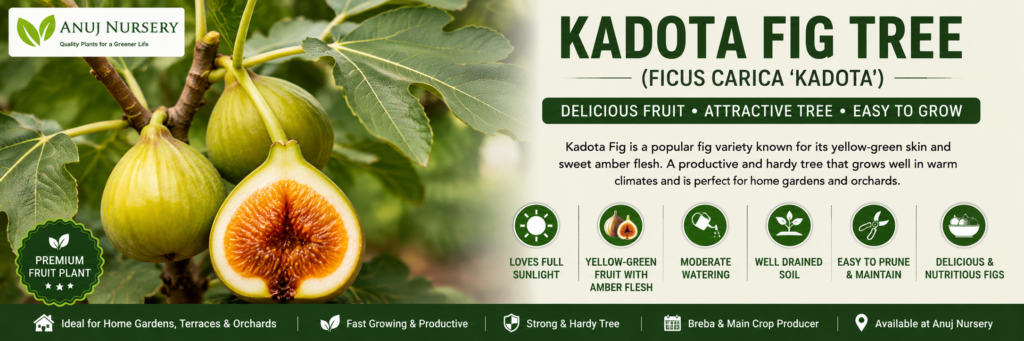
The Kadota Fig Tree, botanically known as Ficus carica ‘Kadota’, is a popular fig variety valued for its attractive yellow-green fruit, amber-colored flesh and suitability for warm growing conditions. It is a productive fruit tree that can be grown in home gardens, orchards, farmhouses and suitable containers.
Kadota is one of the recognized cultivated fig varieties, and horticultural references identify it as a yellow-green fig with amber flesh. It performs particularly well where summers are warm and the growing season is long.
For gardeners who want both an attractive tree and home-grown fruit, Kadota Fig is an excellent choice. Its large foliage provides ornamental value, while the edible figs make it especially rewarding during the fruiting season.
What Makes Kadota Fig Special?
The main attraction of the Kadota Fig Tree is its fruit. Mature Kadota figs typically develop a yellow-green exterior and amber-colored interior. The variety can produce both a breba crop and a main crop under suitable conditions and with appropriate pruning.
Kadota is also recognized as a common-type fig. Common figs generally do not require cross-pollination to produce fruit, which makes them particularly convenient for home gardeners.
However, fruit production depends heavily on climate, sunlight, tree health and cultural care. Don’t assume that planting a Kadota tree automatically guarantees a heavy harvest.
Kadota Fig Tree Care
1. Sunlight
Kadota Fig performs best in full sun. Strong sunlight is particularly important because figs require sufficient heat for proper fruit development and ripening. UC agricultural guidance specifically notes that Kadota requires high temperatures and a long growing season to perform well.
Choose an open location where the tree receives plenty of direct sunlight. In cooler areas, a warm, protected position can improve fruit maturity.
2. Watering
Consistent irrigation is important, especially while the tree is establishing and during fruit development. At the same time, avoid excessive or inconsistent watering.
Too little or too much irrigation can contribute to premature fruit drop.
A better approach than following a fixed daily schedule is to monitor the soil, weather and tree condition and adjust watering accordingly.
3. Soil
Plant Kadota Fig in well-drained soil. Fig trees can tolerate a range of soil conditions, but prolonged waterlogging should be avoided.
If your garden soil drains poorly, improve the planting area or consider planting on a raised mound or berm. Good drainage supports healthier root development.
4. Pruning
Pruning helps control tree size, improve structure and manage fruit production. Kadota is reported to produce both breba and main crops with moderate pruning.
For white and brown fig types such as Kadota, pruning strategies can be particularly important because fruiting occurs on new growth. Remove dead, damaged and crossing branches while maintaining an open structure that allows light to reach the interior of the tree.
Benefits of Growing a Kadota Fig Tree
Growing Kadota Fig offers several advantages:
- Produces edible home-grown figs
- Attractive yellow-green fruit
- Amber-colored flesh
- Excellent choice for warm climates
- Can be grown in home gardens
- Useful for orchard and farmhouse planting
- Provides ornamental foliage
- Can be maintained through pruning
- Common-type figs generally don’t require pollination
- Suitable for fresh and preserved fruit uses
Its combination of ornamental appearance and edible fruit makes it more useful than many purely decorative garden plants.
Kadota Fig Tree for Indian Gardens
The Kadota Fig Tree can be an interesting fruit-tree choice for suitable Indian climates, particularly areas with warm summers and a sufficiently long growing season. But India’s climate varies dramatically from region to region, so location matters.
For areas experiencing hot summers, full sunlight and good drainage can support productive growth. In cooler regions, fruit may take longer to mature because Kadota performs best with substantial heat.
Gardeners should also avoid overwatering during periods of heavy rainfall. If the soil remains saturated for long periods, root health can suffer.
How to Plant Kadota Fig
Select a sunny location with good drainage. Dig a planting hole wider than the root system and position the tree at approximately the same depth at which it was growing in its nursery container.
After planting, water thoroughly and maintain appropriate moisture during establishment. Organic mulch can help moderate soil-moisture fluctuations, but keep mulch away from direct contact with the trunk.
Give the tree enough space to develop its canopy. Regular pruning can later be used to control the size and shape according to the available garden area.
Buy Kadota Fig Plant from Anuj Nursery
If you are searching for a Kadota Fig Plant, Ficus carica ‘Kadota’ or Kadota Fig Tree in India, Anuj Nursery can be considered for fruit and landscaping plant requirements.
When purchasing a Kadota plant, don’t judge quality only by its height. Look for healthy foliage, a strong stem, well-developed roots and an absence of obvious pest or disease symptoms. Healthy planting material gives you a better starting point for establishing a productive tree.
For customers around Nagal, Saharanpur and Uttar Pradesh, selecting a healthy nursery-grown plant and providing suitable sunlight, drainage and irrigation can help the tree adapt successfully to its new location.
Frequently Asked Questions
What is a Kadota Fig Tree?
Kadota Fig is a cultivated variety of Ficus carica, known for yellow-green fruit and amber-colored flesh.
Does Kadota Fig need pollination?
Kadota is generally classified among common figs, which generally do not require cross-pollination for fruit production.
How much sunlight does Kadota Fig need?
Full sun is recommended. Kadota particularly benefits from high temperatures and a long growing season for proper fruit development.
Can Kadota Fig be grown in India?
Yes, it can be grown in suitable Indian climates, particularly where summers provide sufficient heat. Local climate, drainage and irrigation practices will influence performance.
When should Kadota Fig be pruned?
Pruning is generally carried out during the dormant period, with the exact approach depending on the desired tree size and fruiting strategy. Avoid excessive pruning if you want to preserve productive wood.
Final Thoughts
The Kadota Fig Tree (Ficus carica ‘Kadota’) is a valuable choice for gardeners who want an attractive fruit tree capable of producing distinctive yellow-green figs with amber flesh. Its warm-climate preference, edible fruit and manageable structure make it suitable for home gardens, farmhouses and orchards.
For successful cultivation, focus on full sunlight, well-drained soil, consistent but controlled watering and appropriate pruning. Most importantly, choose a healthy nursery plant and match the variety to your local climate.
If you are looking for a productive fruit tree that also adds greenery and character to your garden, Kadota Fig is a variety worth considering.