
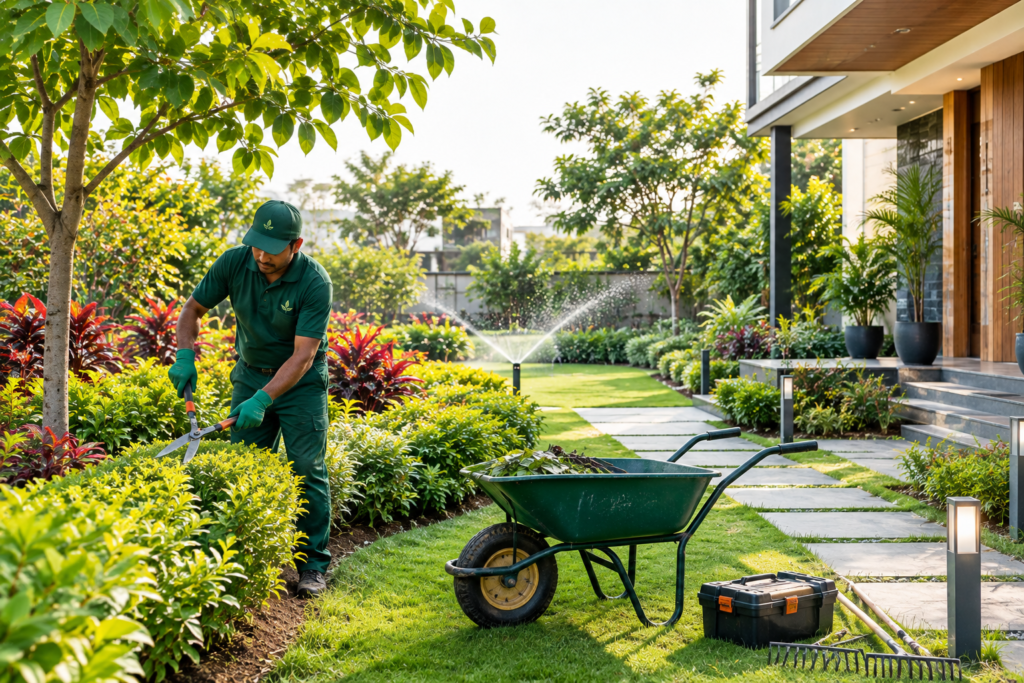
When planning a landscaping project, most property owners focus on the initial installation cost. They calculate the price of plants, lawn, pathways, irrigation, lighting, and other features. However, a landscape is not a one-time expense. It is a living system that requires regular care.
The long-term cost of landscape maintenance includes labour, water, pruning, lawn care, fertilizers, pest control, irrigation repairs, plant replacement, and seasonal maintenance. Understanding these costs before starting a project can help homeowners, businesses, and property developers create a more realistic budget.
Why Long-Term Landscape Cost Matters
A landscape that looks affordable during installation may become expensive to maintain if it requires frequent watering, mowing, pruning, or plant replacement.
For example, a lawn-heavy garden generally requires more regular mowing and watering than a landscape designed with a combination of shrubs, trees, groundcovers, and climate-suitable plants. Current Indian landscaping cost guides also identify maintenance as a recurring cost that should be considered alongside the initial development budget.
The right question is not simply, “How much will my garden cost?” It is:
“How much will my garden cost to build, operate, and maintain over the next five to ten years?”
Step 1: Calculate the Garden Area
Start by measuring the total landscaped area.
Divide the property into different zones such as:
- Lawn
- Trees and shrubs
- Flower beds
- Pathways
- Outdoor seating
- Hedges
- Decorative areas
This is important because different zones require different levels of maintenance.
A large lawn may require frequent mowing and watering, while established trees may require seasonal pruning and comparatively less routine attention.
Step 2: Estimate Labour Costs
Labour is usually one of the most important recurring maintenance expenses.
Depending on the size and complexity of the garden, maintenance may include:
- Watering
- Lawn mowing
- Pruning
- Weeding
- Leaf removal
- Plant training
- Soil work
- Fertilization
- Pest monitoring
- General cleaning
For smaller gardens, maintenance may be arranged on a per-visit or monthly basis. Larger properties may require dedicated gardeners or a professional annual maintenance contract.
The frequency of visits should be clearly defined when comparing maintenance quotations. Current 2026 Indian pricing references show that gardener costs vary considerably depending on garden size, visit frequency, and location.
Step 3: Calculate Watering Costs
Water is another important long-term expense.
Your water requirement depends on:
- Garden size
- Plant selection
- Lawn area
- Local climate
- Season
- Irrigation method
- Soil type
A properly designed irrigation system can make watering more efficient. Drip irrigation is particularly useful for many planted areas because it delivers water closer to plant roots.
However, irrigation also needs maintenance. Emitters can become blocked, pipes can be damaged, and controllers may need adjustment as seasons change. Hydro-zoning plants according to their water requirements can improve both plant health and water efficiency.
Step 4: Include Lawn Maintenance
Lawn maintenance should be calculated separately because lawns often require regular care.
Consider the cost of:
- Mowing
- Edging
- Watering
- Fertilization
- Weed control
- Aeration
- Seasonal lawn treatment
- Replacement or repair
If your property does not require a large lawn, reducing lawn coverage can lower recurring maintenance requirements.
Groundcovers, shrubs, trees, and other planting options can be used to create attractive green spaces while reducing the amount of lawn that needs regular mowing.
Step 5: Budget for Plant Replacement
Plants do not always survive indefinitely.
Replacement may be necessary because of:
- Extreme weather
- Poor soil
- Water problems
- Pest or disease issues
- Accidental damage
- Incorrect plant selection
- Natural plant decline
Instead of assuming that every plant will survive for many years, include a small annual replacement budget.
Choosing plants that are suitable for the local environment can reduce unnecessary replacement expenses.
Step 6: Include Fertilizer and Pest Management
Plants require nutrients and regular health monitoring.
Your maintenance budget may include:
- Organic manure
- Fertilizers
- Soil conditioners
- Pest-control products
- Disease management
- Seasonal plant treatments
The actual requirement depends on the plant varieties and soil conditions.
Regular monitoring can also help identify problems before they become expensive.
Step 7: Account for Irrigation and Equipment Repairs
Long-term maintenance is not limited to plants.
Irrigation pipes, pumps, sprinklers, timers, lighting systems, lawn equipment, and other landscape infrastructure may require servicing or replacement.
A professional maintenance plan should therefore include periodic inspection of irrigation and other landscape systems.
Step 8: Calculate the 5-Year or 10-Year Cost
Once individual expenses are estimated, use a simple formula:
Total Long-Term Maintenance Cost = Annual Maintenance Cost × Number of Years + Major Repairs + Plant Replacement
For example, if your landscape costs ₹60,000 per year to maintain, five years of routine maintenance would be approximately ₹3 lakh before adding major repairs or unusual replacement costs.
This simple calculation can reveal the real cost of owning a landscape.
How to Reduce Long-Term Maintenance Costs
The best time to reduce maintenance costs is during the design stage.
Consider:
- Choosing climate-suitable plants
- Reducing unnecessary lawn areas
- Installing efficient irrigation
- Grouping plants according to water requirements
- Improving soil before plantation
- Using mulch where appropriate
- Planning easy-to-access planting beds
- Scheduling regular preventive maintenance
- Selecting durable landscape materials
- Keeping drainage systems functional
A low-maintenance landscape does not mean a landscape with no maintenance. It means designing the garden so that the required maintenance is practical and predictable.
Plan Your Landscape With Anuj Nursery
At Anuj Nursery, landscape planning should consider both the initial project and future maintenance requirements. Suitable plant selection, proper plantation, irrigation planning, soil preparation, and regular care can help property owners maintain healthier outdoor spaces.
For residential, commercial, and larger property projects, planning maintenance costs from the beginning can make the overall landscaping investment more manageable.
Conclusion
Calculating the long-term cost of landscape maintenance is essential before starting a landscaping project. Instead of looking only at installation expenses, consider labour, water, lawn care, fertilizers, pest management, plant replacement, irrigation repairs, and seasonal requirements.
A well-designed landscape can reduce unnecessary recurring expenses while remaining attractive and functional.
The goal is not simply to create a beautiful garden on day one. The goal is to create a landscape that you can afford to maintain and enjoy for many years.
AEO FAQs
How do I calculate long-term landscape maintenance costs?
Estimate annual labour, water, lawn care, fertilizers, pest management, plant replacement, irrigation servicing, and repairs. Multiply the annual cost by your desired time period and add major replacement or repair expenses.
What is the biggest recurring landscape maintenance cost?
For many gardens, labour can be a major recurring expense. Lawn size, watering requirements, garden complexity, and maintenance frequency can significantly affect the total cost.
Does reducing lawn area lower maintenance costs?
It can. Smaller lawn areas generally require less mowing and watering, although the actual savings depend on what replaces the lawn and how that alternative planting is maintained.
How can irrigation reduce landscape maintenance costs?
Efficient irrigation can help deliver water more accurately and reduce unnecessary watering. Proper zoning and regular irrigation maintenance are important for achieving these benefits.
How often should a landscape maintenance budget be reviewed?
Review the budget at least annually. Reassess labour, water use, plant health, irrigation performance, seasonal requirements, and replacement costs as the landscape matures.