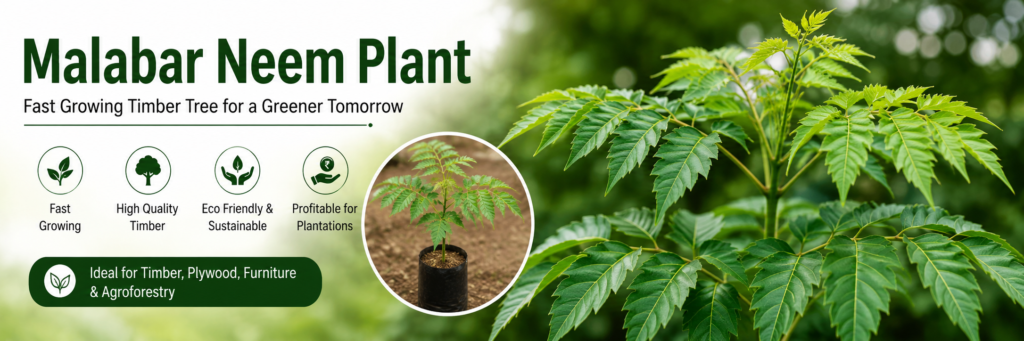
The Malabar Neem Plant, scientifically known as Melia dubia, is a fast-growing tree widely valued for timber production, agroforestry, landscaping, and plantation farming. Despite its common name, Malabar Neem is different from the traditional Neem tree (Azadirachta indica). Its rapid growth and useful wood make it an attractive choice for farmers, landowners, and plantation developers.
Malabar Neem can grow well in warm climates and, with proper care, develops into a tall tree with a straight trunk. It is particularly popular in India because of its relatively quick growth compared with many conventional timber trees.
Benefits of Malabar Neem Plant
One of the biggest advantages of the Malabar Neem Plant is its fast growth rate. This makes it suitable for timber plantations where growers want a relatively shorter production cycle.
The tree is also useful in agroforestry systems, farm boundaries, and large-scale plantations. Its wood is used for products such as plywood, packing materials, furniture components, and other wood-based applications, depending on quality and processing.
Malabar Neem can also add greenery to open spaces and farms. Its attractive foliage makes it useful for environmental and landscaping purposes where sufficient growing space is available.
How to Grow Malabar Neem
For healthy growth, plant Malabar Neem in a location receiving plenty of sunlight. It performs best in fertile, well-drained soil and should not be planted where water remains stagnant for long periods.
During the early growth stage, regular irrigation can help the young plant establish strong roots. Once established, watering requirements depend on rainfall, soil type, temperature, and plantation conditions.
Proper spacing is particularly important in commercial plantations because overcrowding can affect tree development. Farmers should select spacing according to their soil, climate, plantation objective, and management system.
Malabar Neem Plant Care
Young Malabar Neem plants benefit from weed control, adequate moisture, and protection from grazing animals. Adding suitable organic matter to the soil can support healthy development when required.
Regular monitoring is important to identify pest, disease, nutrient, or water-related problems at an early stage. For commercial timber plantations, pruning and other management practices should be planned according to the desired trunk and timber quality.
Why Choose Malabar Neem?
If you are looking for a fast-growing timber tree, Malabar Neem is worth considering. Its rapid growth, adaptability, and timber value have made it increasingly popular among plantation growers in India.
For quality Malabar Neem plants, buyers should choose healthy nursery-grown plants with good root development. Anuj Nursery can be considered for sourcing nursery plants and plantation-related requirements.
Frequently Asked Questions
Is Malabar Neem the same as Neem?
No. Malabar Neem is generally Melia dubia, while common Neem is Azadirachta indica. They are different tree species.
Is Malabar Neem a fast-growing tree?
Yes. Melia dubia is known for relatively fast growth under suitable climate, soil, water, and management conditions.
Where can Malabar Neem be planted?
It can be grown in suitable farms, plantations, agroforestry systems, and large open spaces with appropriate soil, sunlight, and drainage.
Why is Malabar Neem popular for plantations?
Its fast growth and commercially useful wood are major reasons for its popularity in timber-oriented plantations.