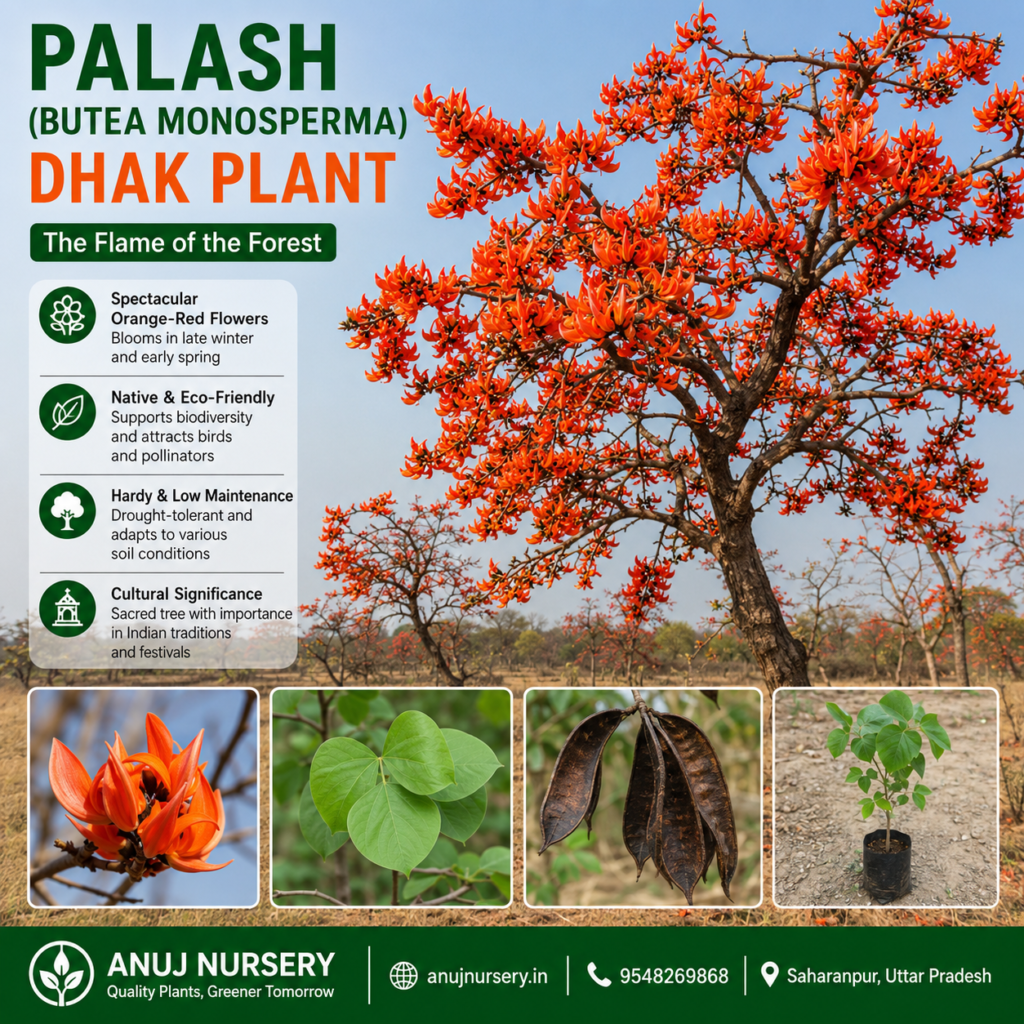
The Palash (Butea monosperma) Dhak plant is one of India’s most distinctive native trees, famous for its spectacular orange-red flowers. Scientifically known as Butea monosperma, Palash is commonly called Dhak, Tesu, or Flame of the Forest. When it blooms, its brilliant flowers can cover the branches and create a striking display that is especially noticeable during the dry season.
Beyond its beauty, Palash has ecological, cultural, and traditional importance. It is a hardy deciduous tree that can adapt to several Indian climatic conditions, making it an interesting choice for gardens, farms, landscaping projects, biodiversity areas, and native-plant plantations.
What Makes the Palash Plant Special?
The biggest attraction of the Palash tree is its bright orange to reddish-orange flowers. The tree generally loses much of its foliage before flowering, allowing the flowers to stand out dramatically against the branches.
Palash is also valued as a native Indian tree. Native trees can provide important habitat and food resources for local insects, birds, and other wildlife. Planting species such as Palash can therefore contribute to a more diverse and nature-friendly landscape.
Its rugged appearance and seasonal flowering also make it suitable for people who want something different from commonly planted ornamental trees.
Palash Plant Benefits
One major benefit of the Butea monosperma plant is its ornamental value. Its spectacular flowers can become a focal point in large gardens, campuses, farmhouses, roadsides, and landscape projects.
The tree can also contribute to local biodiversity by providing habitat and resources for various organisms. Like other trees, Palash also contributes to shade, carbon storage, and the overall environmental value of a planted landscape.
Traditionally, different parts of Palash have been used in Indian practices. However, traditional uses should not automatically be treated as medically proven treatments. If you are considering Palash for medicinal purposes, consult a qualified professional rather than relying on internet claims.
How to Grow Palash (Butea monosperma)
Palash generally performs best when planted in a location with plenty of sunlight. Choose an open area where the tree has enough space to develop naturally.
A well-drained soil is preferable because prolonged waterlogging can negatively affect many trees, including Palash. Once established, it is considered relatively hardy and can tolerate dry conditions better than many moisture-loving ornamental plants.
During the initial establishment period, provide appropriate irrigation according to the soil and weather conditions. Avoid excessive watering. Adding organic matter to poor soil can help improve its structure, while a suitable mulch layer can help conserve moisture around the root zone.
Where Can You Plant a Dhak Tree?
The Dhak tree is particularly suitable for spacious landscapes. It can be planted in farmhouses, institutional grounds, parks, biodiversity gardens, large residential properties, and native-tree plantation projects.
Because Palash can develop into a sizable tree, it is important to consider its mature size before planting. Avoid placing it too close to buildings, underground utilities, or areas where its natural growth could become restricted.
For smaller gardens, check the available space carefully before purchasing a plant. Choosing a tree based only on its current nursery size is a common landscaping mistake.
Why Choose Palash for Indian Landscaping?
If your goal is to create a landscape with native character, seasonal interest, and ecological value, Palash is worth considering. Its dramatic flowering period gives the landscape a memorable visual identity, while its native status makes it particularly relevant for biodiversity-focused planting.
For Anuj Nursery, Palash can be an excellent addition to a collection of trees suitable for Indian gardens, farms, landscaping projects, and plantation requirements. When buying a Palash plant, consider plant health, root development, size, growing conditions, and the supplier’s planting guidance rather than choosing solely on price.
Frequently Asked Questions
What is the scientific name of Palash?
The scientific name of Palash is Butea monosperma.
What is Palash also called?
Palash is commonly known as Dhak, Tesu, and Flame of the Forest.
Is Palash suitable for Indian gardens?
Yes, Palash can be suitable for spacious Indian gardens and landscapes, particularly where there is sufficient sunlight and room for the tree to grow.
Does Palash require full sunlight?
Palash generally performs well in sunny locations and should preferably be planted where it receives plenty of direct sunlight.
Is Palash a native Indian tree?
Yes. Butea monosperma is a species native to the Indian subcontinent and surrounding regions.
The Palash (Butea monosperma) Dhak Plant is a beautiful deciduous tree famous for its vibrant orange-red flowers and attractive appearance. It is suitable for gardens, farms, parks, and landscaping. The plant grows well in warm climates, full sunlight, and well-drained soil. With proper watering and care, it develops into a striking and hardy tree.
Final Thoughts
The Palash (Butea monosperma) Dhak plant combines natural beauty, cultural significance, ecological value, and seasonal flowering in one remarkable native tree. Its famous orange-red flowers make it especially attractive during its blooming season, while its hardy nature makes it an interesting option for larger landscapes.
If you are planning a native-tree garden, farmhouse plantation, biodiversity project, or ornamental landscape, Palash can be a strong choice. Select a healthy plant, provide adequate sunlight and well-drained soil, and give it enough space to mature naturally.
For healthy Palash plants and other quality nursery plants, contact Anuj Nursery.