
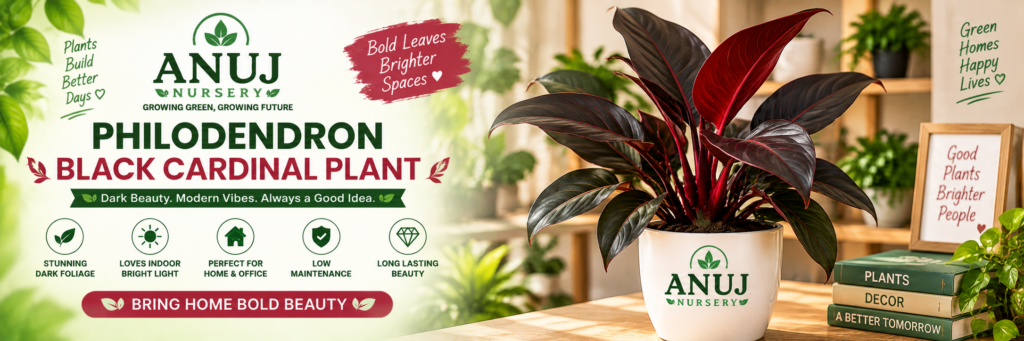
The Philodendron Black Cardinal is a stunning ornamental foliage plant known for its large, glossy leaves that develop rich burgundy, bronze, and deep green shades as they mature. Its dramatic foliage makes it an excellent choice for homes, offices, bedrooms, living rooms, balconies, and indoor plant collections.
Unlike many delicate tropical plants, Philodendron Black Cardinal can be relatively easy to maintain when its basic requirements are met. The key to healthy growth is providing bright indirect light, well-draining soil, appropriate watering, warmth, humidity, and balanced nutrition.
This complete guide covers Philodendron Black Cardinal care, benefits, sunlight, watering, soil, fertilizer, humidity, repotting, propagation, common problems, and flowering tips.
What Is Philodendron Black Cardinal?
Philodendron Black Cardinal is a cultivated ornamental Philodendron valued primarily for its attractive foliage. Its newer leaves can emerge in dark red, bronze, or burgundy tones before developing deeper green coloration as they mature.
Its upright, compact growth habit makes it particularly suitable for indoor spaces where a dramatic foliage plant is desired.
Like other Philodendrons, it is best treated as an ornamental tropical plant and provided with warm, stable growing conditions.
Benefits of Growing Philodendron Black Cardinal
1. Stunning Decorative Foliage
The plant’s dark, glossy foliage can create an elegant focal point in modern interiors.
2. Excellent Indoor Ornamental Plant
Its attractive growth habit makes it suitable for living rooms, offices, bedrooms, reception areas, and other indoor spaces with adequate light.
3. Attractive New Leaf Colors
New leaves can provide striking burgundy or bronze tones before maturing into deeper green shades.
4. Relatively Easy to Maintain
With appropriate light and watering, Philodendron Black Cardinal can be a manageable choice for beginners and experienced plant enthusiasts.
5. Adds Tropical Character
Its bold foliage provides a lush tropical appearance without requiring a very large amount of floor space.
Philodendron Black Cardinal Care Guide
Light Requirements
Philodendron Black Cardinal generally prefers bright, indirect light.
Place it near a bright window where it receives plenty of natural light without prolonged exposure to intense afternoon sunlight.
Too much harsh direct sun can scorch the leaves, while very low light can slow growth and reduce the plant’s overall vigor.
If moving the plant from a low-light location to brighter conditions, acclimatize it gradually.
Watering Requirements
Water when the upper portion of the potting mix has begun to dry.
Avoid keeping the soil constantly saturated. Overwatering combined with poor drainage can cause root problems.
During warm, brighter periods, the plant may need water more frequently. During cooler or lower-light periods, allow the soil to dry further before watering again.
Check the soil rather than following a fixed weekly watering schedule.
Soil Requirements
Use a loose, airy, organic-rich, well-draining potting mix.
The soil should retain enough moisture for healthy roots while allowing excess water to escape quickly.
Always use a pot with drainage holes to minimize the risk of waterlogging.
Humidity Requirements
As a tropical foliage plant, Philodendron Black Cardinal generally appreciates moderate to higher humidity.
If indoor air becomes very dry, particularly near air conditioners, brown leaf edges may develop.
Keep the plant away from direct AC airflow and sudden changes in environmental conditions.
Temperature Requirements
Maintain a warm and stable environment.
Protect the plant from cold drafts, very low temperatures, and sudden temperature fluctuations.
Avoid placing it directly beside heating or cooling vents.
Fertilizer Requirements
During active growth, apply a suitable balanced fertilizer according to the manufacturer’s instructions.
Regular but moderate feeding can support healthy foliage development.
Avoid excessive fertilizer because accumulated salts can damage roots and cause brown leaf margins.
Repotting Philodendron Black Cardinal
Repot the plant when it becomes significantly root-bound or when the existing potting mix has broken down.
Select a container only slightly larger than the current pot. An oversized container can hold excess moisture for too long.
Use fresh, well-draining soil and ensure the new pot has drainage holes.
Propagation
Philodendrons can often be propagated through suitable stem cuttings, provided the cutting contains appropriate growth tissue or a node.
For best results, use clean tools and provide warm, humid conditions after propagation.
Propagation success can vary depending on the cutting, plant health, temperature, and method used.
Common Problems
Yellow Leaves
Yellowing may be caused by overwatering, poor drainage, natural aging, insufficient light, nutrient issues, or environmental stress.
Brown Leaf Edges
Brown edges can result from dry air, inconsistent watering, fertilizer buildup, excessive sunlight, or temperature stress.
Curling Leaves
Curling can indicate underwatering, excessive heat, low humidity, root problems, or environmental changes.
Slow Growth
Insufficient light, low temperatures, poor nutrition, root problems, or unsuitable watering can slow growth.
Frequently Asked Questions
Is Philodendron Black Cardinal a good indoor plant?
Yes. Its compact growth and attractive dark foliage make it an excellent ornamental indoor plant when provided with suitable light and care.
How much sunlight does Philodendron Black Cardinal need?
It generally prefers bright indirect light. Protect it from harsh direct afternoon sunlight.
How often should I water Philodendron Black Cardinal?
Water when the upper portion of the soil has begun to dry. The exact frequency depends on light, temperature, humidity, soil, and pot size.
Why are Philodendron Black Cardinal leaves turning yellow?
Overwatering, poor drainage, insufficient light, nutrient issues, natural aging, or environmental stress can cause yellow leaves.
Can Philodendron Black Cardinal grow in India?
Yes. It can be grown indoors in many parts of India when protected from extreme temperatures and provided with suitable light, drainage, and watering.
Conclusion
Philodendron Black Cardinal is an excellent choice for plant lovers who want bold, sophisticated foliage indoors. Its dark green mature leaves and colorful new growth can add a dramatic tropical touch to homes, offices, apartments, bedrooms, and other indoor spaces.
For healthy growth, focus on the fundamentals: bright indirect light, well-draining soil, careful watering, warm temperatures, suitable humidity, and balanced fertilizer.
If you are looking to buy a healthy Philodendron Black Cardinal Plant online in India, explore the indoor plant collection at AnujNursery.in.
Add dramatic tropical foliage to your home or office—order your Philodendron Black Cardinal from Anuj Nursery today!