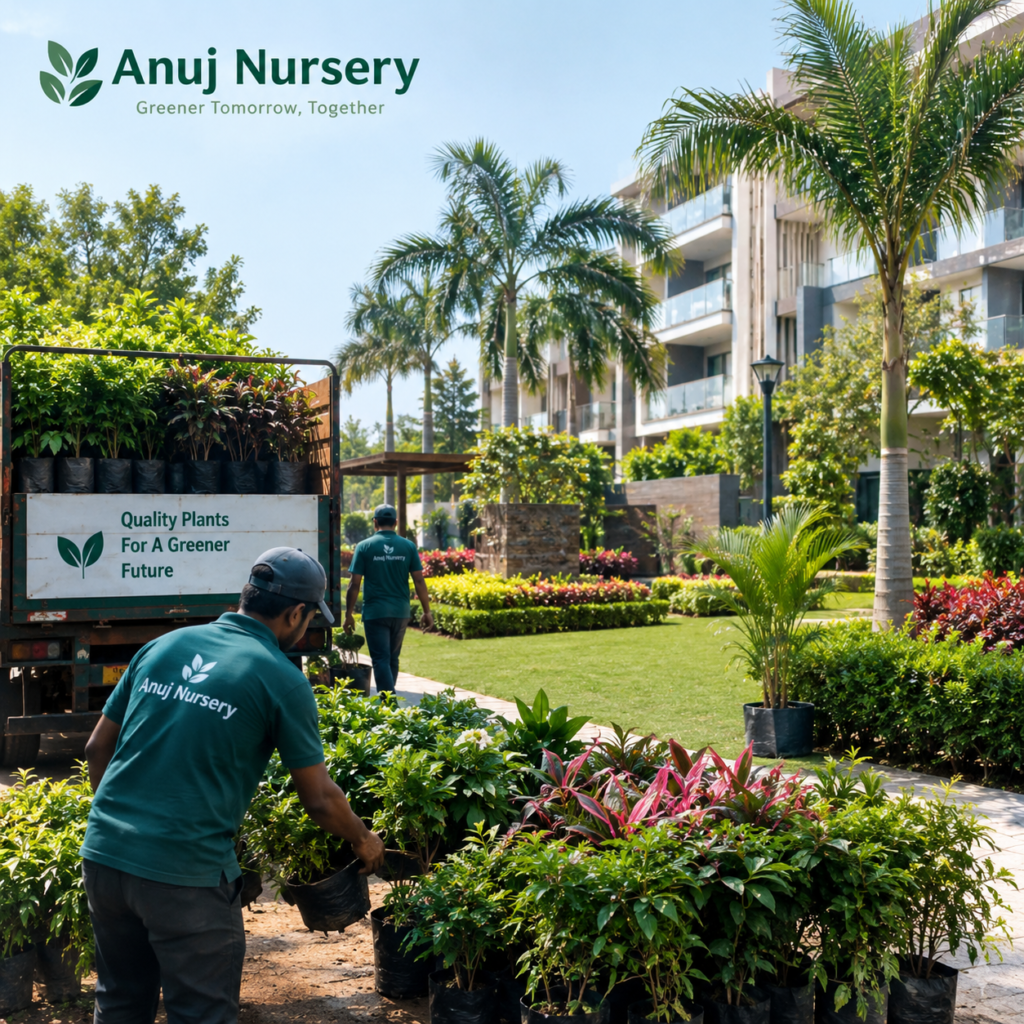
For real estate developers, landscaping is an important part of creating attractive and welcoming residential and commercial projects. Well-planned greenery can improve entrances, roads, gardens, parks, clubhouses, common areas, and outdoor spaces. However, large-scale projects require more than simply purchasing plants individually. They need a reliable plant supply solution for real estate developers that can provide the right plants, quantities, quality, and timely delivery.
From residential townships to commercial developments, professional plant sourcing can make landscape execution more organized and efficient.
Why Plant Supply Is Important for Real Estate Projects
Large real estate developments often require hundreds or even thousands of plants. Trees may be needed along internal roads, shrubs for boundaries, flowering plants for entrances, palms around common areas, and ground covers for garden spaces.
Managing these requirements through multiple small suppliers can create challenges related to availability, plant quality, transportation, and delivery schedules. A dedicated plant supply partner can simplify procurement by helping developers source multiple categories of plants through a more organized process.
Bulk Supply for Large Landscaping Projects
One of the biggest requirements of real estate developers is bulk plant supply. Large projects need consistent quantities of plants at different stages of development.
A professional nursery or plant supplier can help developers plan bulk requirements based on landscape drawings, plantation schedules, and project timelines. This makes it easier to coordinate plant procurement with ongoing construction and landscaping activities.
Bulk sourcing can include:
- Avenue and shade trees
- Ornamental trees
- Flowering plants
- Evergreen shrubs
- Palms
- Ground-cover plants
- Hedge plants
- Indoor and outdoor plants
- Seasonal flowering varieties
Selecting the Right Plants for Different Areas
Every part of a real estate project has different landscaping requirements. Roadside areas may need durable avenue trees, while entrance zones can benefit from ornamental and flowering plants.
Residential gardens may require shade trees, lawns, shrubs, and colorful planting beds. Clubhouses and recreational spaces can be enhanced with palms and decorative greenery.
Plant selection should consider factors such as climate, soil, sunlight, water availability, mature plant size, and maintenance requirements. Choosing suitable plants from the beginning can support healthier landscapes and reduce replacement requirements.
Quality Matters in Plant Procurement
Plant quality is a major consideration for large projects. Healthy plants with strong stems, suitable root development, and good foliage are generally better starting material for landscape installation.
Before accepting a bulk order, developers should consider plant size, health, uniformity, packaging, and transportation conditions. Consistent plant quality is particularly important when large numbers of the same species are being planted across a project.
Timely Delivery for Project Schedules
Real estate projects operate according to strict timelines. Landscaping often takes place alongside other finishing activities, which makes timely plant delivery important.
A dependable supplier should be able to coordinate quantities and delivery schedules according to project requirements. Proper transportation and handling can also help minimize plant damage before installation.
Supporting Sustainable Landscaping
Modern real estate development increasingly focuses on sustainable and environmentally responsible landscapes. Selecting climate-suitable and low-maintenance plants can help reduce unnecessary water and maintenance requirements.
Developers can also incorporate native or well-adapted species, shade trees, biodiversity-friendly planting, and efficient irrigation into landscape plans. These practices can create greener communities while supporting long-term landscape performance.
Working With a Reliable Nursery Partner
A reliable nursery partner can provide more than plants. Developers may benefit from assistance with plant selection, availability, quantities, sizing, packaging, and delivery coordination.
For projects requiring plants at scale, Anuj Nursery can support developers and landscaping teams with a range of trees and plants suitable for residential, commercial, institutional, and large landscaping requirements.
How Developers Can Plan Plant Procurement
Before placing a bulk order, prepare a detailed plant list based on the landscape plan. Include the plant name, quantity, required size, location of planting, and expected delivery timeline.
It is also useful to divide requirements into categories such as trees, palms, shrubs, flowering plants, and ground covers. Ordering according to project phases can help prevent unnecessary storage and ensure plants reach the site when they are ready for installation.
Conclusion
A well-organized plant supply solution for real estate developers can make large-scale landscaping projects easier to manage. From bulk trees and palms to shrubs, flowering plants, and ground covers, the right supplier can help ensure better availability, consistent quality, and coordinated delivery.
As real estate projects continue to focus on attractive and sustainable outdoor environments, professional plant sourcing is becoming an essential part of landscape development. With careful planning and a reliable nursery partner like Anuj Nursery, developers can create greener, more attractive, and long-lasting landscapes that add value to their projects.