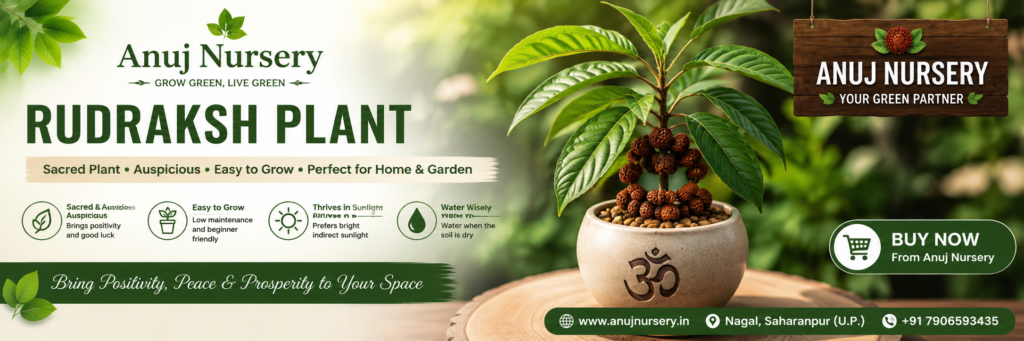
The Rudraksh Plant (Elaeocarpus ganitrus) is one of the most respected and valuable trees in India. Revered for its sacred beads and attractive evergreen foliage, the Rudraksh tree is widely grown in home gardens, temples, farms, and spiritual landscapes. Besides its religious significance, it is admired for its ornamental beauty, long lifespan, and ability to thrive in suitable tropical and subtropical climates.
If you’re planning to grow a Rudraksh plant, this complete guide explains its care requirements, growing conditions, benefits, watering schedule, sunlight needs, and maintenance tips to help you grow a healthy and thriving tree.
What is a Rudraksh Plant?
The Rudraksh Plant, scientifically known as Elaeocarpus ganitrus, is an evergreen tree native to the Himalayan foothills and parts of Southeast Asia. It produces the famous Rudraksha beads, which are traditionally used for prayer malas and meditation.
With glossy green leaves, fragrant flowers, and attractive blue fruits that contain the Rudraksha seed, this tree is an excellent choice for gardens, farmhouses, temples, and large landscapes.
Benefits of Growing a Rudraksh Plant
1. Sacred and Culturally Important Tree
The Rudraksh tree is highly valued in Indian culture and is commonly planted in spiritual gardens, temples, and meditation spaces.
2. Beautiful Evergreen Foliage
Its dense green canopy adds natural beauty and provides year-round greenery to gardens and landscapes.
3. Excellent Shade Tree
As the tree matures, it develops into a broad canopy that offers cool shade in outdoor spaces.
4. Long-Living Tree
With proper care, a Rudraksh tree can thrive for decades, making it a valuable addition to any landscape.
5. Suitable for Home Gardens and Farms
The tree grows well in spacious home gardens, orchards, farmhouses, and institutional campuses where it has room to develop.
Rudraksh Plant Care Guide
Sunlight
The Rudraksh plant grows best in full sunlight to partial shade. Young plants benefit from light shade during very hot summer afternoons, while mature trees thrive in full sun.
Watering
Water regularly during the first 1–2 years to help establish a strong root system. Once established, water deeply when the soil becomes moderately dry, especially during prolonged dry periods.
Soil
Plant the Rudraksh tree in well-drained, fertile soil rich in organic matter. Avoid heavy clay soils that remain waterlogged.
Temperature
The ideal growing temperature ranges between 20°C and 35°C. The tree performs best in tropical and subtropical regions with moderate humidity.
Fertilizer
Apply well-rotted compost or organic manure two to three times a year. During the growing season, a balanced fertilizer can support healthy foliage and vigorous development.
Common Problems and Solutions
Yellow Leaves
Often caused by poor drainage or excessive watering. Improve soil drainage and water only when required.
Slow Growth
Young Rudraksh plants naturally grow slowly during the establishment phase. Ensure adequate sunlight, fertile soil, and balanced nutrition.
Leaf Drop
Temporary leaf shedding may occur due to seasonal changes or water stress. Maintain consistent watering and proper growing conditions.
Best Places to Grow a Rudraksh Plant
- Home gardens
- Farmhouses
- Temple gardens
- Meditation centers
- Orchards
- Educational campuses
- Parks and landscapes
- Large residential properties
Choose a location with enough space, as the tree develops into a medium to large evergreen tree over time.
Frequently Asked Questions (FAQs)
Can I grow a Rudraksh plant at home?
Yes. If you have sufficient outdoor space and a warm climate, the Rudraksh plant grows well in home gardens.
How much sunlight does a Rudraksh plant need?
It prefers 6–8 hours of sunlight daily, although young plants appreciate partial shade during extreme heat.
How often should I water the Rudraksh plant?
Water regularly during the early growing years. Mature trees require moderate watering, particularly during extended dry weather.
How long does a Rudraksh tree take to mature?
The growth rate depends on climate, soil quality, and care. With proper maintenance, the tree gradually develops into a healthy, long-living evergreen.
Conclusion
The Rudraksh Plant (Elaeocarpus ganitrus) is an outstanding choice for gardeners who appreciate evergreen beauty, cultural significance, and long-term landscape value. Its lush foliage, graceful growth, and sacred importance make it a meaningful addition to gardens, farmhouses, and spiritual spaces.
By providing fertile soil, adequate sunlight, regular watering during establishment, and occasional feeding, you can enjoy a healthy Rudraksh tree for many years. Whether you’re planting it for its ornamental appeal or its traditional significance, this evergreen tree is a rewarding investment for every garden.
Looking for a healthy Rudraksh Plant? Visit AnujNursery.in to explore premium-quality plants grown with care. We offer healthy, well-rooted plants, secure packaging, expert guidance, and fast delivery across India. Order your Rudraksh Plant today and bring timeless greenery and natural beauty to your home or garden.