
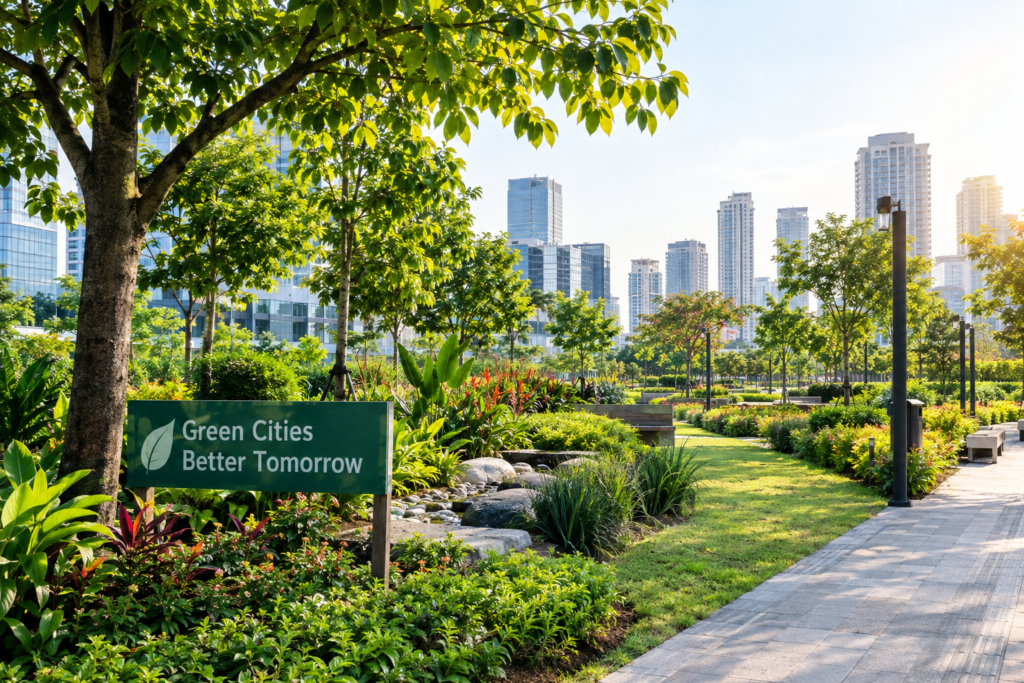
Rapid urbanization has transformed Indian cities, making green spaces more important than ever. Roads, buildings, parking areas, residential complexes, offices, and commercial properties can benefit from thoughtfully planned greenery. Sustainable landscaping ideas for Indian cities focus on creating attractive outdoor spaces while reducing water consumption, maintenance requirements, and environmental impact.
A sustainable landscape is not simply about planting more trees. It involves selecting climate-suitable plants, managing water efficiently, improving soil health, reducing waste, and designing green spaces that can thrive in local conditions. With the right approach, urban properties across India can become greener, cooler, and more environmentally responsible.
1. Choose Native and Climate-Suitable Plants
One of the simplest ways to create a sustainable landscape is to select plants that are well adapted to the local climate. Native and climate-suitable plants generally have better chances of establishing successfully when their soil, sunlight, and water requirements are matched correctly.
Before selecting plants, consider the city’s temperature, rainfall, humidity, soil conditions, and available sunlight. This can help reduce unnecessary watering and replacement of plants.
2. Plant More Shade Trees
Trees play an important role in urban landscaping. Strategically placed shade trees can create cooler outdoor areas and improve the visual appeal of streets, campuses, gardens, and residential properties.
Trees should be selected according to the available space and their mature size. Avoid planting large-rooted or very large trees too close to buildings, underground utilities, roads, or power infrastructure.
3. Use Water-Efficient Irrigation
Water management is a key part of sustainable landscaping. Traditional watering methods can sometimes waste water through runoff and evaporation.
Drip irrigation and properly designed sprinkler systems can help deliver water where it is needed. Irrigation schedules should also be adjusted according to weather, plant requirements, and soil moisture rather than following a fixed routine throughout the year.
4. Create Rainwater-Friendly Landscapes
Urban surfaces such as concrete and asphalt can increase water runoff during heavy rainfall. Sustainable landscape designs can incorporate areas that allow rainwater to enter the soil.
Rain gardens, permeable pathways, planting beds, and suitable drainage systems can help manage rainwater more effectively. These features can be particularly useful for residential societies, corporate campuses, institutions, and large commercial properties.
5. Reduce Lawn Areas Where Appropriate
Large lawns can require regular mowing, watering, and maintenance. While lawns are useful for recreation and open spaces, not every part of a property needs to be covered with grass.
Consider combining lawn areas with shrubs, ground covers, trees, mulched beds, and hardscape features. This can create a visually balanced landscape while potentially reducing maintenance and water requirements.
6. Improve Soil Health Naturally
Healthy soil supports healthy plants. Before planting, improve soil structure with suitable organic matter and compost where appropriate.
Mulching can also help protect the soil surface, reduce moisture loss, suppress weeds, and moderate soil temperature. Organic mulch can gradually contribute to soil health as it decomposes.
7. Add Greenery to Small Urban Spaces
Sustainable landscaping is not limited to large properties. Balconies, terraces, courtyards, apartment entrances, and small gardens can also benefit from carefully selected plants.
Vertical gardens, container plants, climbers, compact shrubs, and terrace greenery can help introduce vegetation where ground space is limited.
8. Choose Low-Maintenance Plants
Low-maintenance landscaping can reduce the need for frequent pruning, watering, fertilization, and plant replacement. Select plants according to the site’s growing conditions instead of choosing plants only for their appearance.
A combination of evergreen trees, ornamental shrubs, palms, flowering plants, and ground covers can create an attractive landscape with different textures and seasonal interest.
9. Reduce Chemical and Landscape Waste
Sustainable maintenance also means managing garden waste responsibly. Fallen leaves, grass clippings, and suitable organic materials can be composted instead of being discarded.
Integrated pest management practices can also help reduce unnecessary chemical use by focusing on monitoring, prevention, and appropriate treatment when required.
10. Design for Long-Term Maintenance
A sustainable landscape should be easy to maintain. Plan pathways, planting beds, irrigation lines, trees, and shrubs in a way that allows gardeners and maintenance teams to access different areas easily.
Choosing plants according to their mature size can also reduce future pruning and relocation problems.
Why Choose Anuj Nursery for Sustainable Landscaping?
Selecting the right plants is one of the most important steps in sustainable landscaping. Anuj Nursery offers a variety of trees, palms, flowering plants, shrubs, and ornamental plants for residential, commercial, and large-scale landscaping projects.
For Indian cities, plant selection should be based on local climate, soil, sunlight, water availability, and the specific requirements of the landscape. A thoughtful combination of suitable plants can help create attractive green spaces that are practical to maintain.
Frequently Asked Questions (AEO)
What is sustainable landscaping?
Sustainable landscaping is an approach to designing and maintaining outdoor spaces that uses suitable plants, efficient water management, healthy soil practices, and environmentally responsible maintenance methods.
What are the best sustainable landscaping ideas for Indian cities?
Popular ideas include using climate-suitable plants, planting shade trees, installing efficient irrigation, reducing unnecessary lawn areas, improving soil, using mulch, and incorporating rainwater-friendly landscape features.
Which plants are suitable for sustainable urban landscaping?
Suitable plants depend on the city’s climate and site conditions. Native and climate-adapted trees, shrubs, palms, flowering plants, and ground covers are generally good options when matched to the location.
How can landscaping save water?
Water-efficient irrigation, proper plant selection, mulching, soil improvement, and watering according to plant needs can help reduce unnecessary water consumption.
Conclusion
Sustainable landscaping ideas for Indian cities can help transform urban properties into greener, more attractive, and resource-conscious spaces. From selecting climate-suitable plants and planting shade trees to using efficient irrigation, improving soil, and reducing unnecessary lawn areas, every landscaping decision can contribute to a more sustainable outdoor environment.
With thoughtful planning and quality plants from Anuj Nursery, residential societies, offices, hotels, institutions, and commercial properties can create beautiful landscapes designed for India’s diverse urban conditions.