
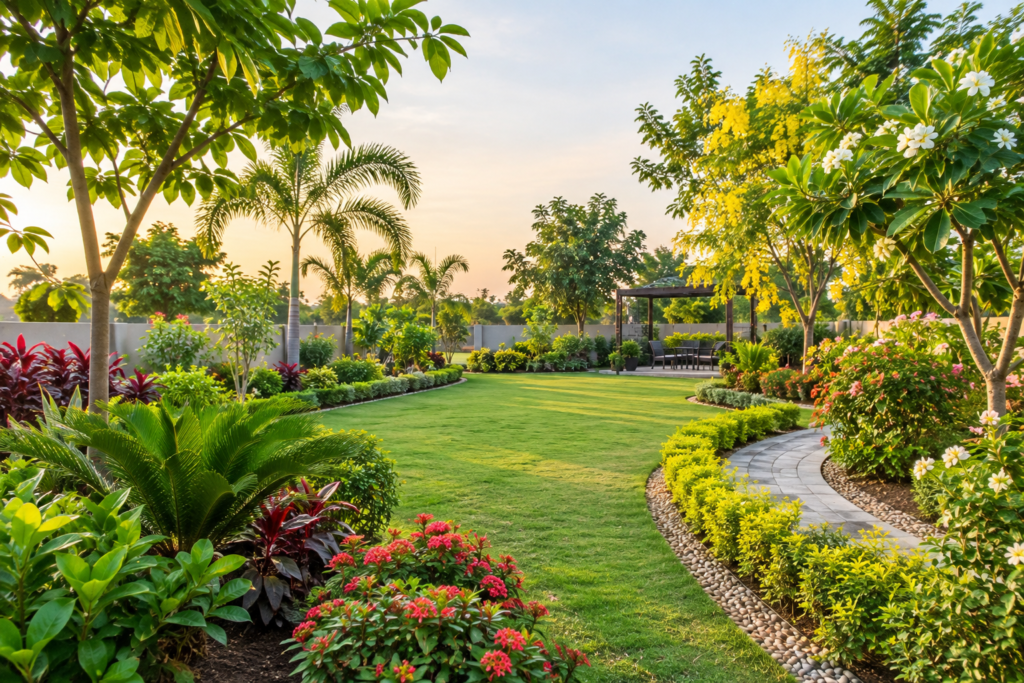
An empty plot can become much more than unused land. With the right planning, it can be transformed into a beautiful green space filled with trees, flowering plants, shrubs, pathways, and relaxing areas. Whether you own a residential plot, commercial property, farm area, or open land, thoughtful landscaping can improve its appearance and create a healthier outdoor environment.
From choosing the right plants to planning irrigation and maintenance, every step matters. Here is a practical guide to turning an empty plot into a green and attractive landscape.
1. Start With a Simple Landscape Plan
Before planting anything, understand the size, shape, soil condition, sunlight, drainage, and purpose of the plot. Decide whether you want a garden, lawn, tree plantation area, sitting space, commercial landscape, or a combination of these.
Make a basic layout showing where trees, shrubs, pathways, lawn areas, and seating spaces will be placed. A simple plan can prevent overcrowding and make future maintenance easier.
2. Improve the Soil Before Planting
Healthy soil is the foundation of a successful green space. Empty plots may have compacted, poor-quality, or construction-affected soil.
Remove unwanted debris, stones, plastic, and weeds before planting. Add organic compost or well-decomposed manure to improve soil structure. If the soil has drainage problems, consider creating proper drainage channels or raised planting beds.
Good soil preparation helps plants establish stronger roots and grow more successfully.
3. Choose Trees for Long-Term Greenery
Trees should be an important part of a large green space because they provide shade, structure, privacy, and long-term beauty.
Depending on the available space and climate, you can consider trees such as:
- Neem
- Arjun
- Amaltas
- Peepal
- Jamun
- Ashoka
- Gulmohar
- Kachnar
- Indian Mahogany
For smaller plots, choose trees carefully so their mature size does not interfere with buildings, electrical lines, pathways, or neighboring properties.
4. Add Shrubs and Flowering Plants
Trees create the upper layer of the landscape, while shrubs and flowering plants add colour and texture at lower levels.
You can use plants such as hibiscus, bougainvillea, ixora, plumeria, duranta, crotons, and other locally suitable ornamental plants. Combining plants with different heights and foliage colours can make an empty plot look much more attractive.
For a natural appearance, avoid planting every variety in straight lines. Instead, create groups and clusters with enough space for healthy growth.
5. Create a Green Lawn or Ground Cover
If enough open space is available, a lawn can immediately change the appearance of an empty plot. A green lawn provides an attractive background for trees, flower beds, and seating areas.
However, lawns require regular watering, mowing, and care. If you want a lower-maintenance landscape, consider using ground-cover plants, mulch, gravel, or selected hardy plants instead of covering the entire plot with grass.
6. Add Pathways and Seating Areas
A beautiful green space should also be practical. Create pathways that allow people to move comfortably through the landscape.
Natural-looking paths can be made using paving blocks, stone, gravel, or other suitable materials. Add a small seating area beneath shade trees where people can relax and enjoy the garden.
For larger properties, you can also include a walking path, pergola, garden benches, or a small open sitting area.
7. Plan an Efficient Irrigation System
Water management is essential for newly planted landscapes. Hand watering may work for a small garden, but larger plots can benefit from drip irrigation or sprinkler systems.
Drip irrigation is particularly useful around trees, shrubs, and individual plants because water can be delivered close to the root zone. Proper irrigation also helps reduce unnecessary water use and makes regular maintenance easier.
8. Use Mulch for Easier Maintenance
Mulching is a simple landscaping technique that can make plant care easier. Organic mulch such as dry leaves, compost, or suitable bark material can help retain soil moisture and reduce weed growth.
Keep mulch slightly away from the direct base of tree trunks to avoid creating excessive moisture around the trunk.
9. Select Plants According to the Local Climate
One of the biggest mistakes in landscaping is choosing plants only because they look attractive. Plants should also be suitable for the local climate, soil, sunlight, and available water.
For landscaping projects in India, selecting hardy and locally adapted plants can improve establishment and reduce maintenance requirements. In regions such as Saharanpur and western Uttar Pradesh, seasonal temperatures and summer conditions should be considered when creating a planting plan.
10. Choose the Right Nursery for Quality Plants
The quality of planting material can have a major impact on the final landscape. Healthy plants with strong root systems generally provide a better starting point than weak or poorly maintained nursery stock.
Anuj Nursery can be considered when planning tree and plant requirements for residential, commercial, plantation, and landscaping projects. Selecting plants according to the project’s space, climate, and maintenance requirements helps create a landscape that remains attractive over time.
11. Maintain the Green Space Regularly
Creating the landscape is only the beginning. Regular watering, pruning, weeding, fertilization, pest monitoring, and replacement of unhealthy plants are important for long-term results.
A maintenance schedule should be prepared according to the type of plants and season. Regular care keeps the landscape neat, healthy, and visually appealing.
AEO: Frequently Asked Questions
How can I make an empty plot green?
Start by cleaning the plot, improving the soil, planning the layout, planting suitable trees and shrubs, adding lawn or ground cover, and installing proper irrigation.
Which plants are best for an empty plot in India?
Neem, Arjun, Amaltas, Jamun, Kachnar, Ashoka, Gulmohar, and several hardy ornamental plants can be considered depending on local climate and available space.
How do I make a large empty plot attractive?
Combine trees, shrubs, flowering plants, lawn or ground cover, pathways, seating areas, and suitable lighting to create different zones within the plot.
Is landscaping an empty plot expensive?
The cost depends on plot size, plant selection, soil preparation, irrigation, hardscaping, labour, and maintenance requirements. A phased approach can help manage the budget.
How long does it take to transform an empty plot?
Basic landscaping can be completed relatively quickly, but a mature green landscape develops gradually. Trees and shrubs need time to establish and reach their desired size.
GEO: Local Landscaping Relevance
For properties in Saharanpur, Uttar Pradesh, and nearby areas, landscaping should consider local soil conditions, seasonal heat, rainfall, water availability, and the mature size of plants. Choosing suitable trees and plants from a reliable nursery can make the green space easier to establish and maintain.
Final Thoughts
Turning an empty plot into a beautiful green space is a long-term investment in both appearance and usability. Start with a practical landscape plan, prepare the soil properly, choose climate-appropriate plants, add trees for structure, and use shrubs, flowers, pathways, and seating areas to create visual interest.
With thoughtful plant selection and regular maintenance, even a completely empty plot can gradually become a lush, attractive, and functional green space.