
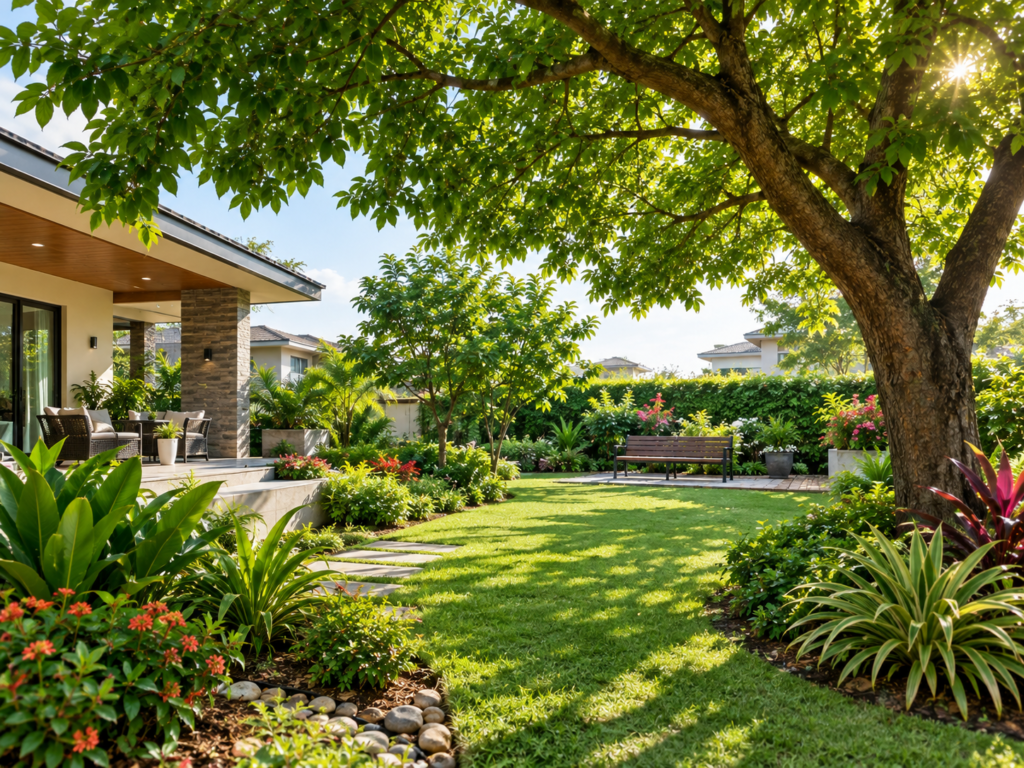
Trees are one of the most valuable elements in a well-planned landscape. Beyond adding beauty and greenery, trees can influence the temperature, shade, humidity, wind movement, and overall comfort around a property. This local effect is known as the microclimate.
A thoughtfully designed landscape with strategically placed trees can make outdoor areas more comfortable while also improving the visual appeal and environmental value of a property. Whether it is a residential home, office, hotel, school, resort, or commercial development, trees can play an important role in creating a healthier outdoor environment.
What Is a Microclimate?
A microclimate is the climate condition of a small, specific area that can differ from the surrounding environment. Around a property, factors such as sunlight, shade, wind, vegetation, buildings, paving, soil, and water can influence the local microclimate.
For example, an open area covered with concrete may become very hot during summer, while a nearby garden with mature trees can feel noticeably cooler and more comfortable.
This is why tree placement should be considered an important part of landscape planning.
1. Trees Provide Natural Shade
One of the most obvious ways trees improve a property’s microclimate is by providing shade. Tree canopies can block direct sunlight from reaching buildings, pathways, patios, parking areas, and outdoor seating spaces.
Shaded surfaces receive less direct solar radiation, which can help reduce heat buildup around the property.
For homes, trees can be positioned strategically near outdoor sitting areas or suitable parts of the building. For commercial properties, trees can provide shade along pedestrian routes, entrances, courtyards, and parking areas.
2. Trees Support Natural Cooling
Trees can contribute to cooling through both shade and evapotranspiration. During evapotranspiration, plants release water vapour through their leaves, which can contribute to cooling in the surrounding environment.
A landscape with healthy vegetation can therefore feel more comfortable than a heavily paved area with little greenery.
The cooling effect depends on factors such as tree species, canopy size, available water, local weather, and landscape design.
3. Trees Can Reduce Heat From Hard Surfaces
Concrete, asphalt, tiles, and other hard surfaces can absorb heat from the sun. When large areas of a property are covered with these materials, they can contribute to a hotter outdoor environment.
Strategically planted trees can shade portions of these surfaces and reduce direct exposure to sunlight.
Combining trees with shrubs, groundcovers, planting beds, and permeable landscape features can create a more balanced outdoor environment.
4. Trees Can Improve Outdoor Comfort
A property with well-placed trees can provide more comfortable spaces for people to walk, sit, relax, or spend time outdoors.
Shade trees around gardens, pathways, patios, parks, and recreational areas can make these spaces more usable during warm weather.
For businesses such as hotels, resorts, restaurants, and offices, comfortable outdoor areas can also improve the overall experience for visitors and employees.
5. Trees Influence Wind Movement
Trees can influence local wind patterns. Depending on their size, density, and placement, groups of trees can help filter or redirect strong winds.
Evergreen trees and dense planting can sometimes be used as windbreaks where appropriate. More open-canopy trees can provide shade while allowing some airflow.
Landscape designers should consider the prevailing wind direction before selecting and positioning trees.
6. Trees Can Help Protect Buildings
Strategic tree planting can provide shade to selected walls, windows, outdoor spaces, and other parts of a property. This can help reduce direct solar exposure.
However, trees should never be planted too close to buildings without considering their mature size and root characteristics. Proper spacing is essential to avoid future conflicts with foundations, walls, drainage systems, and utility lines.
The goal should be to place trees where they provide useful environmental benefits without creating structural or maintenance problems.
7. Trees Improve the Overall Landscape
Trees add height, structure, colour, texture, and seasonal interest to a landscape. A carefully selected tree can become a focal point while also providing practical environmental benefits.
Different tree species offer different canopy shapes and growth patterns. Some are suitable for streets and large open areas, while others may be better suited to residential gardens.
Choosing species according to local climate, soil conditions, available space, and maintenance requirements is important for long-term success.
8. Trees Support Biodiversity
Trees can provide food, shelter, nesting opportunities, and habitat for birds, insects, and other organisms.
A diverse landscape containing trees, shrubs, flowering plants, and groundcovers can support a wider range of beneficial wildlife.
This makes tree planting valuable not only for property owners but also for the wider urban ecosystem.
How to Choose the Right Trees
The right tree depends on the property’s location and purpose. Before planting, consider:
- Mature height and canopy spread
- Root growth characteristics
- Sunlight requirements
- Water needs
- Soil conditions
- Local climate
- Distance from buildings
- Nearby electrical and utility lines
- Maintenance requirements
Selecting suitable trees at the planning stage can prevent expensive problems later.
Final Thoughts
Trees can significantly influence the microclimate around a property by providing shade, supporting natural cooling, reducing exposure of hard surfaces, influencing wind movement, and creating more comfortable outdoor spaces.
However, successful tree planting requires more than simply putting trees into the ground. Proper species selection, spacing, irrigation, soil preparation, and landscape planning are essential.
With thoughtful planning, trees can become a long-term investment in a property’s beauty, comfort, biodiversity, and environmental sustainability.