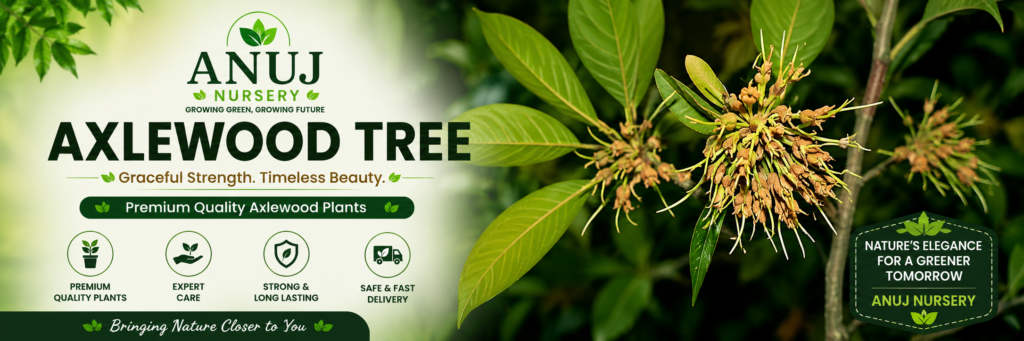
The Axlewood Tree (Anogeissus latifolia) is a valuable deciduous tree native to the Indian subcontinent and other parts of South Asia. It is known by several regional names, including Dhaora, Dhavda, and Axlewood, and is valued for its timber, foliage, ecological importance, and adaptability to suitable warm climates.
For gardeners, farmers, landscapers, and tree enthusiasts, growing an Axlewood Tree can be a rewarding long-term project. It is particularly suitable for spacious outdoor areas where the tree has enough room to develop its root system and mature canopy.
This complete guide explains Axlewood Tree care, benefits, sunlight, watering, soil, fertilizer, pruning, planting, and maintenance tips in a simple and practical format.
What is an Axlewood Tree?
The scientific name of Axlewood Tree is Anogeissus latifolia. It belongs to the Combretaceae family and is naturally found across parts of India and other areas of South Asia.
The tree is deciduous, meaning it can shed some or most of its leaves during a dry or seasonal period depending on the local climate. It can develop into a medium-to-large tree when given suitable growing conditions.
Axlewood is traditionally valued for its durable wood and has also been used in various local and ecological applications. Its natural adaptability makes it an interesting tree for farms, plantations, large landscapes, and restoration projects.
Benefits of Growing Axlewood Tree
1. Valuable Timber Tree
Axlewood is known for its durable wood, which has traditionally been used for various timber and woodworking applications.
2. Native Indian Tree
Anogeissus latifolia is native to the Indian subcontinent, making it an important species within local forest ecosystems.
3. Supports Biodiversity
Like many native trees, Axlewood can contribute to local ecosystems by providing habitat and resources for insects, birds, and other organisms.
4. Suitable for Large Landscapes
Its mature size makes it useful for farms, plantations, parks, open landscapes, and ecological planting projects.
5. Drought Adaptability
Once established, Axlewood can tolerate periods of dry conditions, although young trees require appropriate watering during establishment.
6. Long-Term Tree Value
A healthy Axlewood Tree can become a long-lasting part of a farm, plantation, or landscape.
Axlewood Tree Care Guide
Sunlight Requirements
Axlewood generally performs best in full sunlight. Choose an open planting location where the tree receives several hours of direct sunlight each day.
Good sunlight supports healthy foliage development and overall growth.
Avoid planting young trees in heavily shaded locations unless temporary protection is needed during extreme weather.
Watering Requirements
Newly planted Axlewood Trees require regular watering during the establishment stage. Water deeply when the upper layer of soil begins to dry.
Once established, the tree can be relatively tolerant of dry conditions. However, additional irrigation may be helpful during prolonged periods of extreme heat or drought.
Avoid excessive watering and standing water because poor drainage can damage roots.
Soil Requirements
Axlewood can grow in a range of soil conditions but generally performs better in well-drained soil.
Before planting, improve poor soil with mature compost or well-decomposed organic manure. Avoid locations where water remains stagnant after heavy rainfall.
Good drainage is particularly important during the early establishment stage.
Fertilizer Requirements
Young trees can benefit from organic compost or well-decomposed manure around the root zone.
If soil testing indicates nutrient deficiencies, an appropriate balanced fertilizer can be used according to professional recommendations.
Avoid excessive fertilizer, especially around the trunk.
Pruning Requirements
Axlewood generally requires limited pruning after establishment. Remove dead, damaged, diseased, or crossing branches when necessary.
For young trees, light formative pruning can help develop a strong structure.
Avoid excessive pruning that unnecessarily removes healthy branches.
Best Places to Plant Axlewood Tree
Because Axlewood can become a sizeable tree, provide adequate space for mature growth.
It can be suitable for:
- Farms
- Farmhouses
- Large gardens
- Parks
- Plantations
- Roadside landscapes
- Institutional campuses
- Ecological restoration projects
- Large outdoor landscapes
Avoid planting near buildings, overhead electrical wires, narrow pathways, and underground utilities.
Common Axlewood Tree Problems
Yellow Leaves
Yellow leaves may result from excessive watering, poor drainage, nutrient deficiencies, transplant stress, or natural seasonal changes.
Check the soil moisture and drainage before adding fertilizer.
Slow Growth
Young trees may initially grow slowly while establishing their root systems. Poor sunlight, compacted soil, insufficient moisture, or transplant shock can also reduce growth.
Leaf Damage
Inspect leaves regularly for unusual spots, insects, discoloration, or other signs of stress. Good spacing and proper watering can help maintain plant health.
Frequently Asked Questions
What is the botanical name of Axlewood Tree?
The botanical name of Axlewood Tree is Anogeissus latifolia.
Is Axlewood Tree native to India?
Yes. Anogeissus latifolia is native to the Indian subcontinent and occurs naturally in various parts of India.
How much sunlight does Axlewood Tree need?
Axlewood generally prefers full sunlight for healthy growth.
How often should I water Axlewood Tree?
Young trees require regular watering during establishment. Mature trees generally need less irrigation but may benefit from additional water during prolonged dry periods.
Can Axlewood Tree be grown in a home garden?
It can be grown in a home garden if there is sufficient space for its mature size. For small gardens, a large tree may not be the best choice.
Conclusion
The Axlewood Tree (Anogeissus latifolia) is a valuable native Indian tree known for its durable wood, ecological importance, adaptability, and long-term landscape value. It can be an excellent choice for farms, plantations, parks, large gardens, and ecological planting projects.
For healthy growth, provide full sunlight, well-drained soil, appropriate watering, organic nutrition, and sufficient space. Young trees need more attention during establishment, while mature trees are generally more resilient to dry conditions.
If you are looking to buy a healthy Axlewood Plant online in India, visit AnujNursery.in and explore the available plant collection for your farm, farmhouse, garden, plantation, or landscaping project.
Choose a healthy Anogeissus latifolia plant suited to your local conditions and give it proper care from planting onwards.
Order your Axlewood Plant from Anuj Nursery today and add a valuable native tree to your green space!