If you are planning a timber plantation, agroforestry project, farmhouse landscape, or commercial tree-growing project, the Teak Timber Tree (Tectona grandis) is one of the most well-known timber species to consider. Commonly called Teak or Sagwan, Tectona grandis is valued for its durable wood, attractive grain, natural resistance to several environmental conditions, and long history of use in furniture and construction.
However, buying teak plants should not be treated as a simple purchase. The quality of planting material, site conditions, management practices, climate, and long-term plantation planning can significantly influence tree growth. Choosing healthy plants from a reliable nursery is therefore an important first step.
What Is Tectona grandis?
Tectona grandis is a deciduous tree belonging to the mint family, Lamiaceae. It is native to South and Southeast Asia and has been widely planted in tropical regions.
A mature teak tree can become large, making it more suitable for spacious areas than small residential gardens. Its large leaves, straight trunk potential, and distinctive seasonal growth make it particularly recognizable.
For people searching online for “buy teak timber tree”, it is important to distinguish between buying a young nursery plant and purchasing mature timber. A nursery plant is an investment in future tree growth, not an instant source of timber.
Why Is Teak Timber So Popular?
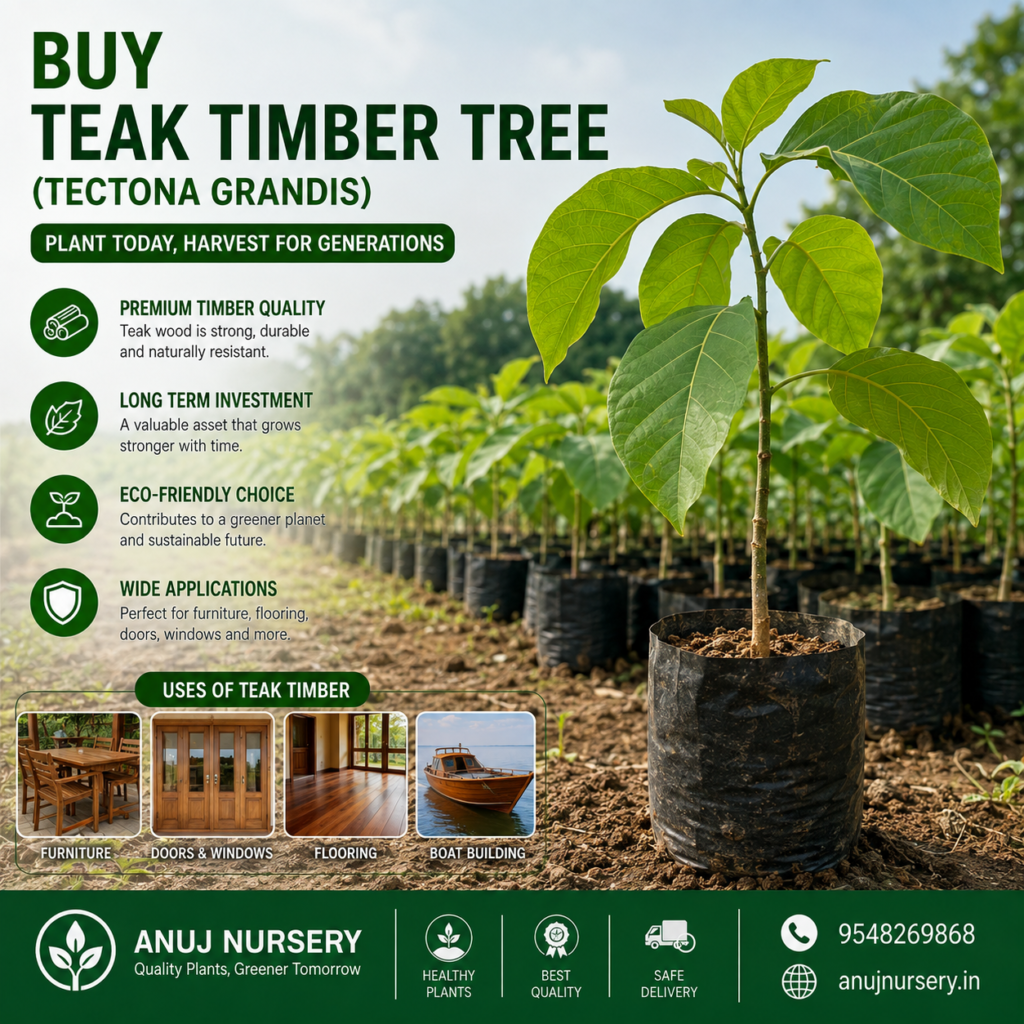
Teak is famous for its high-quality wood. Properly grown teak timber is widely valued for furniture, doors, windows, flooring, decorative woodwork, boat building, and other applications.
One reason for its popularity is the natural durability of teak wood. Its oil content and physical properties help the wood perform well in demanding applications when properly processed and maintained.
Teak also has an attractive golden to medium-brown appearance that can develop a distinctive patina over time. These characteristics have made teak a premium timber in many markets.
Benefits of Planting Teak Trees
Planting Tectona grandis can offer several advantages when the species is suitable for the location.
1. Valuable Timber: Teak is one of the best-known commercial hardwoods and has strong demand for quality timber.
2. Long-Term Plantation Potential: Teak is generally grown as a long-term forestry or agroforestry crop rather than a short-term garden plant.
3. Strong Landscape Appeal: Young teak trees have large leaves and can add a tropical appearance to spacious properties.
4. Environmental Contribution: Like other trees, teak plantations can contribute to carbon storage, soil protection, and green cover when responsibly managed.
5. Multiple Timber Applications: Mature teak wood can be used in furniture, construction-related woodwork, flooring, doors, and other products.
How to Choose Healthy Teak Plants
When you buy teak plants, don’t focus only on height. A taller plant is not automatically a better plant.
Look for plants with a healthy root system, a strong and relatively straight stem, healthy leaves, and no obvious signs of pests, disease, severe physical damage, or root disturbance.
The nursery should also be able to provide useful information about the plant’s age, growing conditions, and recommended planting practices.
For plantation projects, the source and quality of planting material can matter far more than a small difference in the initial purchase price.
Ideal Conditions for Teak Plantation
Teak generally performs well in warm tropical and subtropical conditions. It prefers adequate sunlight and well-drained soil. Waterlogged locations are generally unsuitable because excessive standing water can negatively affect root development.
Before planting, prepare the land properly and consider soil characteristics, rainfall, drainage, spacing, weed management, and long-term maintenance.
Farmers and investors should also check applicable local forestry regulations and market conditions before starting a commercial teak plantation. Timber regulations and harvesting requirements can vary by state and region.
Teak Tree Plantation: A Long-Term Approach
One of the biggest mistakes people make is expecting teak to provide quick returns. Teak is a long-term timber crop. Growth rates and final timber quality depend on genetics, climate, soil, spacing, management, and other factors.
Therefore, avoid advertisements that promise guaranteed profits or a fixed return within a specific period. A responsible plantation plan should consider realistic growth expectations, maintenance costs, land suitability, legal requirements, and the intended timber market.
Buy Teak Timber Tree from Anuj Nursery
If you are searching for quality Teak Timber Tree (Tectona grandis) plants in India, Anuj Nursery can help you source healthy nursery plants for suitable plantation and landscaping requirements.
Before ordering, confirm plant size, quantity, availability, delivery conditions, and planting requirements. For large plantation projects, it is also wise to discuss the site conditions and intended plantation scale before purchasing.
Anuj Nursery
Website: anujnursery.in
Contact: 9548269868
Frequently Asked Questions
What is the scientific name of teak?
The scientific name of teak is Tectona grandis.
Is teak also called Sagwan?
Yes. Teak is widely known as Sagwan in India.
Is teak suitable for timber plantations?
Yes, teak is a major timber species and is commonly grown in suitable tropical and subtropical regions.
How long does teak take to grow?
Teak is a long-term tree crop. Growth and harvest timelines vary significantly according to genetics, climate, soil, plantation management, and local forestry practices.
Where should teak be planted?
Teak generally prefers warm conditions, good sunlight, and well-drained soil. Avoid poorly drained or persistently waterlogged locations.
Final Thoughts
The Teak Timber Tree (Tectona grandis) is a valuable and highly recognized hardwood species with important applications in furniture, construction-related woodwork, flooring, and other timber products. For anyone planning a teak plantation, selecting healthy planting material is only the beginning. Proper site selection, spacing, maintenance, legal compliance, and realistic long-term planning are equally important.
If you are ready to buy teak timber tree plants, choose healthy nursery stock from a reliable supplier and plan your plantation around the actual growing conditions of your land.