
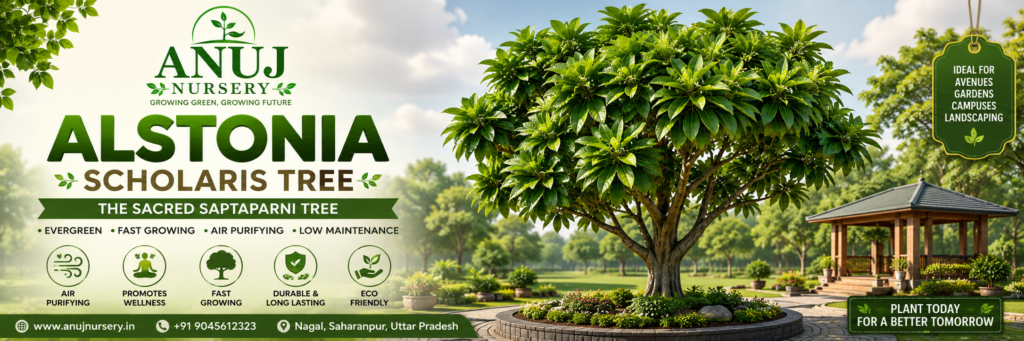
The Alstonia Scholaris Tree, commonly known as the Saptaparni Tree, is a beautiful evergreen tree widely grown in India for avenue plantations, gardens, parks, campuses, and large landscapes. Known for its tall growth, glossy green foliage, fragrant flowers, and dense canopy, this tree is an excellent choice for creating attractive and green outdoor spaces.
Whether you are a home gardener, landscaper, farmer, or plantation enthusiast, understanding Alstonia Scholaris tree care is important for healthy and vigorous growth. In this guide, you will learn about Saptaparni tree benefits, sunlight, watering, soil, fertilizer, planting, and maintenance.
What is Alstonia Scholaris?
Alstonia scholaris is an evergreen tree belonging to the Apocynaceae family. In India, it is commonly called Saptaparni because its leaves often occur in whorls around the branches. It is also known by names such as Devil’s Tree and Blackboard Tree.
The tree can develop into a tall landscape specimen with a straight trunk and attractive foliage. Its small, fragrant flowers generally appear in clusters and can add seasonal interest to gardens and avenues.
Because of its upright growth and evergreen appearance, Alstonia scholaris is particularly suitable for spacious landscapes and avenue planting.
Benefits of Alstonia Scholaris Tree
1. Excellent Evergreen Landscape Tree
Saptaparni maintains attractive green foliage and can provide year-round greenery in suitable climates.
2. Ideal Avenue Tree
Its tall, upright growth makes it suitable for roadsides, institutional campuses, parks, gardens, and large landscaping projects.
3. Provides Shade
As the tree matures, its dense foliage can provide useful shade and improve the visual appeal of outdoor spaces.
4. Attractive Fragrant Flowers
Alstonia scholaris produces clusters of small flowers with a pleasant fragrance, adding ornamental value during its flowering period.
5. Suitable for Indian Climate
The tree performs well in many tropical and subtropical parts of India when planted in suitable soil and given adequate moisture during establishment.
6. Long-Term Landscape Value
A properly planted Saptaparni tree can become a significant feature of a garden, avenue, campus, or large property.
Alstonia Scholaris Tree Care Guide
Sunlight
Plant Alstonia scholaris in a location receiving full sun to partial shade. Good sunlight supports healthy foliage and strong growth.
Watering
Young Saptaparni plants need regular watering while their root systems are becoming established. Water deeply when the soil begins to dry, but avoid keeping the soil permanently waterlogged.
Once established, the tree generally becomes more tolerant of short dry periods.
Soil
Use fertile, well-drained soil containing organic matter. Loamy soil with good drainage is a good choice. Avoid locations where water remains stagnant around the roots.
Temperature
Alstonia scholaris is well suited to warm tropical and subtropical conditions. Protect young plants from prolonged extreme cold.
Fertilizer
Apply well-decomposed compost or organic manure around the root zone during the growing season. A balanced tree fertilizer can also be used when necessary, following the product instructions.
Pruning
Remove dead, damaged, or crossing branches to maintain a healthy structure. For avenue plantations, appropriate formative pruning can help develop a desirable shape.
Alstonia scholaris benefits include supporting traditional herbal remedies, improving respiratory health, and promoting overall wellness. The tree has long been valued for its medicinal bark and leaves in many cultures. It also provides dense shade, enhances air quality, and contributes to biodiversity, making it a useful and environmentally beneficial tree for gardens and landscapes.
Where Can You Grow Saptaparni Trees?
Alstonia scholaris is suitable for:
- Large home gardens
- Farmhouses
- Public parks
- Roadside avenues
- Schools and colleges
- Institutional campuses
- Resorts and hotels
- Commercial landscapes
- Large residential properties
Because it can become a large tree, choose a planting location with adequate space for its mature height and canopy.
Alstonia scholaris benefits include its value as a shade tree, avenue tree, and attractive evergreen plant for landscaping. It can help provide a cooler environment, support biodiversity, and improve the visual appeal of gardens and roadsides. Its traditional uses also make it an interesting species for botanical and educational purposes when grown under suitable conditions.
Frequently Asked Questions
Is Alstonia Scholaris a good tree for gardens?
Yes, it can be an excellent landscape tree for spacious gardens where there is enough room for mature growth.
How much sunlight does Saptaparni need?
Saptaparni generally performs well in full sun to partial shade, with good light supporting vigorous growth.
How often should I water Alstonia Scholaris?
Water young plants regularly according to soil moisture and weather. Once established, watering can be reduced during periods of adequate rainfall.
Is Saptaparni an evergreen tree?
Yes. Alstonia scholaris is generally an evergreen tree in suitable tropical and subtropical climates, although foliage can vary with local conditions.
Is Alstonia Scholaris suitable for avenue planting?
Yes. Its tall growth and attractive evergreen foliage make it a popular choice for avenue and institutional landscaping where sufficient space is available.
Conclusion
The Alstonia Scholaris Tree (Saptaparni) is a valuable choice for gardeners and landscapers looking for an attractive evergreen tree with strong landscape appeal. Its tall structure, glossy foliage, fragrant flowers, and suitability for avenue planting make it useful for gardens, parks, campuses, and large properties.
For successful growth, provide adequate sunlight, well-drained fertile soil, regular watering during establishment, and occasional organic nutrition. Most importantly, select a spacious planting location so the tree has enough room to develop naturally.
Looking for a healthy Alstonia Scholaris Plant? Visit AnujNursery.in to explore quality plants for gardens, farms, landscapes, and avenue plantations. Choose a healthy Saptaparni plant today and add lasting greenery and elegance to your outdoor space.