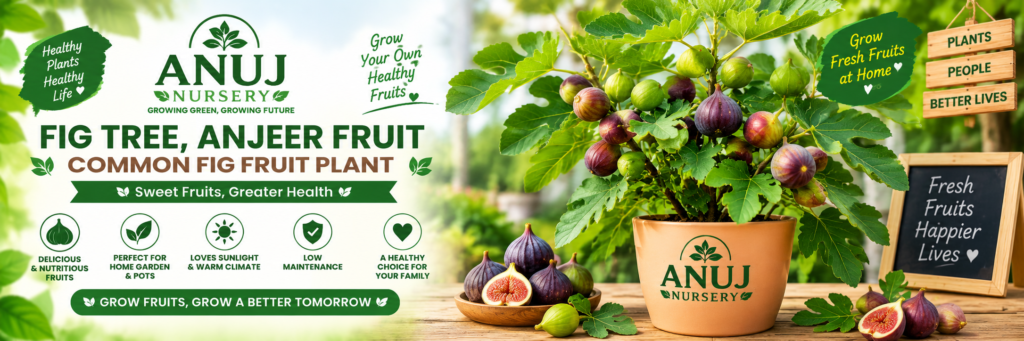
The Fig Tree, commonly known as the Anjeer Plant or Common Fig, is a rewarding fruit plant for home gardens, terraces, patios, and suitable orchard spaces. Its botanical name is Ficus carica, and it is valued for its sweet, nutritious fruits and attractive foliage.
With the right combination of sunlight, well-draining soil, appropriate watering, balanced nutrition, pruning, and a suitable climate, fig plants can produce delicious fruits while adding ornamental value to your garden.
Whether you are growing an Anjeer plant in a pot or planting a fig tree in your garden, understanding its basic requirements is essential for healthy growth and fruit production.
What Is a Fig Tree?
The Common Fig (Ficus carica) is a deciduous fruit tree cultivated in many regions for its edible figs. Depending on the variety and growing conditions, fig plants can be maintained as compact container plants or allowed to develop into larger trees.
The fruits may develop in shades ranging from green and yellow to purple or brown. Fresh figs are appreciated for their naturally sweet flavor and soft texture.
Benefits of Growing an Anjeer Plant
1. Delicious Homegrown Fruit
Growing a fig tree allows you to harvest fresh Anjeer fruits directly from your garden when the fruit is mature.
2. Nutritional Value
Figs provide dietary fiber and several vitamins and minerals, making them a nutritious addition to a balanced diet.
3. Suitable for Containers
With the right variety, container size, soil, and pruning, figs can be grown successfully in large pots.
4. Attractive Foliage
Large, distinctive fig leaves give the plant an attractive ornamental appearance.
5. Suitable for Home Gardens
A well-maintained fig plant can be an excellent addition to home fruit gardens, terraces, patios, and larger landscapes.
Fig Tree Care Guide
Sunlight Requirements
Full sunlight is essential for healthy fig growth and fruit production.
Place your Anjeer plant in a location receiving around 6–8 hours of direct sunlight where climate conditions allow.
Insufficient sunlight can lead to weak growth and reduced fruiting.
Watering Requirements
Young fig plants require regular watering while their roots become established.
Once established, figs are relatively tolerant of short dry periods, but consistent moisture is important during active growth and fruit development.
Water deeply when the soil begins to dry, but avoid keeping the roots continuously wet. Good drainage is essential because waterlogged soil can cause root problems.
Soil Requirements
Fig trees perform best in fertile, well-draining soil.
A mixture containing garden soil, organic matter, and suitable drainage material can work well for container cultivation.
Avoid heavy soil that holds excess water for long periods.
Fertilizer Requirements
Apply a balanced fertilizer during active growth according to the manufacturer’s instructions.
Organic compost or well-decomposed manure can also improve soil structure and provide nutrients.
Avoid excessive nitrogen fertilizer. Too much nitrogen can encourage leafy growth while reducing fruit production.
Pruning an Anjeer Plant
Pruning helps control plant size, improve air circulation, and maintain a productive structure.
Remove dead, damaged, diseased, or crossing branches when necessary.
Container-grown fig plants may require more regular pruning to maintain a manageable size.
Avoid excessive pruning because heavy removal of productive branches can reduce fruiting.
How to Get More Figs
For better fruit production, focus on these important factors:
- Provide plenty of direct sunlight.
- Choose a variety suitable for your climate.
- Use well-draining fertile soil.
- Maintain appropriate moisture during fruit development.
- Avoid excessive nitrogen fertilizer.
- Prune carefully.
- Give container plants enough root space.
- Protect developing fruit from birds and other pests where necessary.
A healthy, mature plant with suitable environmental conditions generally has better fruiting potential.
Common Fig Tree Problems
Yellow Leaves
Yellowing can occur because of overwatering, poor drainage, nutrient deficiencies, root stress, or natural leaf aging.
No Fruit
Poor fruiting may result from insufficient sunlight, unsuitable climate, young plant age, excessive nitrogen, inadequate watering, or variety-specific characteristics.
Leaf Spots
Leaf spots can be associated with fungal or environmental problems. Remove badly affected foliage and improve air circulation.
Fruit Damage
Birds, insects, and other pests may damage ripening figs. Monitor fruit regularly and use appropriate protective measures when necessary.
Frequently Asked Questions
How much sunlight does an Anjeer plant need?
A fig plant generally performs best with 6–8 hours of direct sunlight per day, depending on local climate and growing conditions.
Can Anjeer grow in pots?
Yes. Fig plants can grow well in large containers when provided with adequate sunlight, drainage, suitable soil, and regular maintenance.
How often should I water a fig tree?
Water when the soil begins to dry. Young plants need more consistent watering, while established trees generally tolerate short dry periods better.
Why is my fig tree not producing fruit?
Check sunlight, plant age, variety, watering, nutrition, pruning, and climate. Excessive nitrogen and insufficient sunlight can particularly contribute to poor fruiting.
Can fig trees grow in India?
Yes. Common figs can be grown in suitable regions of India, although variety and local climate are important factors in successful fruit production.
Conclusion
The Fig Tree (Ficus carica) is an excellent choice for gardeners who want to grow their own Anjeer fruits while adding attractive greenery to their outdoor space. It can be grown in gardens as well as large containers when its basic requirements are met.
For the best results, provide full sunlight, well-draining soil, appropriate watering, balanced nutrition, careful pruning, and sufficient root space. Selecting a fig variety suitable for your local climate is equally important.
If you are looking to buy a healthy Fig Tree or Anjeer Plant online in India, explore the fruit plant collection at AnujNursery.in.
Grow your own delicious Anjeer fruits at home—order a healthy Fig Plant from Anuj Nursery today!