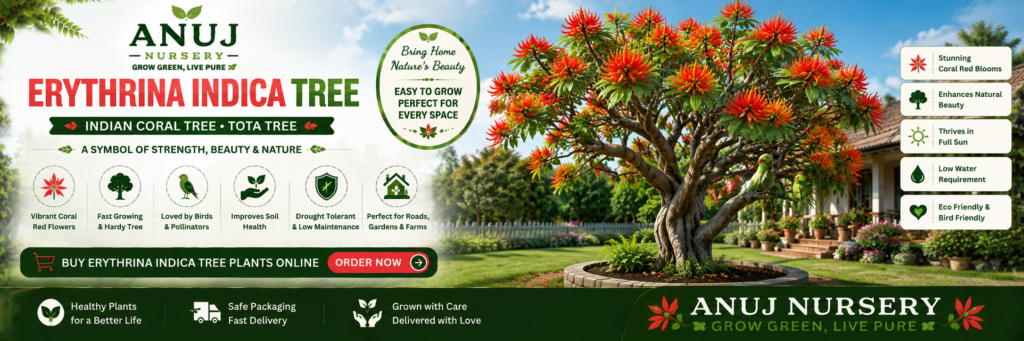
The Erythrina Indica—commonly known as the Indian Coral Tree or Parijat / Mandara in regional Indian contexts—is a striking, fast-growing deciduous tree native to tropical and subtropical regions of South Asia. Celebrated for its brilliant crimson-red flower clusters that bloom before the foliage appears, this tree is far more than an ornamental landscape feature. It is an ecological powerhouse with profound traditional and agricultural utility across India.
Key Characteristics of Erythrina Indica
- Botanical Name: Erythrina variegata (syn. Erythrina indica)
- Family: Fabaceae (Legume family)
- Native Range: India, Southeast Asia, Northern Australia, and coastal East Africa.
- Flowering Season: Late winter to early spring (February to April), providing a vital nectar source for birds and pollinators.
- Growth Rate: Rapid, capable of reaching heights of 15 to 20 meters.
Traditional Uses and Health Benefits
While every part of the Indian Coral Tree—bark, leaves, and roots—has a history of use in Ayurveda and indigenous medicine systems, proper clinical validation is essential.
- Anti-Inflammatory and Analytica Properties: Traditional formulations utilize bark extracts to alleviate joint pain, rheumatic swelling, and localized inflammation.
- Digestive Health: Leaf juices have historically been deployed as a natural remedy to expel intestinal parasites and soothe digestive discomfort.
- Sleep and Sedative Qualities: Extracts from the bark and leaves contain bioactive alkaloids (such as hypaphorine) traditionally valued for their mild sedative and calming effects on the nervous system.
Disclaimer: Always consult a certified medical professional or Ayurvedic practitioner before using plant-based remedies for therapeutic purposes.
The Erythrina Indica Tree is a fast-growing tropical tree admired for its attractive foliage, striking flowers, and broad canopy. It is commonly planted for shade, landscaping, avenues, and garden decoration. This hardy tree grows well in warm climates and sunny locations. With suitable soil, watering, and regular maintenance, it can develop into an impressive landscape tree.
Ecological and Agricultural Benefits in India
Beyond medicinal lore, the Indian Coral Tree plays a critical role in sustainable agriculture and environmental conservation:
- Natural Nitrogen Fixation: As a member of the Fabaceae family, it hosts symbiotic root bacteria that convert atmospheric nitrogen into usable soil nutrients, enriching surrounding soil health.
- Living Fences and Windbreaks: Because it propagates easily from large stem cuttings, farmers across rural India plant rows of Erythrina Indica to serve as living fences, boundary markers, and windbreaks for crop protection.
- Support for Permaculture: It acts as a premier shade tree for shade-grown crops like coffee, vanilla, and pepper, while its falling leaves decompose rapidly to create a rich green manure mulch.
Step-by-Step Growing Guide for India
The Indian Coral Tree is exceptionally hardy, drought-tolerant once established, and thrives across diverse Indian agro-climatic zones.
1. Climate and Sunlight Requirements
- Sunlight: Requires full, direct sunlight (at least 6 to 8 hours daily) for optimal flowering.
- Climate: Thrives in hot, humid tropical and subtropical environments. It performs exceptionally well in coastal regions due to its high salt tolerance.
2. Soil Preferences
- Type: Prefers well-draining sandy loam, clay loam, or even gravelly coastal soils.
- Drainage: Waterlogging is its primary enemy; ensure planting sites do not retain standing water during the monsoon season.
3. Propagation Methods
- From Cuttings (Recommended): Hardwood stem cuttings (1 to 2 meters long and 5 to 10 cm thick) taken from mature branches root with high success rates. Simply push the cutting directly into moist soil before the dry season.
- From Seeds: Scarify the hard seed coat by soaking in warm water for 24 hours before sowing in a nursery bed to accelerate germination.
4. Watering and Maintenance
- Establishment Phase: Water young saplings regularly during their first dry season. Once mature, the tree is remarkably drought-resistant.
- Pruning: Prune after the flowering season concludes to maintain structural integrity, control height, and encourage dense branching for the subsequent bloom cycle.
Frequently Asked Questions (FAQ)
Is Erythrina Indica toxic to livestock?
Yes, certain parts of the tree contain alkaloids that can be toxic if consumed in large quantities by grazing animals. Farmers generally use it for fencing precisely because livestock tend to avoid browsing its leaves.
When is the best time to plant the Indian Coral Tree in India?
The onset of the monsoon season (June to July) provides the ideal window for planting stem cuttings or saplings, allowing roots to establish before the harsher summer months return.
Transform Your Landscape with the Indian Coral Tree
Harness the ecological resilience, rapid growth, and stunning crimson canopy of the Erythrina Indica to elevate your agricultural land or urban sanctuary.
Ready to start planting? Secure your certified Indian Coral Tree saplings or high-viability hardwood cuttings from a local certified nursery today, and cultivate a resilient, biodiverse ecosystem right in your backyard.