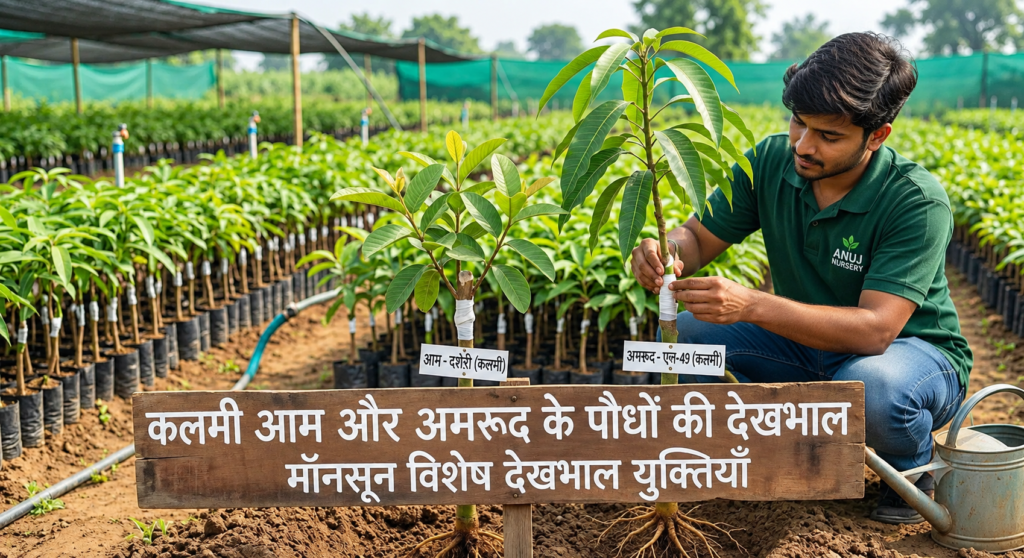
Grafted mango and guava plants are popular choices for Indian home gardens, terraces, farms, and orchards because they can produce quality fruits while requiring less waiting time than many seed-grown plants. However, proper care is essential to help grafted plants establish strong roots, healthy branches, and good fruit production.
India’s changing seasons make plant care especially important. From hot summers to monsoon humidity and winter temperatures, mango and guava plants need different care throughout the year. This seasonal guide from Anuj Nursery explains how to care for grafted mango and guava plants for healthy growth and better fruiting.
What Are Grafted Mango and Guava Plants?
Grafting is a plant propagation technique in which a desired variety is joined with a suitable rootstock. The resulting plant combines the characteristics of both parts.
Grafted mango and guava plants are generally selected by gardeners who want a known fruit variety and relatively earlier fruiting compared with plants grown from seeds. When purchased from a reliable nursery, grafted plants can be a practical option for residential gardens and commercial orchards.
Choosing the Right Location
Both mango and guava plants need plenty of sunlight for vigorous growth and fruit development. Choose an open location that receives around 6–8 hours of direct sunlight during the growing season.
Avoid planting them in areas where water remains stagnant after rain. Good drainage is particularly important because continuously wet soil can affect root health.
For container gardening, select a large, sturdy pot with sufficient drainage holes. As the plant grows, it may eventually need a larger container or a suitable location in the ground.
Soil and Planting Tips
Grafted mango and guava plants perform well in fertile, well-drained soil enriched with organic matter. Before planting, prepare the soil by mixing mature compost or well-decomposed organic manure.
When planting a grafted sapling, keep the graft union above the soil level. Do not bury the grafted portion underground. This is an important step because shoots emerging from below the graft can compete with the selected variety.
After planting, water thoroughly to help the soil settle around the roots.
Summer Care: March to June
Indian summers can be particularly stressful for young grafted plants. During hot and dry weather, maintain consistent soil moisture without creating waterlogging.
Water early in the morning or in the evening. Newly planted saplings may require more frequent watering than established trees.
Applying an organic mulch layer around the root zone can help reduce moisture loss and moderate soil temperature. Keep mulch slightly away from the main stem to reduce the risk of stem-related problems.
Protect very young plants from extreme heat with temporary shade when necessary, while ensuring they still receive adequate light.
Monsoon Care: July to September
The monsoon season brings natural moisture but can also create excessive soil wetness. Reduce irrigation when rainfall is sufficient and check drainage regularly.
Remove weeds around the plant so that they do not compete for nutrients, water, and sunlight. Good air circulation around the foliage is also useful during humid weather.
Inspect the plant regularly for unusual spots, damaged leaves, insects, or excessive shoots. Early observation makes plant-care problems easier to manage.
Winter Care: October to February
During winter, plant growth may slow depending on the local temperature. Reduce watering compared with peak summer, but do not allow the soil to remain completely dry for long periods.
Guava can continue growing and fruiting under suitable conditions, while mango growth may become slower during cooler months.
Avoid excessive nitrogen fertilization when active growth is limited. Instead, focus on maintaining healthy soil and providing balanced nutrition according to the plant’s age and growing condition.
Pruning and Removing Unwanted Shoots
Grafted plants benefit from proper pruning and training. Remove dead, damaged, diseased, or crossing branches when appropriate.
Most importantly, monitor the area below the graft union. Any shoots emerging from the rootstock should generally be removed because they can take energy away from the grafted variety.
Do not perform heavy pruning without a reason. A clean, well-shaped canopy with good air circulation is usually more useful than excessive cutting.
Fertilizer and Nutrition
Grafted mango and guava plants need nutrients for leaf growth, root development, flowering, and fruit production. Organic compost can help improve soil structure and provide nutrients.
A balanced fertilizer program should be based on plant age, soil condition, growth stage, and local growing conditions. Avoid applying excessive fertilizer because more fertilizer does not automatically mean faster or healthier growth.
Regularly adding organic matter and maintaining healthy soil can support long-term plant performance.
Watering: Avoid Both Extremes
One of the most common mistakes in fruit-plant care is inconsistent watering. Too little water can cause stress, while excessive irrigation can create root problems.
Check the soil before watering. If the upper soil layer is becoming dry, water deeply enough to reach the root zone. The exact frequency will depend on temperature, rainfall, soil type, plant size, and whether the plant is grown in a pot or in the ground.
Common Mistakes to Avoid
When caring for grafted mango and guava plants, avoid these common mistakes:
- Burying the graft union under soil
- Overwatering during the monsoon
- Keeping plants in deep shade
- Ignoring shoots growing below the graft
- Applying excessive fertilizer
- Using poorly drained soil
- Allowing weeds to compete around young plants
- Neglecting regular inspection for pests and diseases
Why Buy Grafted Plants from a Reliable Nursery?
The quality of the planting material can influence future plant performance. A healthy grafted plant should have a strong root system, a healthy stem, vigorous foliage, and a properly formed graft union.
Anuj Nursery provides a range of plants for gardeners, homeowners, landscapers, and plantation projects. Choosing suitable planting material and following proper seasonal care can help your mango and guava plants establish successfully.
Final Thoughts
Grafted mango and guava plants can be excellent additions to Indian gardens and orchards when given the right growing conditions. Proper sunlight, well-drained soil, controlled watering, seasonal nutrition, pruning, and regular monitoring are key to healthy development.
Whether you are growing a grafted mango or guava plant in a backyard, terrace garden, farm, or orchard, adapting your care routine to India’s seasons can make a significant difference. With consistent attention and quality planting material from a trusted nursery such as Anuj Nursery, you can create the right foundation for healthy growth and future fruit production.