
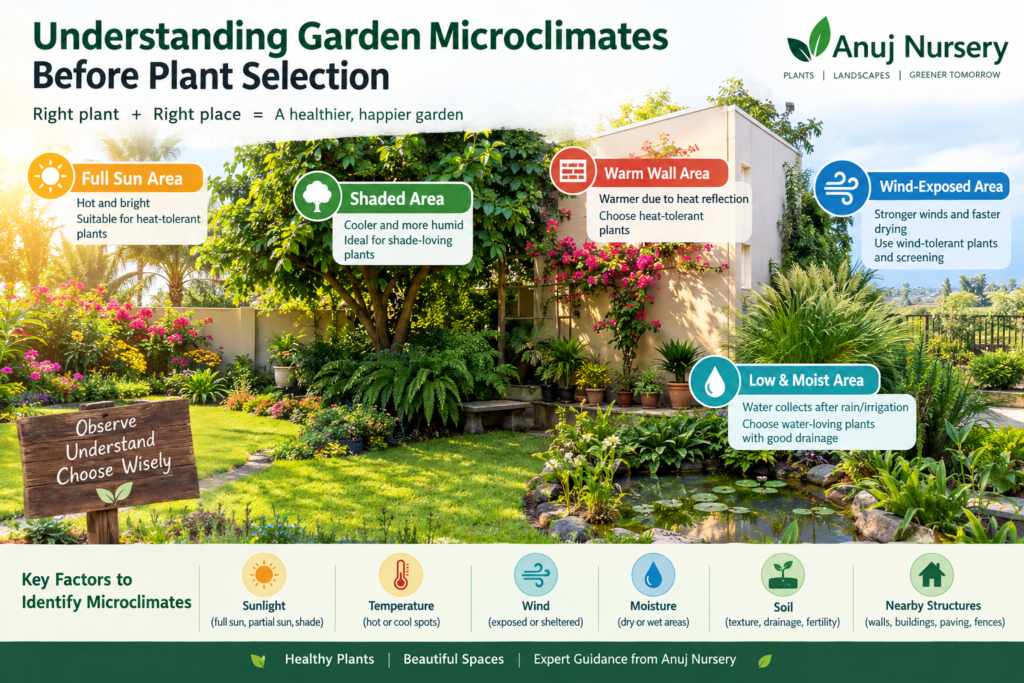
Choosing the right plants is one of the most important steps in creating a healthy and attractive garden. However, selecting plants based only on the general climate of your city can lead to disappointing results. Even within the same property, temperature, sunlight, wind, moisture, and soil conditions can vary significantly.
These small areas with different growing conditions are called garden microclimates. Understanding them before plant selection can help you choose suitable plants, reduce maintenance problems, and create a healthier landscape.
What Is a Garden Microclimate?
A garden microclimate is the specific environmental condition found in a small area of a garden or landscape. It can be different from the overall climate of the surrounding region.
For example, a wall may absorb heat during the day and release it at night, creating a warmer area. A shaded corner beneath a large tree may remain cooler and more humid. Similarly, an open lawn can experience stronger winds than a protected garden bed.
Understanding these differences allows you to match plants with the conditions where they are most likely to thrive.
Why Microclimates Matter for Plant Selection
Two parts of the same garden may require completely different plants. A plant that grows well in full sunlight may struggle in a shaded corner, while a moisture-loving plant may perform poorly in a dry, exposed location.
Before buying plants, examine:
- Sunlight: Identify areas receiving full sun, partial sun, or shade.
- Temperature: Notice locations that become unusually hot or cold.
- Wind: Open spaces may experience stronger drying winds.
- Moisture: Low areas may retain more water after irrigation or rain.
- Soil: Soil texture, drainage, and fertility can vary across the property.
- Nearby structures: Walls, buildings, paving, and fences can influence temperature and sunlight.
This simple assessment can prevent unsuitable plant choices.
Common Garden Microclimates
1. Full-Sun Microclimate
Open spaces receiving several hours of direct sunlight can become hot, particularly during summer. These areas are suitable for plants that tolerate strong sunlight and heat.
When selecting plants for these locations, consider their water requirements and heat tolerance rather than choosing them only for appearance.
2. Shaded Microclimate
Areas beneath trees, beside buildings, or behind walls may receive limited direct sunlight. Shade-loving and shade-tolerant plants are generally more suitable for these locations.
Before planting, observe whether the area receives morning, afternoon, or filtered sunlight.
3. Warm Wall Microclimate
Walls and buildings can absorb solar heat and create warmer conditions nearby. This can influence plant growth, especially during hot weather.
Plants placed close to walls should therefore be selected according to their heat and reflected-light tolerance.
4. Wind-Exposed Areas
Gardens located in open areas may experience strong winds. Wind can increase water loss from leaves and dry the soil quickly.
Using suitable wind-tolerant plants and strategic screening can help create a more stable growing environment.
5. Low and Moist Areas
Water naturally collects in lower parts of some gardens. These areas may remain wetter than surrounding soil.
Before planting, check drainage carefully. Plants that dislike waterlogged conditions may struggle even when they receive adequate sunlight.
How to Identify a Garden Microclimate
You do not need complicated equipment to begin. Spend a few days observing your garden at different times.
Record:
- Where sunlight falls in the morning and afternoon.
- Which areas remain shaded throughout the day.
- Where water collects after irrigation or rainfall.
- Which locations feel hotter than others.
- Where strong wind commonly occurs.
- How quickly different areas of soil dry.
This information creates a simple garden microclimate map that can guide your plant selection.
Match Plants to the Right Location
Once you understand your garden’s microclimates, select plants according to their growing requirements. Consider sunlight, water needs, soil conditions, mature size, temperature tolerance, and maintenance requirements.
Avoid choosing plants simply because they look attractive in a nursery. A beautiful plant may perform poorly if its environmental requirements do not match your garden.
For residential gardens, commercial landscapes, and larger plantation projects, proper plant selection can also reduce replacement costs and long-term maintenance.
How Anuj Nursery Can Help
Anuj Nursery can help gardeners, homeowners, landscapers, and project owners choose plants according to their landscape requirements. When planning a garden, share details such as available sunlight, soil conditions, irrigation availability, planting location, and expected plant size.
A thoughtful plant-selection approach can make the landscape more sustainable and easier to maintain.
Conclusion
Understanding garden microclimates before plant selection is a practical way to improve plant health and garden performance. Instead of treating the entire property as having identical conditions, identify differences in sunlight, temperature, moisture, wind, and soil.
By matching plants to their preferred growing environment, you can create a healthier, more attractive, and lower-maintenance landscape. Whether you are developing a home garden or a commercial landscape, studying microclimates before planting is a small planning step that can make a significant difference.