Healthy plants need sunlight, water, oxygen, and essential nutrients to grow properly. However, even when nutrients are present in the soil, plants may not be able to absorb them efficiently if the soil pH is unsuitable. Soil pH plays an important role in determining how easily plant roots can access essential nutrients.
Understanding how soil pH influences plant nutrition can help gardeners select suitable plants, improve soil conditions, and prevent common nutrient-related problems. Whether you maintain a home garden, landscape, lawn, or nursery, checking soil pH can make plant care more effective.
What Is Soil pH?
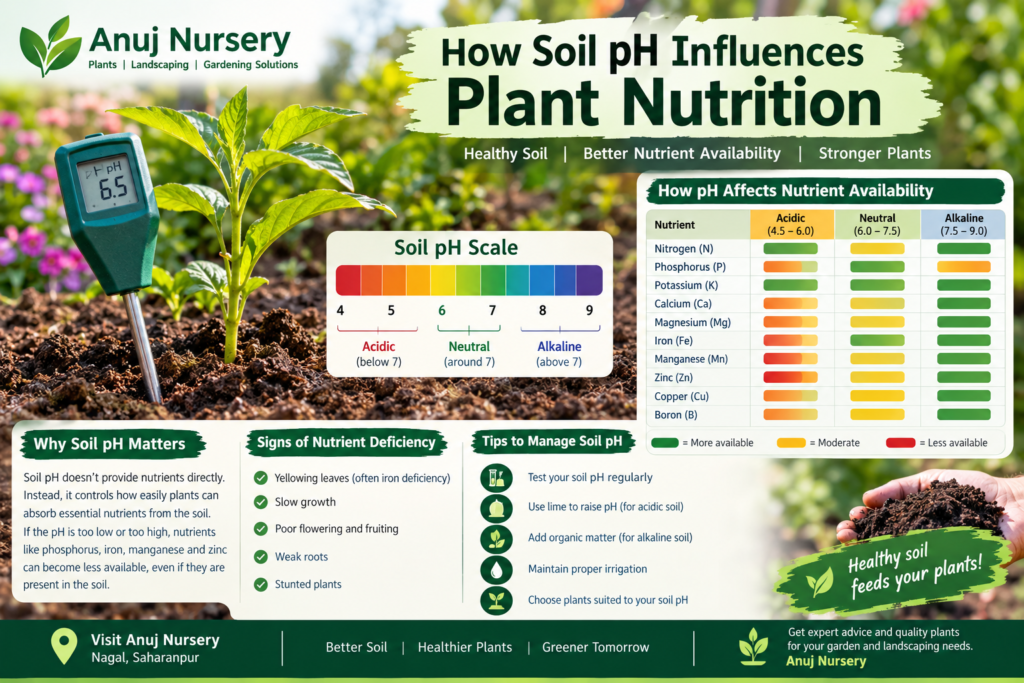
Soil pH measures how acidic or alkaline the soil is. The pH scale generally ranges from 0 to 14, with 7 considered neutral.
- Below 7: Acidic soil
- Around 7: Neutral soil
- Above 7: Alkaline soil
Most garden plants perform well within a slightly acidic to neutral range, although the ideal pH varies between plant species.
Soil pH does not directly provide nutrients. Instead, it affects the availability of nutrients already present in the soil.
Why Soil pH Matters for Plant Nutrition
Plant roots require both macronutrients and micronutrients. Important macronutrients include nitrogen, phosphorus, potassium, calcium, magnesium, and sulfur. Plants also need smaller quantities of micronutrients such as iron, zinc, manganese, copper, and boron.
The availability of these nutrients changes as soil pH changes.
For example, phosphorus can become less available under strongly acidic or strongly alkaline conditions. Iron and manganese may also become difficult for plants to absorb in alkaline soils. This means a plant can experience nutrient deficiency even when the soil contains the required nutrient.
This is one reason why simply adding more fertilizer does not always solve yellow leaves or poor growth.
Soil pH and Nitrogen Availability
Nitrogen supports leafy growth, chlorophyll production, and overall plant development. Soil pH can influence the activity of microorganisms involved in nitrogen cycling.
When soil conditions are unsuitable, nitrogen availability and plant uptake may be affected. Plants may then show slow growth or pale foliage.
Maintaining suitable soil conditions can help plants make better use of nitrogen already present in the soil.
Soil pH and Phosphorus
Phosphorus is important for root development, energy transfer, flowering, and fruit production. However, phosphorus availability can decline when the soil becomes extremely acidic or strongly alkaline.
In highly acidic soils, phosphorus may react with iron and aluminum. In alkaline soils, it can interact with calcium. These reactions can reduce the amount of phosphorus available to plant roots.
Therefore, correcting soil pH can sometimes be more useful than simply applying additional phosphorus fertilizer.
Soil pH and Micronutrients
Micronutrients are required in small amounts but remain essential for healthy plant growth.
Iron deficiency is particularly noticeable in plants growing in alkaline soil. A common symptom is interveinal chlorosis, where young leaves become yellow while the veins remain relatively green.
Zinc, manganese, and copper availability can also be influenced by soil pH.
If plants repeatedly show deficiency symptoms, gardeners should consider soil testing instead of assuming that fertilizer is always the answer.
How to Test Soil pH
A soil pH test is one of the simplest ways to understand your garden soil. Home testing kits can provide a general indication of soil acidity or alkalinity.
For more accurate information, a professional soil laboratory can test pH along with nutrient levels and other soil properties.
When collecting a soil sample, take small samples from several locations in the planting area and mix them according to the testing instructions. Avoid testing only one unusual spot because it may not represent the entire garden.
How to Adjust Soil pH
If soil pH is unsuitable for a particular plant, amendments may help move it toward a more suitable range.
For acidic soil, materials such as agricultural lime are commonly used to increase pH. For alkaline soil, organic matter and other suitable soil amendments may help improve soil conditions, although lowering pH can require careful management.
Do not add large quantities of amendments without testing first. Over-correcting soil pH can create new nutrient availability problems.
The right approach depends on soil type, existing pH, plant requirements, and local conditions.
Soil pH for Gardens in Saharanpur
Gardeners in Saharanpur, Uttar Pradesh, should consider local soil characteristics, irrigation water, climate, and plant selection when managing soil pH. Different garden areas can also have different soil conditions.
Before establishing a landscape, testing the soil can help determine whether selected plants are suitable for the existing growing environment.
For established gardens, regular observation combined with soil testing can help identify nutrient-related problems before they become severe.
Soil pH and Anuj Nursery
Choosing the right plants is only one part of successful gardening. Understanding soil conditions is equally important. Anuj Nursery, located in Nagal, Saharanpur, can help gardeners and landscaping projects select suitable plants for different garden environments.
Whether you are developing a residential garden, commercial landscape, or plant collection, considering soil pH, drainage, sunlight, and plant requirements can improve long-term results.
Frequently Asked Questions
What is the best soil pH for most plants?
Many garden plants prefer slightly acidic to neutral soil, commonly around pH 6 to 7. However, the ideal range varies by plant species.
Does soil pH affect fertilizer effectiveness?
Yes. Soil pH affects the availability and absorption of several nutrients. A fertilizer may not provide the expected benefit if the soil pH prevents plants from accessing certain nutrients.
Can high soil pH cause yellow leaves?
Yes. High or alkaline soil pH can reduce the availability of nutrients such as iron and manganese, potentially causing yellowing leaves and poor growth.
Should I test soil pH before planting?
Yes. Soil testing before planting can help you select suitable plants and identify whether soil amendments may be required.
Conclusion
Understanding how soil pH influences plant nutrition is essential for maintaining healthy gardens. Soil pH affects the availability of nitrogen, phosphorus, iron, manganese, zinc, and other nutrients that plants need for growth.
Instead of relying only on fertilizer, gardeners should consider soil pH, drainage, organic matter, irrigation, and plant-specific requirements together. A simple soil test can provide valuable information and help prevent unnecessary fertilizer applications.
For gardens and landscaping projects in Saharanpur, thoughtful soil management combined with suitable plant selection can create healthier and more sustainable landscapes.