Healthy plants need more than sunlight and water. They also need oxygen around their roots. In established gardens, soil can gradually become compacted because of foot traffic, repeated watering, heavy clay content, construction activity, or natural settling. Compacted soil restricts air movement, water penetration, and root growth.
Soil aeration techniques for established gardens help loosen compacted soil without seriously disturbing existing plants. With the right approach, gardeners can improve drainage, encourage healthy roots, and maintain stronger plants throughout the growing season.
What Is Soil Aeration?
Soil aeration is the process of creating spaces within the soil so that air, water, and nutrients can move more effectively around plant roots. Healthy soil contains a balance of mineral particles, organic matter, water, and air.
When soil becomes compacted, these air spaces become smaller. As a result, roots may struggle to absorb oxygen and water. Plants can show slow growth, yellowing leaves, poor flowering, or increased stress.
Aerating established garden soil helps restore these important spaces while protecting existing plants.
Why Do Established Gardens Need Soil Aeration?
Established gardens often experience soil compaction over time. People walking through planting beds, gardening equipment, rain, and heavy irrigation can gradually compress the soil.
Common signs of compacted soil include:
- Water collecting on the soil surface
- Slow drainage after irrigation or rain
- Hard or crusted soil
- Poor plant growth
- Shallow root development
- Yellowing or stressed foliage
- Difficulty inserting a garden tool into the soil
If these problems appear regularly, soil aeration may be necessary.
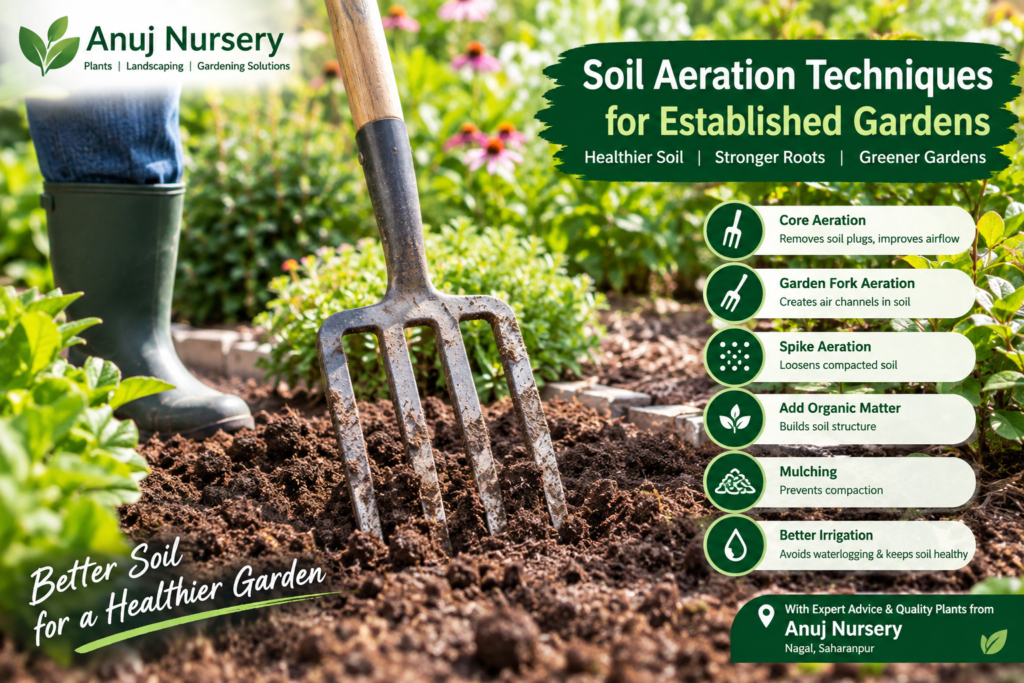
1. Core Aeration
Core aeration is one of the most effective methods for heavily compacted areas. A core aerator removes small plugs of soil from the ground, creating channels for air and water.
For established lawns and larger open garden areas, mechanical core aerators can cover large spaces efficiently. The removed soil plugs can remain on the surface and naturally break down.
For smaller garden beds, a manual core aerator or hollow-tine tool can be used carefully around plants.
2. Garden Fork Aeration
A garden fork is a simple option for established planting beds. Insert the fork vertically into the soil and gently move it back and forth to create small air channels.
Avoid aggressively turning the soil. The objective is to improve air movement while minimizing damage to established roots.
This technique works particularly well around shrubs, ornamental plants, and garden borders where mechanical equipment may be difficult to use.
3. Spike Aeration
Spike aeration involves making small holes in compacted soil with a garden fork, soil aerator, or specialized hand tool.
It is useful for small areas and routine maintenance. However, simply creating holes without addressing the underlying compaction may provide only temporary improvement.
For long-term results, combine spike aeration with organic matter and better soil-management practices.
4. Add Organic Matter
Aeration should not always be treated as a mechanical process. Adding suitable organic matter can improve soil structure over time.
Well-decomposed compost, leaf compost, or other appropriate organic amendments can help improve the soil’s ability to hold moisture while maintaining air spaces.
Spread a suitable layer over the soil surface and incorporate it carefully where plant roots allow. Avoid disturbing the root zones of mature trees and established shrubs unnecessarily.
5. Mulching for Long-Term Soil Health
Organic mulch can help prevent soil from becoming compacted again. Materials such as composted leaves, bark, or other suitable organic mulch protect the soil surface from heavy rain and temperature fluctuations.
Apply mulch around plants while keeping it away from direct contact with tree trunks and plant stems.
A healthy mulch layer can also gradually contribute organic matter as it decomposes.
6. Improve Irrigation Practices
Excessive irrigation can contribute to poor soil structure, particularly when drainage is already weak. Instead of frequent shallow watering, use irrigation practices appropriate for the plant species and local climate.
Check the soil before watering. If the soil remains saturated for long periods, investigate drainage and compaction rather than simply adding more water.
For gardens in Saharanpur and other parts of North India, seasonal rainfall, summer heat, and soil type should all be considered when planning irrigation and aeration.
7. Be Careful Around Established Tree Roots
Established trees require special attention. Their major roots may extend far beyond the visible canopy, and aggressive digging can cause damage.
Avoid deep digging near mature trees. Use shallow aeration techniques and organic surface amendments where appropriate.
If a mature tree is showing signs of severe soil compaction, professional assessment can help determine the safest approach.
Best Time for Soil Aeration
The ideal timing depends on soil type, plant species, weather, and garden conditions. In general, aerate when the soil is moist but not waterlogged.
Avoid working extremely wet soil because it can smear and compact further. Extremely dry soil can also be difficult to penetrate.
For gardens in North India, seasonal weather should be considered carefully. Moderate temperatures and workable soil moisture generally make garden maintenance easier than periods of extreme heat or heavy rainfall.
Soil Aeration and Anuj Nursery
Good soil preparation is an important part of successful gardening. Anuj Nursery in Nagal, Saharanpur, provides plants and gardening-related solutions for residential and landscaping projects. Whether you are developing a new garden or maintaining an established landscape, choosing suitable plants and understanding soil conditions can improve long-term garden performance.
Frequently Asked Questions
How often should established garden soil be aerated?
The frequency depends on soil type, compaction, plant selection, and garden use. Heavily compacted areas may need more attention, while healthy soil may require only occasional maintenance.
Can I aerate soil around mature trees?
Yes, but use caution. Avoid deep digging and aggressive cultivation because established tree roots can be easily damaged.
Does compost improve soil aeration?
Yes. Properly decomposed organic matter can improve soil structure and help create better air and water movement over time.
What is the easiest soil aeration technique?
For small established garden beds, using a garden fork to create shallow channels is one of the simplest methods. For larger compacted areas, core aeration can be more efficient.
Conclusion
Soil aeration techniques for established gardens can improve root health, drainage, water movement, and overall plant performance. From garden-fork aeration and core aeration to compost application and proper mulching, the best results usually come from combining physical aeration with long-term soil improvement.
Before aerating, identify the cause of compaction and consider the plants already growing in the area. Careful soil management can help established gardens remain healthy, productive, and attractive for years.