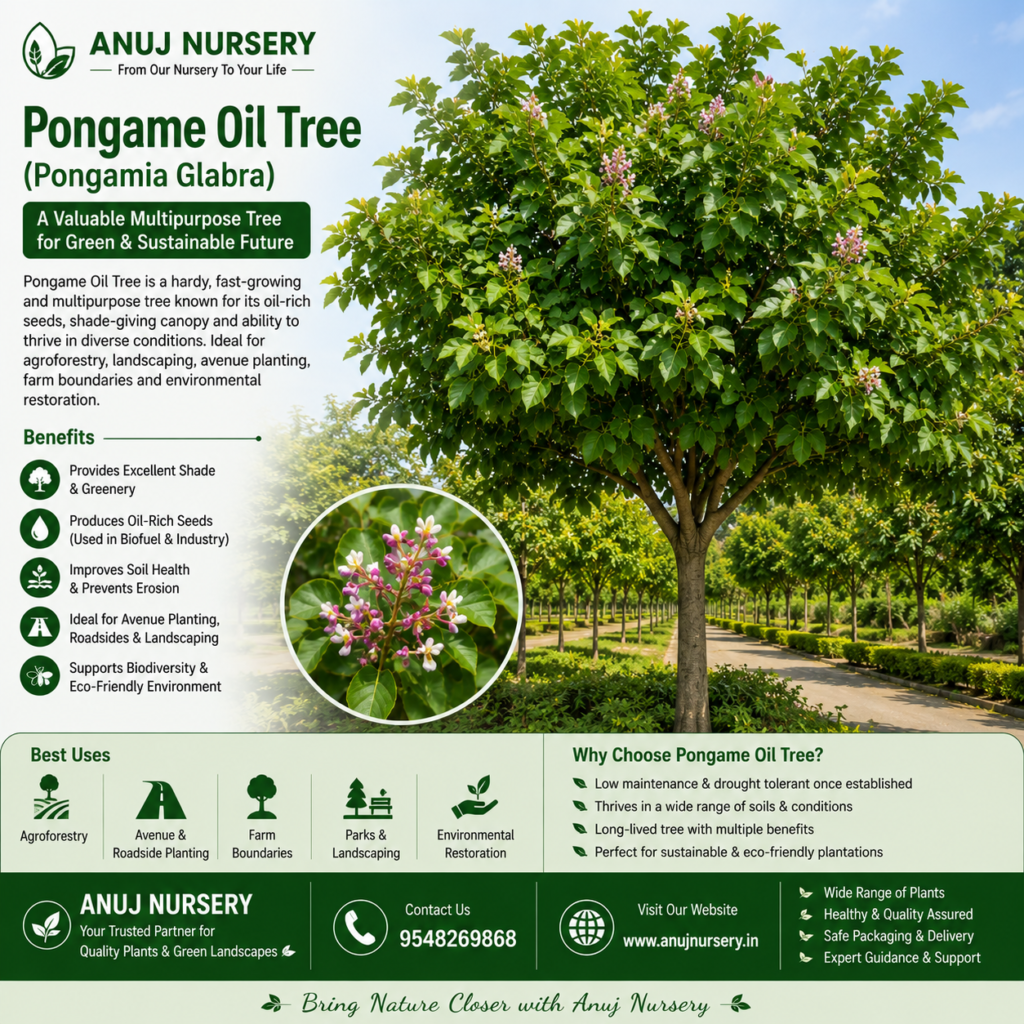
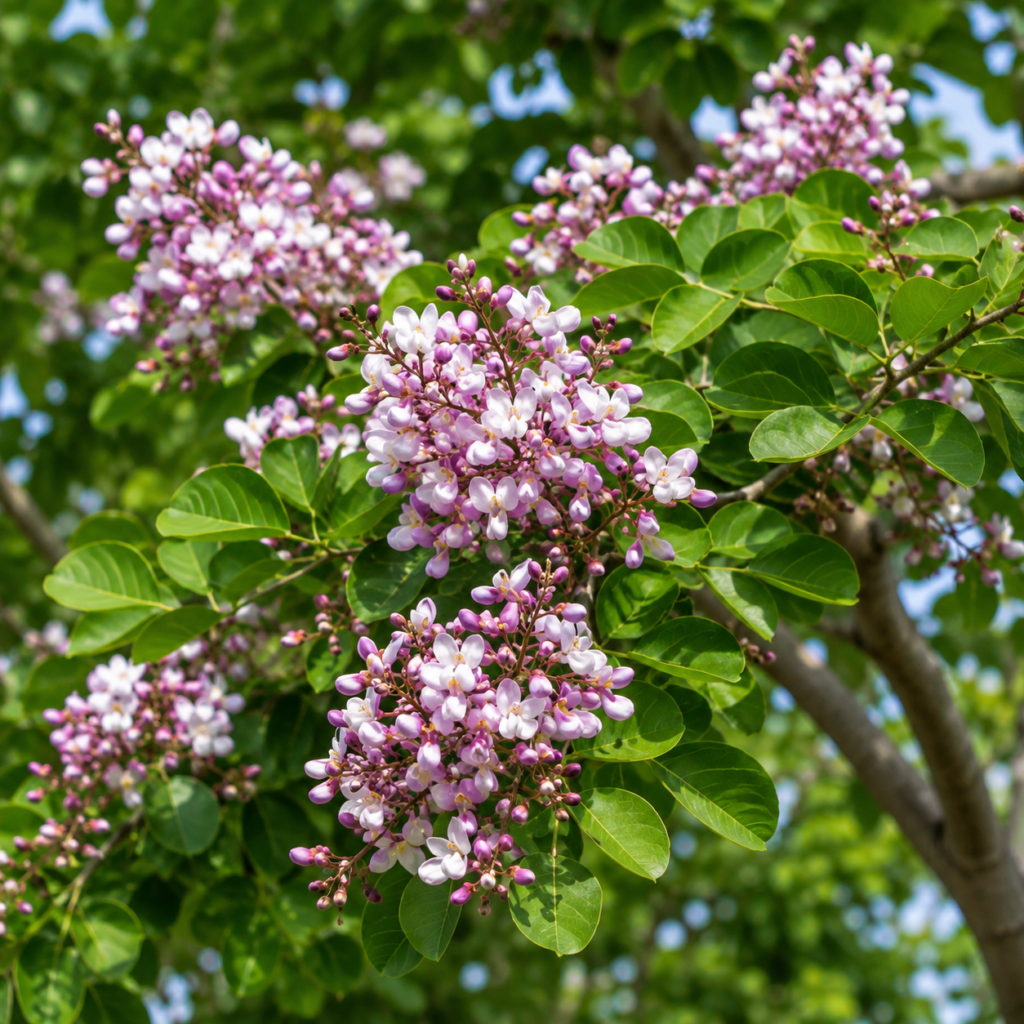
The Pongame Oil Tree (Pongamia glabra) is a hardy, multipurpose tree valued for its attractive foliage, shade, adaptability, and traditional importance as an oilseed and agroforestry tree. It is also commonly associated with the Karanja tree and is known botanically in modern references as Millettia pinnata or Pongamia pinnata.
The tree can be an excellent choice for farms, roadsides, parks, large gardens, plantations, and environmental landscaping. Its dense green canopy provides shade, while its ability to grow in a range of conditions makes it useful for various landscape and agroforestry applications.
Why Choose Pongame Oil Tree?
One of the main advantages of the Pongame Oil Tree is its versatility. It can be grown as a shade tree, farm-boundary tree, avenue tree, and component of agroforestry systems.
Its green foliage gives landscapes a natural appearance, while its flowering and seed production add ecological value. The tree is also known for its ability to establish in warm climates and can be considered for areas where a hardy multipurpose tree is required.
For commercial plantations, however, performance depends heavily on climate, soil, irrigation, spacing, and management. Claims about yield or profitability should always be evaluated locally rather than assumed from the tree’s reputation.
Benefits of Pongamia Glabra Tree
The Pongame Oil Tree offers several potential benefits:
- Provides useful shade and greenery
- Suitable for agroforestry systems
- Can be planted along farms and boundaries
- Useful for landscaping and avenue planting
- Produces oil-rich seeds
- Supports biodiversity and pollinators
- Suitable for warm-climate plantations
- Can tolerate challenging growing conditions once established
Its multipurpose nature makes it particularly interesting for farmers, landscapers, institutions, and plantation developers.
Pongame Oil Tree Uses
Traditionally, Pongamia has been valued for its oil-bearing seeds. Pongamia seed oil has been investigated and used in various industrial and renewable-energy contexts. However, the seeds and plant parts should not be treated as food or home remedies without appropriate expert guidance.
The tree is also used for shade, soil and landscape improvement, farm boundaries, roadside greenery, and agroforestry. Its attractive canopy makes it useful where both environmental and ornamental benefits are desired.
How to Grow Pongamia Glabra
Plant the tree in a sunny location with adequate space for root and canopy development. Well-drained soil is generally preferred, although established Pongamia trees can tolerate a range of soil conditions.
Young plants should receive sufficient water during establishment. Once established, irrigation requirements depend on rainfall, soil type, temperature, and the purpose of cultivation.
For plantations, proper spacing is important. Choose spacing according to the intended use, soil conditions, local climate, and long-term management plan.
Pongame Oil Tree Care
Pongame Oil Tree care is relatively simple after establishment. Keep the area around young plants free from excessive weeds and provide adequate moisture during prolonged dry periods.
Pruning can be carried out when necessary to remove damaged or poorly positioned branches and to develop a suitable tree structure. Regular inspection can help identify pest, disease, nutrient, or water-stress problems early.
Buy Quality Pongame Oil Tree Plants
When purchasing Pongame Oil Tree plants, choose healthy nursery-grown plants with strong stems, healthy foliage, and a well-developed root system. The correct plant size and variety should be selected according to your plantation or landscaping requirements.
Anuj Nursery offers a range of trees and plants for landscaping, plantation, and gardening requirements. Contact the nursery for current availability and suitable plant options.
Frequently Asked Questions
What is Pongame Oil Tree?
Pongame Oil Tree is a common name associated with Pongamia glabra and the species now commonly referred to as Pongamia pinnata or Millettia pinnata. It is a multipurpose tree known for its oil-rich seeds, shade, and agroforestry value.
Is Pongame Oil Tree the same as Karanja?
The names are commonly used for the same or closely synonymous botanical entity, particularly in Indian horticultural and forestry contexts.
What is Pongame Oil Tree used for?
It is used for shade, landscaping, avenue planting, farm boundaries, agroforestry, and production of oil-rich seeds with industrial and renewable-energy applications.
Is Pongamia a fast-growing tree?
Pongamia can establish and grow relatively quickly under suitable conditions, but growth rate varies according to climate, soil, water availability, planting material, and management.
How should Pongame Oil Tree be cared for?
Provide good sunlight, suitable soil drainage, adequate water during establishment, weed management, sufficient planting space, and occasional structural pruning.
Featured Snippet Answer:
Pongame Oil Tree, commonly associated with Pongamia glabra and Pongamia pinnata, is a multipurpose tree valued for shade, landscaping, agroforestry, and its oil-rich seeds. It is suitable for farms, plantations, roadsides, and warm-climate landscapes.