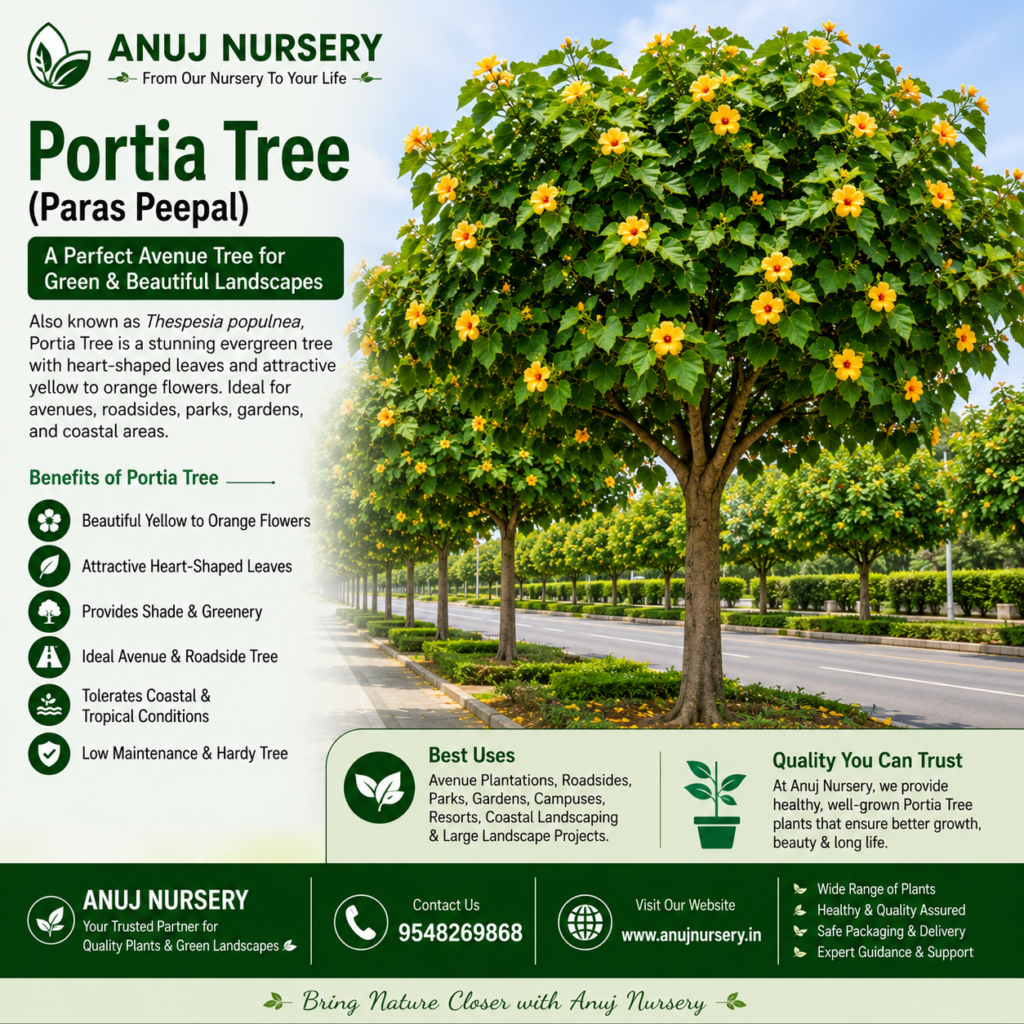
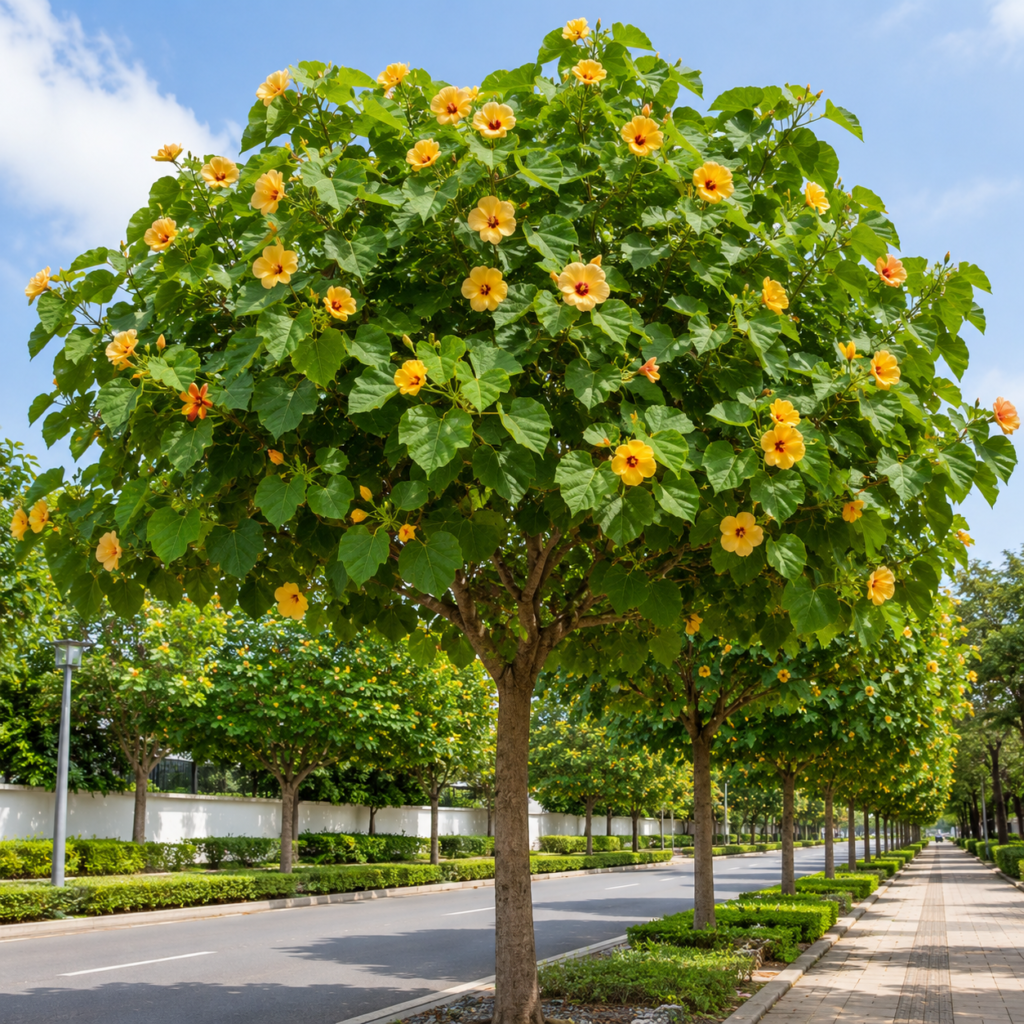
The Portia Tree (Paras Peepal), scientifically known as Thespesia populnea, is an attractive evergreen or semi-evergreen ornamental tree valued for its beautiful foliage, yellow-to-orange flowers, and suitability for warm climates. It is commonly used in landscaping, avenues, roadsides, parks, gardens, campuses, and coastal areas.
With its attractive rounded canopy and heart-shaped leaves, the Portia Tree can create a pleasant green environment. Its colourful flowers add seasonal beauty, making it a useful choice for landscape designers and gardeners looking for an ornamental avenue tree.
Why Choose Portia Tree as an Avenue Tree?
A good avenue tree should provide greenery, visual appeal, and suitable canopy development while fitting the conditions of the planting site. Thespesia populnea can be a practical option for warm-climate landscapes and roadside plantations.
Its broad leaves create a dense appearance, while its hibiscus-like flowers provide additional ornamental value. The tree can be planted along roads, pathways, parks, institutional campuses, resorts, and large gardens where sufficient space is available.
For avenue planting, proper spacing is essential. Trees should be positioned away from buildings, utility lines, drainage structures, and other infrastructure according to the site design.
Benefits of Portia Tree Paras Peepal
The Portia Tree offers several benefits for landscaping and avenue plantation:
- Attractive heart-shaped green leaves
- Beautiful yellow to orange flowers
- Suitable for warm and tropical landscapes
- Useful as an ornamental avenue tree
- Provides greenery and shade
- Suitable for parks, gardens, and campuses
- Can perform well in coastal and salt-influenced environments
- Adds aesthetic value to roadsides and large landscapes
Its ability to tolerate coastal conditions makes it especially interesting for suitable seaside landscaping projects.
How to Grow Portia Tree
For healthy growth, plant Portia Tree Paras Peepal in a location receiving good sunlight. It generally performs well in well-drained soil and warm conditions.
Young plants should receive adequate irrigation while establishing their root systems. Once established, watering requirements depend on rainfall, soil type, temperature, and local climate.
Avoid prolonged waterlogging and provide enough growing space for the tree’s roots and canopy. Good site preparation before planting can significantly improve establishment.
Portia Tree Care Tips
Portia Tree care is relatively straightforward when the tree is planted in an appropriate location. Keep the area around young plants free from excessive weeds and maintain suitable soil moisture during dry periods.
Pruning can be carried out when necessary to remove damaged, weak, or unwanted branches and to maintain the desired structure. For roadside plantations, early structural training can help develop a suitable tree form.
Regularly monitor the tree for pest problems, disease symptoms, and signs of water or nutrient stress. Good drainage and proper planting practices are important for long-term tree health.
Best Uses of Paras Peepal Tree
The Paras Peepal Tree can be used for:
- Avenue plantations
- Roadsides and pathways
- Parks and public gardens
- Residential landscaping
- Institutional campuses
- Resorts and commercial landscapes
- Coastal landscaping
- Large garden projects
Its attractive flowers and foliage make it particularly useful as a specimen or avenue tree in suitable climates.
Buy Quality Portia Tree Plants
When buying a Portia Tree, select a healthy nursery-grown plant with strong growth, healthy foliage, and a well-developed root system. Choose the plant size according to your landscaping requirements and planting location.
Anuj Nursery provides plants for gardening, avenue plantation, and landscaping projects. Availability of Portia Tree plants may vary according to season and location.
Frequently Asked Questions
What is the scientific name of Portia Tree?
The scientific name of the Portia Tree is Thespesia populnea.
What is Paras Peepal?
Paras Peepal is a common name used for Thespesia populnea, also known as the Portia Tree.
Is Portia Tree suitable for avenue planting?
Yes, Portia Tree can be used for avenues, roadsides, parks, campuses, and other large landscapes when the climate and planting conditions are suitable.
What colour flowers does Portia Tree have?
The flowers are generally yellow and can develop reddish or orange tones as they age.
Does Portia Tree need sunlight?
Yes, Portia Tree generally performs well in locations with good sunlight, which supports healthy growth and flowering.
Featured Snippet Answer:
The Portia Tree, scientifically known as Thespesia populnea and commonly called Paras Peepal, is an ornamental tree valued for its attractive foliage and yellow-to-orange flowers. It is suitable for avenues, roadsides, parks, gardens, campuses, and warm-climate landscapes.