The Rain Tree Samanea saman, scientifically known as Samanea saman, is one of the most impressive shade and avenue trees used in tropical landscaping. It is also known by names such as Albizia saman, Rain Tree and Siris Tree in different regions. With its enormous spreading canopy, strong trunk and attractive foliage, this tree is particularly valuable for large gardens, roadsides, parks, campuses, resorts and farmhouses.
The Rain Tree is famous for developing a broad umbrella-shaped crown that can provide substantial shade. Its impressive size makes it an excellent choice for large-scale landscaping, but it is not a tree that should be squeezed into a small garden. Planning for its mature size is essential.
What Is Samanea Saman?
Samanea saman belongs to the Fabaceae family. It is a tropical tree known for its rapid development under favorable conditions and its broad, spreading crown.
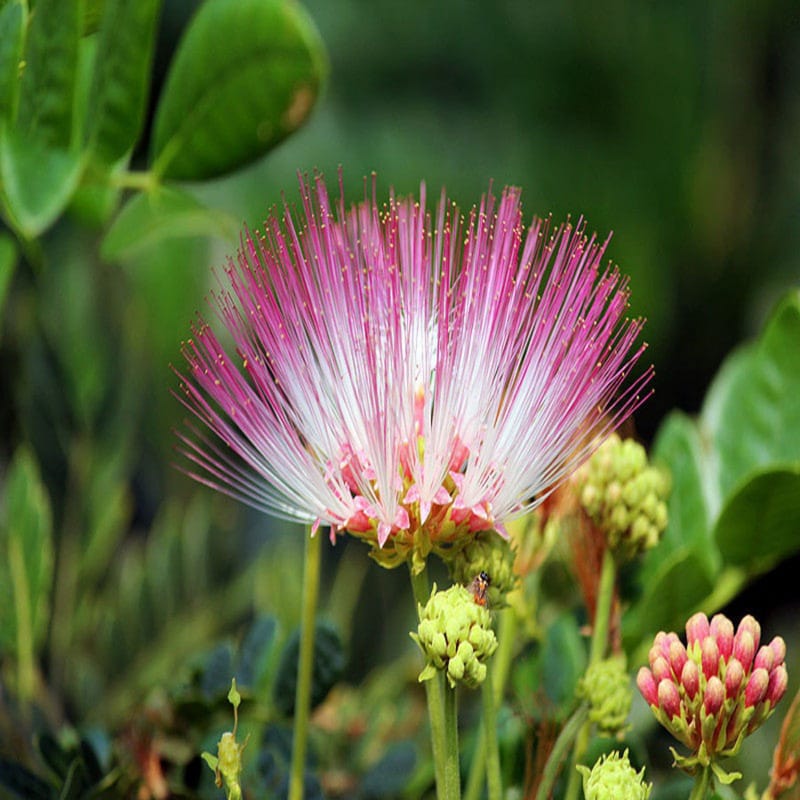
The leaves are compound and finely divided, giving the tree a soft and attractive appearance. Small flowers with pinkish or white coloration can appear in clusters, adding ornamental value to the tree.
One interesting characteristic of Rain Tree is its leaf movement. The leaflets can fold or partially close under certain environmental conditions, particularly around evening or during rain and low-light periods. This behavior is one reason behind its popular common name, Rain Tree.
Why Choose Rain Tree as an Avenue Tree?
1. Exceptional Shade
The biggest advantage of Samanea saman is its extensive canopy. Mature trees can create a large shaded area, making them valuable for parks, campuses, large roads and open landscapes.
2. Impressive Landscape Appearance
Its massive umbrella-shaped crown gives a landscape a mature, established appearance and can become a major focal point.
3. Suitable for Large Avenues
Where adequate space is available, Rain Tree can be used for avenue and roadside plantation projects.
4. Attractive Flowers and Foliage
Its finely divided foliage and attractive flower clusters provide ornamental value beyond its shade-producing ability.
5. Tropical Landscape Appeal
Rain Tree is especially suitable for warm climates and can complement tropical and subtropical landscape designs.
Rain Tree Planting Guide
Selecting the right planting location is critical. Rain Tree can become a very large tree, so it should be planted well away from buildings, narrow roads, utility lines, underground infrastructure and small garden structures.
Choose a location with good sunlight and suitable, well-drained soil. Prepare a sufficiently large planting pit and carefully position the nursery plant without damaging the root ball.
After planting, water thoroughly and maintain suitable moisture during the establishment stage. Avoid creating permanently waterlogged soil.
For avenue plantations, spacing should be decided according to the expected mature canopy, road design and local landscaping requirements rather than simply planting trees close together for an immediate visual effect.
Samanea Saman Care Tips
Young Rain Trees benefit from regular watering while their root systems establish. Once established, watering requirements depend on rainfall, soil type, temperature and local climate.
Good drainage is important. Apply organic matter or suitable fertilizer according to soil conditions and plant requirements.
Mulching can help conserve soil moisture and control weeds. Keep mulch away from direct contact with the trunk.
Because Rain Tree develops large branches and a broad canopy, structural pruning may be necessary in managed landscapes. Remove dead, damaged or unsafe branches and maintain adequate clearance from roads, buildings and utilities.
Best Uses of Rain Tree
The Rain Tree avenue tree is particularly useful for large-scale landscaping applications such as:
- Roadside avenue plantations
- Large parks
- Public gardens
- University and institutional campuses
- Resorts and hotels
- Farmhouses and estates
- Large residential landscapes
- Commercial properties
- Open lawns
- Highway and landscape projects where locally suitable
Its enormous canopy makes it especially valuable where shade and visual impact are priorities.
Rain Tree in India
Rain Tree is well known as a tropical and subtropical landscape tree and can be seen in various parts of India. Its suitability depends on local climate, soil, available space and management requirements.
For Indian landscaping projects, the most important consideration is not simply whether the tree can grow—it is whether the site can safely accommodate a large mature tree. This makes Rain Tree much better suited to spacious landscapes than compact urban gardens.
Frequently Asked Questions About Rain Tree
What is the scientific name of Rain Tree?
The scientific name of Rain Tree is Samanea saman. It has also historically been associated with the name Albizia saman.
Is Rain Tree a good avenue tree?
Yes, Rain Tree can be an excellent avenue tree for locations with sufficient space for its large spreading canopy and root system.
Does Rain Tree provide good shade?
Yes. Its broad, umbrella-shaped crown makes it particularly valuable as a shade tree.
Is Samanea saman fast growing?
Rain Tree can grow relatively quickly under favorable tropical conditions, although growth varies depending on climate, soil, water and plant care.
Is Rain Tree suitable for a small garden?
Generally, no. Its potentially very large mature canopy makes it more appropriate for spacious gardens, parks, campuses and large properties.
Buy Rain Tree Plants from Anuj Nursery
If you are planning a large landscaping, avenue plantation or shade-tree project, Samanea saman Rain Tree can be a powerful choice when adequate planting space is available.
Anuj Nursery provides plants for landscaping, avenue plantation, gardening and plantation projects.
Website: anujnursery.in
Contact: 9548269868
Conclusion
The Rain Tree Samanea saman, also known as Albizia saman, is a spectacular large shade and avenue tree with an expansive canopy, attractive foliage and impressive landscape presence. It can provide substantial shade and create a distinctive tropical character in parks, avenues, campuses, resorts and large properties.
However, its greatest strength is also its biggest limitation: Rain Tree becomes large. Planting it in an undersized location is a poor landscaping decision. Choose a site with adequate space, good soil drainage, sufficient sunlight and room for the mature canopy. With proper planning and care, Rain Tree can become a magnificent long-term feature of a landscape.